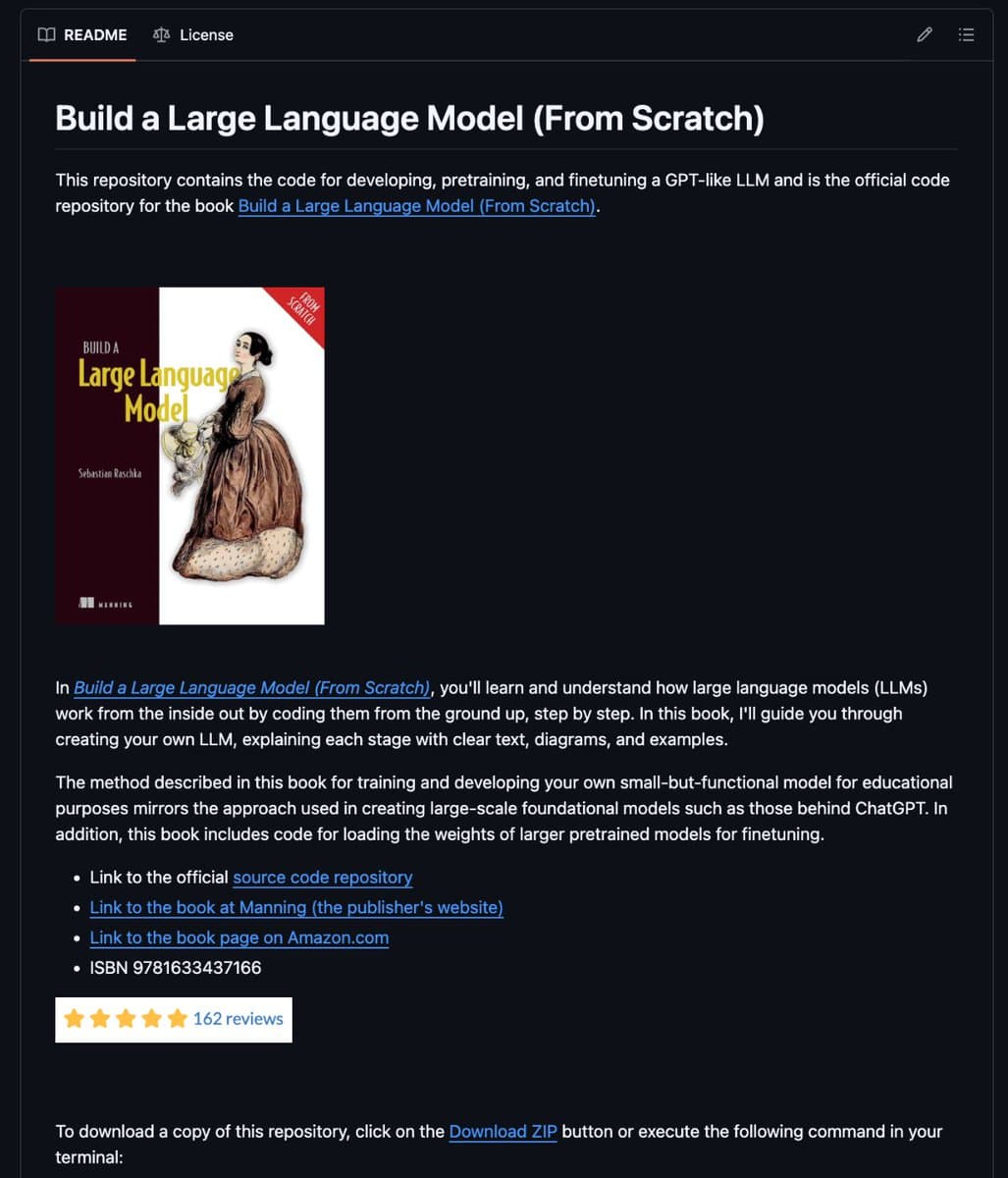
In a significant development for the AI community, a comprehensive blueprint for constructing ChatGPT-like models from the ground up has been made freely available on GitHub. The repository, titled "LLMs-from-scratch," offers developers and researchers an unprecedented look inside the architecture of large language models (LLMs), providing step-by-step instructions for building a GPT model using PyTorch.
What the Repository Contains
The LLMs-from-scratch repository represents a radical departure from the opaque, proprietary approaches that have characterized much of commercial AI development. According to the source material, the project walks users through building a GPT model "line by line" with "no black boxes" and "no hand-waving." Every component of the transformer architecture—the foundation of models like ChatGPT—is explained and implemented in code.
This educational resource covers the fundamental building blocks of modern language models, including:
- Tokenization and embedding layers
- Multi-head attention mechanisms
- Feed-forward neural networks
- Positional encoding
- Layer normalization
- The complete transformer decoder architecture
Why This Matters for AI Development
For years, the most advanced language models have been developed behind closed doors by well-funded research labs and corporations. While open-source alternatives have emerged, they've often lacked the comprehensive educational components that would allow newcomers to truly understand how these systems work at a fundamental level.
LLMs-from-scratch changes this dynamic by providing what amounts to a masterclass in transformer architecture. The repository doesn't just offer pre-trained weights or high-level APIs—it guides developers through the actual process of constructing the model from first principles.
Educational Implications
This development has profound implications for AI education. Previously, aspiring AI engineers faced a steep learning curve when attempting to understand transformer models. Documentation was often fragmented across research papers, blog posts, and incomplete tutorials. The LLMs-from-scratch repository consolidates this knowledge into a single, coherent learning path.
Educators can now point students to a complete implementation that demonstrates not just what each component does, but exactly how it's implemented in practice. This hands-on approach accelerates learning and demystifies concepts that were previously accessible only to those with extensive mathematical backgrounds or access to proprietary training materials.
Democratizing AI Development
The open-sourcing of this blueprint represents a significant step toward democratizing AI development. By making the complete architecture transparent and accessible, the repository lowers barriers to entry for:
- Independent researchers without institutional backing
- Students at universities with limited AI resources
- Developers in regions with less access to cutting-edge AI education
- Entrepreneurs seeking to build custom language models for specific applications
This transparency could lead to more diverse applications of transformer technology, as developers with domain-specific knowledge but limited AI expertise can now more easily adapt the architecture to their particular needs.
Technical Significance
From a technical perspective, the repository's value lies in its completeness and clarity. Many existing educational resources on transformers either oversimplify the architecture or present it in such abstract terms that implementation becomes challenging. LLMs-from-scratch appears to strike a balance between theoretical understanding and practical implementation.
The use of PyTorch—one of the most popular deep learning frameworks—ensures that the code is accessible to a broad audience of developers. The line-by-line approach means that even those with limited experience in neural network implementation can follow along and understand each decision in the coding process.
Potential Impact on Innovation
When complex technologies become transparent and well-documented, innovation typically accelerates. The history of computing is filled with examples of open standards and transparent implementations leading to rapid advancement. The LLMs-from-scratch repository could catalyze similar progress in natural language processing.
Developers who understand the complete architecture are better positioned to:
- Identify optimization opportunities
- Develop novel modifications to the standard transformer design
- Create more efficient implementations for specific hardware
- Debug and improve existing models more effectively
Looking Forward
While the repository represents an important educational resource, it's worth noting that building a production-ready ChatGPT equivalent requires more than just the architecture blueprint. Training such models demands substantial computational resources, carefully curated datasets, and expertise in distributed training techniques.
Nevertheless, understanding the architecture is the essential first step. The LLMs-from-scratch repository provides that foundation in unprecedented detail, potentially creating a new generation of AI developers who truly understand the systems they're working with rather than treating them as magical black boxes.
As AI continues to transform industries and societies, this type of educational transparency becomes increasingly valuable. It empowers more people to participate in the development of these technologies, ensures better oversight through broader understanding, and ultimately leads to more robust and innovative AI systems.
Source: @hasantoxr on X/Twitter