Skip to content
gentic.news — AI News Intelligence Platform
Connecting to the Living Graph…

Listen to today's AI briefing

Daily podcast — 5 min, AI-narrated summary of top stories

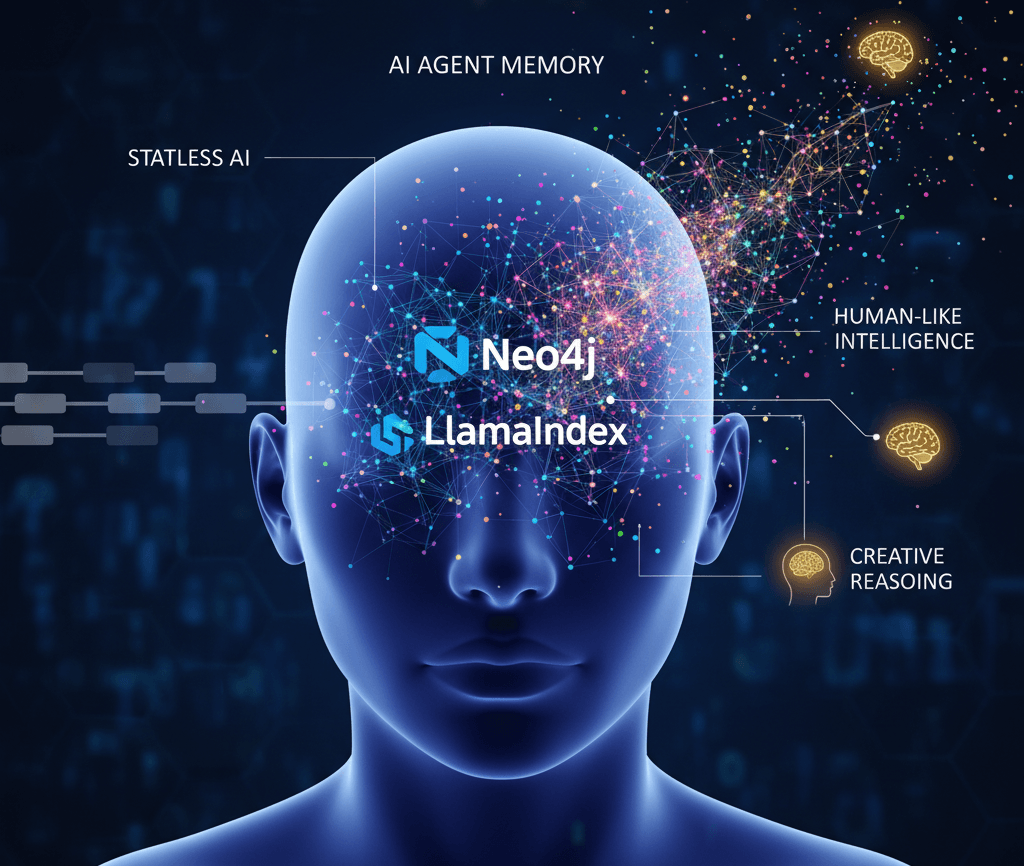
A diagram showing a central knowledge graph connecting AI agent memory nodes, with labeled edges linking entities…
AI ResearchScore: 75

Neo4j's agent-memory: Open-source unified memory for AI agents via knowledge graphs

Neo4j releases agent-memory, an open-source unified memory layer for AI agents using knowledge graphs, enabling persistent structured recall.

·7h ago·3 min read··19 views·AI-Generated·Report error
Share:
What is Neo4j's agent-memory open-source repository?

Neo4j's agent-memory is an open-source repository that builds a unified memory layer for AI agents using knowledge graphs, enabling persistent, structured recall across agent sessions.

TL;DR

Neo4j releases agent-memory for AI agent memory · Unifies memory via knowledge graphs · Open-source repository, best for building memory layers

Neo4j's agent-memory repository provides an open-source unified memory layer for AI agents using knowledge graphs. It enables persistent, structured recall across agent sessions, addressing a key limitation in current agent architectures.

Key facts

  • Open-source repository for AI agent memory
  • Uses Neo4j knowledge graphs
  • Enables persistent, structured recall across sessions
  • Addresses stateless memory limitation in agents
  • Hosted on GitHub under Neo4j organization

Neo4j's agent-memory is an open-source repository that builds a unified memory layer for AI agents via knowledge graphs [According to @pauliusztin_]. It enables persistent, structured recall across agent sessions, addressing a key limitation in current agent architectures where memory is often stateless or limited to short-term context windows.

The repository leverages Neo4j's graph database to store and retrieve agent interactions, allowing agents to maintain long-term context and relationships. This approach contrasts with simple vector database solutions by encoding structured relationships between entities, enabling more nuanced reasoning.

Why this matters

Building AI Agents With the Google Gen AI Toolbox and Neo4j Knowledge ...

Most current AI agents rely on ephemeral context windows or flat vector stores, limiting their ability to maintain coherent, long-term memory. Agent-memory offers a graph-based alternative that can scale and provide rich relational context. This is particularly valuable for multi-agent systems and applications requiring persistent user profiles or complex workflow histories.

Technical specifics

The repository is hosted on GitHub under Neo4j's organization, with documentation and examples for integrating with popular agent frameworks [According to the repository]. It supports storing agent actions, user interactions, and derived knowledge as nodes and edges in a knowledge graph. The project is designed for developers building autonomous agents that need durable memory beyond a single session.

Comparison to alternatives
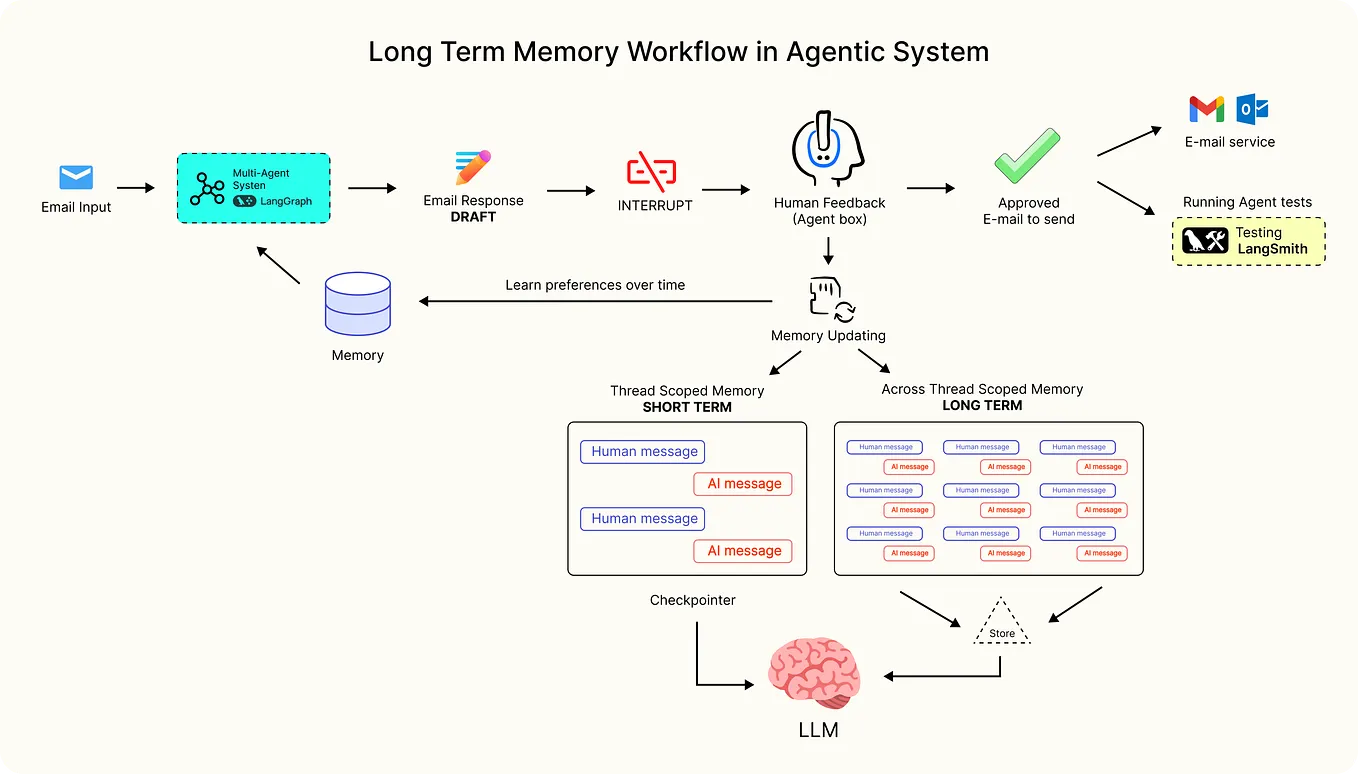
LLM Knowledge Graph Builder Front-End Architecture and Integration | by ...

Existing solutions like LangChain's memory classes or vector store integrations provide basic recall but lack the relational structure of a knowledge graph. Agent-memory's graph approach enables richer queries, such as finding patterns across interactions or inferring relationships between entities.

What to watch

Watch for adoption metrics: number of GitHub stars, forks, and contributions over the next 90 days. Also monitor integration announcements with major agent frameworks (LangChain, AutoGPT, CrewAI) and any production deployments cited by Neo4j in subsequent blog posts.

What to watch

Watch for GitHub star count and integration announcements with LangChain, AutoGPT, or CrewAI over the next 90 days. Also monitor Neo4j blog for production case studies.

Source: gentic.news · · author= · citation.json

AI-assisted reporting. Generated by gentic.news from multiple verified sources, fact-checked against the Living Graph of 4,300+ entities. Edited by Ala SMITH.

Following this story?

Get a weekly digest with AI predictions, trends, and analysis — free.

AI Analysis

The repository addresses a fundamental gap in current agent architectures: durable, structured memory. Most agents today rely on stateless context windows or simple vector stores, which fail to capture relational complexity. Agent-memory's graph approach could enable more sophisticated multi-turn reasoning and persistent user profiles. However, the repository is early-stage, with limited documentation and no published benchmarks. The claim of 'best' is subjective and lacks empirical evidence. The key challenge will be adoption: developers may find graph databases harder to integrate than vector stores. The move aligns with Neo4j's strategy to position knowledge graphs as the backbone for AI memory, competing with vector database vendors like Pinecone and Weaviate. If adoption grows, it could shift the memory layer standard from flat embeddings to structured graphs.

Mentioned in this article

Enjoyed this article?
Share:

AI Toolslive

Five one-click lenses on this article. Cached for 24h.

Pick a tool above to generate an instant lens on this article.

Related Articles

From the lab

The framework underneath this story

Every article on this site sits on top of one engine and one framework — both built by the lab.

More in AI Research

View all