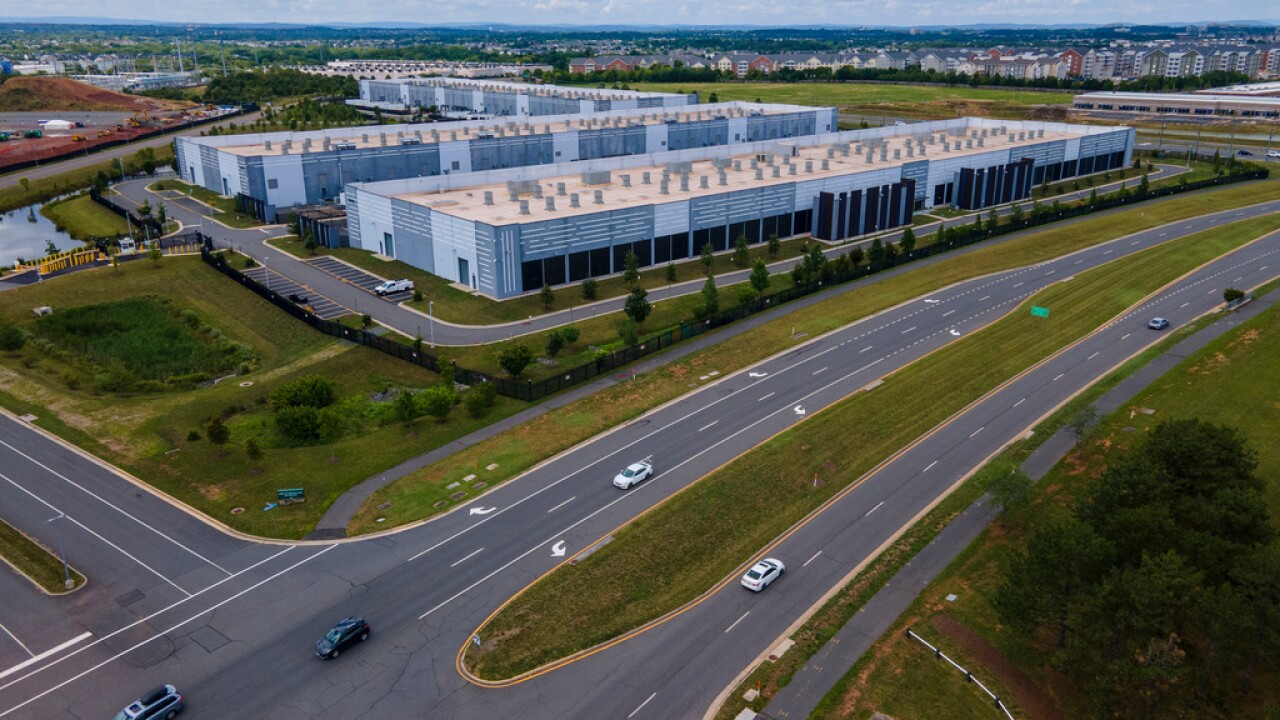
The U.S. Department of Energy (DOE) has taken a concrete step toward expanding the nation's artificial intelligence infrastructure by issuing a formal Request for Information (RFI). The agency is soliciting insights from industry, academia, and other stakeholders on the potential to develop AI and high-performance computing (HPC) infrastructure on DOE-owned lands and facilities.
Key Takeaways
- Department of Energy has published a Request for Information (RFI) to solicit input on developing AI and high-performance computing infrastructure on DOE-owned lands.
- This marks a significant step in the federal government's strategy to directly address the national AI compute shortage.
What Happened

The DOE published the RFI, titled "AI Infrastructure on DOE Lands," seeking public comment. An RFI is a preliminary step often used by government agencies to gauge market interest, understand technical feasibility, and identify potential partners before issuing a formal solicitation or launching a program. This move explicitly ties federal land assets—a significant resource—to the strategic goal of bolstering national AI compute capacity.
The Strategic Context
This initiative sits at the intersection of several critical trends: the escalating global demand for AI compute, concerns over U.S. competitiveness, and the energy-intensive nature of modern AI training and inference. DOE lands and facilities, which include national laboratories like Oak Ridge, Argonne, and Lawrence Livermore, already host some of the world's most powerful supercomputers. They also offer key advantages:
- Established Power Infrastructure: Many sites have pre-existing, robust electrical connections capable of supporting multi-megawatt data centers.
- Physical Security: Federally managed lands provide high levels of physical security and controlled access.
- Proximity to Expertise: Co-location with DOE national labs offers potential synergy with world-class scientific and computational research.
The RFI likely aims to understand how to leverage these assets to accelerate the deployment of next-generation AI infrastructure, potentially through public-private partnerships.
Why This Matters
The global race for AI supremacy is increasingly a race for compute. Leading AI labs are constrained by the availability of advanced GPUs and the power/cooling infrastructure to support them. By exploring the use of its vast real estate and utility resources, the DOE is signaling a whole-of-government approach to treating AI compute as critical national infrastructure, akin to the electricity grid or highways.
This is not about building a single exascale computer for scientific research—the DOE already does that. This RFI suggests a broader vision: creating scalable, dedicated infrastructure to support the training and deployment of large-scale AI models, potentially for both governmental and private-sector use. It represents a potential shift from the government solely as a funder of research to a direct provider of foundational AI infrastructure.
What's Next

Responses to the RFI will inform the DOE's next steps. These could range from launching pilot projects at specific labs to formulating a larger-scale national strategy for federal AI infrastructure. Key questions the DOE is likely exploring include:
- What business models (e.g., leasing, cost-sharing) would attract private investment?
- What are the most urgent technical and regulatory hurdles?
- How can such infrastructure simultaneously serve national security, scientific research, and economic competitiveness goals?
gentic.news Analysis
This DOE RFI is a direct, tangible response to a pressure point we've covered extensively: the AI compute crunch. It follows a pattern of increased federal activity around AI infrastructure, building on initiatives like the National AI Research Resource (NAIRR) pilot and the CHIPS and Science Act. While the NAIRR focuses on providing cloud-based compute access to researchers, this DOE exploration is fundamentally about the physical layer—land, power, and cooling—which is the ultimate bottleneck.
The move aligns with the Biden administration's October 2023 executive order on AI, which tasked agencies with promoting a competitive ecosystem. Using federal lands to lower the barrier for entry for AI compute construction is a classic industrial policy lever. It also strategically positions the DOE, with its unique combination of real estate, energy expertise, and supercomputing pedigree, as a central player in the nation's AI future, rather than ceding the entire infrastructure field to a handful of hyperscalers.
However, significant challenges remain. Turning this RFI into gigawatts of operational AI compute will require navigating environmental reviews, complex contracting, and the relentless pace of AI hardware innovation. The success of this concept will depend on whether the DOE can create partnership frameworks that are more agile than traditional government procurement.
Frequently Asked Questions
What is a Request for Information (RFI)?
An RFI is a formal government document used to collect information and capabilities from potential suppliers before finalizing requirements or issuing a contract solicitation. It's a fact-finding step, not a commitment to buy.
Which DOE lands might be used for AI infrastructure?
While the RFI doesn't specify sites, likely candidates include areas surrounding major DOE National Laboratories such as Oak Ridge National Lab (Tennessee), Pacific Northwest National Lab (Washington), and Lawrence Livermore National Lab (California), which already host massive supercomputers and have the necessary power and security infrastructure.
How could this help address the AI compute shortage?
By providing pre-vetted sites with guaranteed power access and high security, the DOE could significantly reduce the time, cost, and risk for companies or consortia looking to build large-scale AI data centers. This could accelerate the deployment of new compute capacity.
Is this related to the National AI Research Resource (NAIRR)?
They are complementary initiatives within a broader national strategy. The NAIRR is focused on providing shared access to compute and data for researchers. The DOE lands concept is about expanding the underlying physical supply of that compute, which could eventually support NAIRR and other public and private needs.