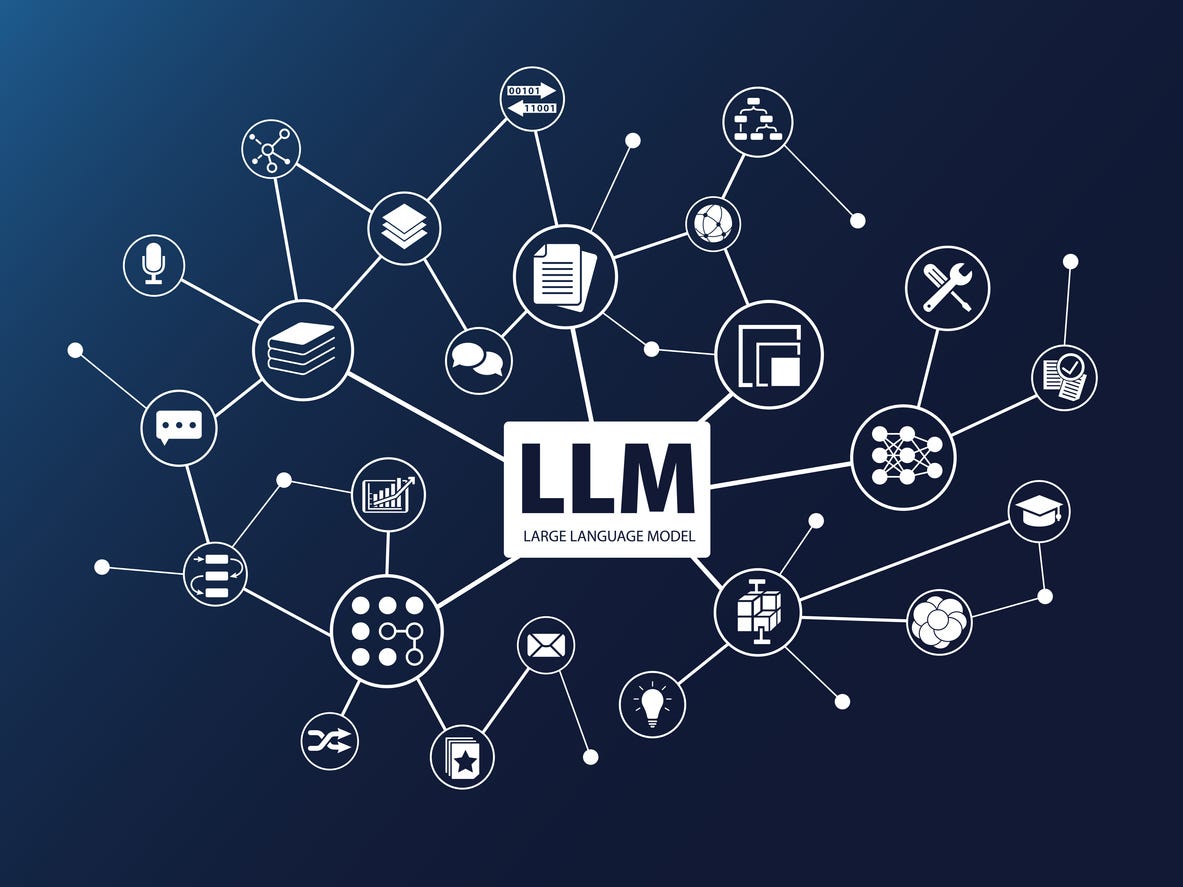
In a groundbreaking development that could reshape the future of artificial intelligence research, Google DeepMind has demonstrated that large language models (LLMs) can autonomously discover entirely new multi-agent learning algorithms. This research, highlighted by AI researcher Omar Sanseviero, represents a paradigm shift in how we approach algorithm design and multi-agent coordination—two of the most challenging problems in contemporary AI.
The Core Discovery: From Language to Algorithm Design
Traditionally, multi-agent learning algorithms—which govern how multiple AI agents learn to cooperate, compete, or coordinate—have been painstakingly designed by human researchers through a combination of mathematical theory, intuition, and extensive experimentation. These algorithms enable everything from robotic swarms to autonomous vehicle fleets to learn effective collective behaviors.
Google DeepMind's research reveals that LLMs, when properly prompted and constrained, can generate novel algorithmic solutions to multi-agent learning problems that outperform human-designed approaches in certain scenarios. The models essentially function as "algorithmic inventors," exploring a vast space of potential learning rules and strategies that human researchers might never consider.
How It Works: The LLM as Algorithm Designer
The process begins with researchers providing the LLM with a formal description of a multi-agent learning problem, including the agents' objectives, available actions, and learning constraints. Rather than asking the model to execute a specific algorithm, researchers prompt it to generate the algorithm itself—the actual learning rules that agents should follow.
Through iterative refinement and evaluation, the LLM proposes algorithmic structures, which are then tested in simulation environments. The most promising candidates undergo further optimization, creating a feedback loop where the language model learns what types of algorithmic designs work best for specific multi-agent scenarios.
Technical Implications: Beyond Human Design Limitations
This approach offers several significant advantages over traditional algorithm design:
Exploration of unconventional solutions: LLMs can propose algorithmic structures that defy conventional wisdom, potentially discovering more efficient or robust learning strategies.
Rapid prototyping: What might take human researchers months of trial and error can be accelerated to days or even hours of computational exploration.
Adaptation to specific domains: The generated algorithms can be tailored to particular multi-agent environments with unique constraints or objectives.
Combination of disparate concepts: LLMs can synthesize ideas from different areas of machine learning, creating hybrid approaches that might not occur to specialists focused on narrow subfields.
Practical Applications: From Robotics to Economics
The implications extend across numerous domains:
Autonomous systems: Fleets of delivery drones, autonomous vehicles, or warehouse robots could employ AI-designed coordination algorithms optimized for their specific operational environments.
Game theory and economics: Multi-agent algorithms govern complex economic systems, market dynamics, and strategic interactions—areas where AI-designed solutions might reveal novel equilibrium concepts.
Scientific research: In fields like molecular dynamics or climate modeling, where multiple interacting components must be simulated, AI-designed coordination algorithms could improve accuracy and efficiency.
Network optimization: Communication networks, power grids, and transportation systems all involve multiple interacting agents that must coordinate effectively.
Challenges and Limitations
Despite the excitement surrounding this development, several challenges remain:
Interpretability: AI-generated algorithms can become "black boxes" that are difficult for humans to understand or verify mathematically.
Generalization: Algorithms designed for specific simulated environments may not transfer effectively to real-world applications.
Safety considerations: In critical applications, we need assurance that AI-designed algorithms won't produce unexpected or harmful emergent behaviors.
Computational costs: The process of generating and testing numerous algorithmic candidates requires significant computational resources.
The Future of AI Research: Human-AI Collaboration
This research points toward a future where AI systems and human researchers collaborate more intimately in scientific discovery. Rather than replacing human algorithm designers, LLMs could serve as creative partners that expand the space of possibilities humans can consider.
The most promising path forward likely involves a hybrid approach: LLMs generate novel algorithmic concepts, which human researchers then analyze, refine, and validate using traditional mathematical methods. This combines the exploratory power of AI with the interpretative and critical thinking capabilities of human experts.
Broader Context: The Evolution of AI Self-Improvement
This development represents another step toward what researchers call "AI self-improvement"—systems that can enhance their own capabilities. While still in early stages, the ability of LLMs to design learning algorithms moves us closer to AI systems that can iteratively improve their own learning processes.
It's important to distinguish this from concerns about recursive self-improvement leading to uncontrollable AI. The current research operates within carefully constrained environments with human oversight at every stage. However, it does raise important questions about how we maintain appropriate governance as AI systems take on more creative roles in their own development.
Conclusion: A New Era of Algorithmic Discovery
Google DeepMind's demonstration that LLMs can discover novel multi-agent learning algorithms marks a significant milestone in AI research. It suggests that language models' capabilities extend far beyond text generation into the realm of creative problem-solving and algorithmic innovation.
As this research progresses, we can expect to see AI-designed algorithms deployed in increasingly complex real-world systems. The key challenge will be developing frameworks that ensure these AI-generated solutions are safe, interpretable, and aligned with human values—while still harnessing their potential to solve coordination problems that have long eluded purely human-designed approaches.
Source: Research highlighted by Omar Sanseviero (@omarsar0) based on Google DeepMind's work on LLM-generated multi-agent learning algorithms.