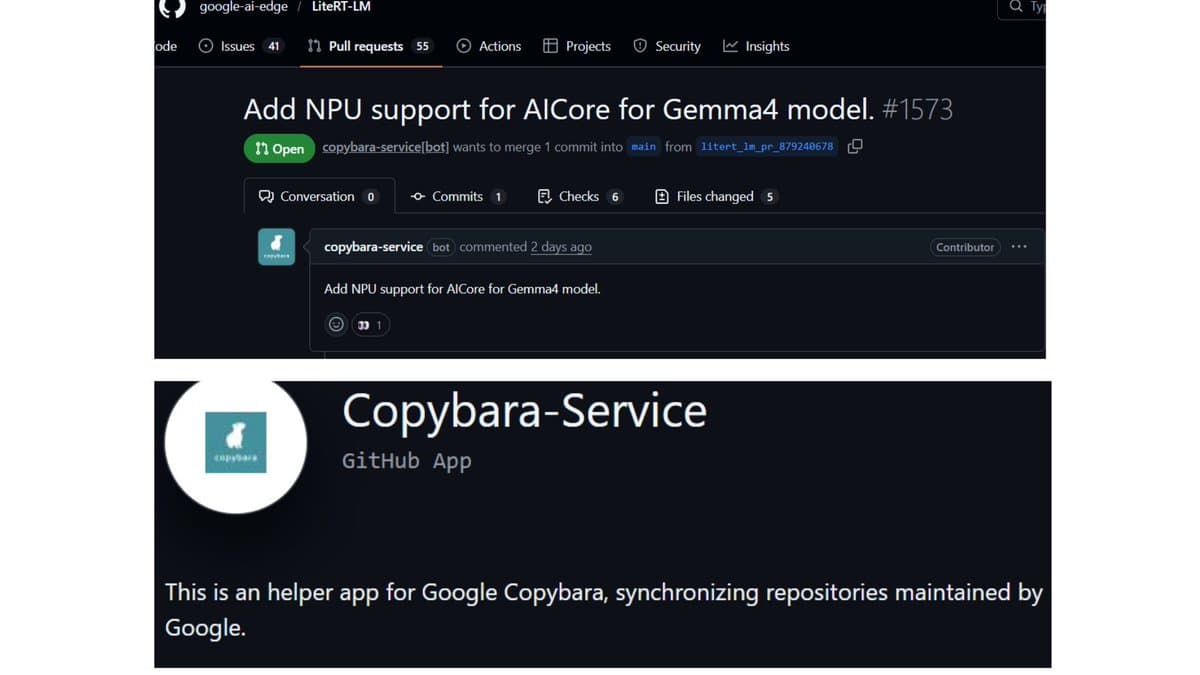
Google has officially signaled the impending arrival of Gemma 4, the fourth major iteration of its open-source large language model family. The announcement, made via social media, represents Google's continued strategic push to democratize advanced AI technology while maintaining a competitive position against other open model initiatives from Meta, Mistral AI, and various research collectives.
The Gemma Evolution: From Inception to Version 4
The Gemma project represents Google's answer to the growing demand for capable, open-weight AI models that researchers, developers, and businesses can run and modify without restrictive licensing. Named after the Latin word for "precious stone," the Gemma family builds upon the technical foundations and architectural insights from Google's flagship Gemini models, but with a focus on accessibility and practical deployment.
Previous Gemma iterations have offered various parameter sizes (notably 2B and 7B) optimized for different hardware constraints, from research servers to potential edge devices. These models have emphasized responsible AI development with built-in safety filters and detailed usage guidelines. The announcement of Gemma 4 suggests not just incremental improvements, but potentially significant architectural advances or capability expansions that could narrow the performance gap with larger, closed models.
Strategic Context: Why Gemma Matters
Google's investment in the Gemma ecosystem serves multiple strategic purposes in the rapidly evolving AI landscape. First, it fosters innovation on Google's AI infrastructure, particularly its Tensor Processing Units (TPUs) and cloud services, as developers building with Gemma are naturally inclined to deploy on Google Cloud Platform. Second, it creates a counterbalance to Meta's dominant Llama family of open models, ensuring no single corporation controls the open-source AI narrative.
Perhaps most importantly, Gemma advances Google's vision of "AI for everyone" by providing capable models that can be fine-tuned for specific languages, cultures, and specialized domains without the costs associated with proprietary API services. This is particularly significant for non-English language communities and researchers in regions with limited computational budgets.
Technical Expectations and Community Impact
While the brief announcement doesn't detail technical specifications, the progression to a fourth major version suggests several likely enhancements. The AI community will be watching for improvements in reasoning capabilities, multimodal processing (potentially integrating vision or audio understanding), extended context windows for longer documents, and more efficient training techniques that reduce computational costs.
The timing is particularly noteworthy as the open-source community increasingly focuses on mixture-of-experts architectures, speculative decoding techniques, and other efficiency innovations that allow smaller models to achieve performance previously requiring much larger parameter counts. Gemma 4 may incorporate some of these cutting-edge approaches.
The Competitive Landscape
The announcement intensifies the already fierce competition in the open model space. Meta's Llama 3 recently set new benchmarks for open models at the 70B parameter scale, while Mistral AI continues to release innovative models like Mixtral that use sparse architectures. French startup H (formerly Holistic AI) has also entered with substantial funding and ambitious goals.
Google's response with Gemma 4 demonstrates that the company isn't ceding the open-source territory to competitors. By leveraging its vast research resources from DeepMind and Google Research, along with unprecedented training infrastructure, Google can potentially release models that balance performance, efficiency, and responsibility in unique ways.
Implications for Developers and Enterprises
For the developer community, Gemma 4's release will provide another high-quality option for building AI-powered applications without vendor lock-in. Enterprises concerned about data privacy can fine-tune Gemma models on their internal data without sending sensitive information to external APIs. Educational institutions can use these models for teaching AI concepts without expensive licensing.
The open nature also enables transparency and auditability—researchers can examine model weights, test for biases, and understand failure modes in ways impossible with closed black-box systems. This aligns with growing regulatory pressures in the EU, US, and elsewhere for more transparent AI systems.
Looking Ahead: The Future of Open AI
Gemma 4's announcement represents more than just another model release—it signifies the maturation of open AI as a sustainable ecosystem. As these models become more capable, they challenge the economic assumptions behind proprietary AI services while accelerating innovation through community collaboration.
The coming weeks will likely bring technical papers, benchmark results, and community evaluations that reveal how Gemma 4 advances the state of open AI. What's already clear is that Google remains fully committed to both the frontier of AI capabilities and the democratization of this transformative technology.
Source: Announcement via @kimmonismus on X/Twitter