What Happened
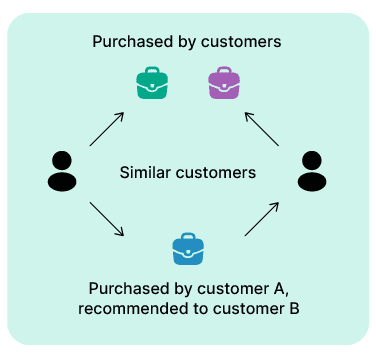
The source article provides a foundational overview of graph-based recommendation systems, specifically tailored for e-commerce applications. While the full text is gated, the core premise is clear: it advocates for moving beyond traditional collaborative filtering or matrix factorization methods by structuring data as a graph. This graph typically connects entities like users, products, product categories, brands, and attributes (e.g., color, material). By leveraging the relationships within this knowledge graph, the system can generate recommendations by traversing paths between a user and potential items of interest.
Technical Details
Graph-based recommender systems fundamentally treat data as a network (or graph) consisting of nodes (entities) and edges (relationships).
Core Components:
Node Types: Common nodes in an e-commerce graph include:
- Users
- Items/Products (SKUs)
- Categories & Subcategories
- Brands
- Attributes (size, color, fabric, style)
- User Actions (view, add-to-cart, purchase)
Edge Types: Relationships define the graph's intelligence.
User --[purchased]--> ItemItem --[belongs_to]--> CategoryItem --[has_attribute]--> Color:RedUser --[viewed]--> ItemItem --[also_bought_with]--> Item(a derived relationship)
How It Works for Recommendations:
The power lies in graph algorithms and embeddings.
- Path-based Reasoning: The system can find items related to a user's past interactions through multi-hop connections. For example, if a user bought a "Linen Blazer," the system can traverse:
User -> Linen Blazer -> [made_of] -> Linen -> [other_items_made_of] -> Linen Shirtto suggest complementary items. - Graph Embeddings: Techniques like Node2Vec or Graph Neural Networks (GNNs) learn low-dimensional vector representations (embeddings) for each node. Items with similar network contexts (e.g., connected to similar users, brands, and attributes) will have similar embeddings. Recommendations then become a nearest-neighbor search in this embedding space. This captures complex, indirect relationships that traditional methods miss.
- Heterogeneous Graphs: Modern systems use Heterogeneous Information Networks (HINs) or Knowledge Graphs to model different node and edge types explicitly, allowing for richer meta-path analysis (e.g.,
User->Brand->Itemvs.User->Category->Item).
Key Advantages Over Traditional Methods:
- Explainability: Recommendations can be justified by showing the connecting path ("Recommended because you liked other items from this brand").
- Cold Start Mitigation: A new item with few user interactions can still be recommended if it is well-connected to popular brands, categories, or attributes.
- Cross-Domain Recommendations: The graph can seamlessly connect different product verticals (e.g., fashion and homeware) if they share attribute nodes like "Minimalist Style" or "Designer X."
Retail & Luxury Implications
For luxury and high-end retail, graph-based recommendations offer nuanced advantages that align with sector-specific needs.
1. Curating the Narrative, Not Just the Product:
Luxury is driven by brand heritage, craftsmanship, and narrative. A knowledge graph can encode nodes for Designer, Collection (e.g., Cruise '25), Inspiration, and Artisan Technique. This allows recommendations to tell a story: "You admired this hand-embroidered jacket from the Maria Grazia Chiuri collection. Explore other pieces from the same atelier or from our 'Heritage Crafts' editorial." This moves suggestions from transactional to experiential.
2. Precision in High-Value Personalization:
Luxury clients expect highly tailored service. A graph can integrate client profile nodes with attributes like Preferred Store, Personal Stylist, Past Event Attendance, and Sustainability Preferences. Recommendations can then weight paths through these high-fidelity signals, ensuring suggestions respect client taste and relationship history far beyond purchase data.
3. Managing Complex Product Relationships:
Luxury items have dense relational data: a bag is part of a Collection, uses Caviar Leather, features Palladium Hardware, and is Styled_With certain runway looks. Graph-based systems excel at modeling these multi-faceted relationships, enabling sophisticated outfit building, cross-category accessorizing, and inventory-based styling ("This belt completes the look from your saved cart").
4. The Cold-Start Challenge for New Collections:
Launching a new collection with limited sales data is a classic cold-start problem. A graph can immediately connect new items to the designer's node, the season's color palette, and affiliated marketing campaigns. Recommendations can flow from user interest in these connected entities, providing a vital launchpad for new products.
Implementation Consideration:
The primary challenge is constructing and maintaining a high-quality, domain-specific knowledge graph. This requires significant data engineering effort to unify product catalogs, client data, content (editorials, lookbooks), and transactional systems into a consistent graph schema. For luxury brands, curating the correct relationships and attributes is a strategic task that demands close collaboration between data scientists, merchandisers, and brand managers.