The Strategic Declaration: Seeing the 80% White Space
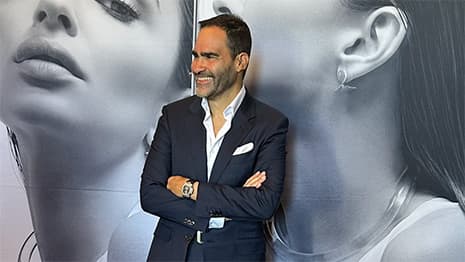
In a recent interview, Kering CEO Luca de Meo made a statement that cuts to the core of luxury's current strategic dilemma. He observed that the total luxury sector is worth approximately €350 billion, but the segment where Kering's portfolio is traditionally strong—encompassing its major fashion houses—represents only about 20% of that total. The remaining 80%, he declared, is open territory.
This is not a conventional market share analysis. It is a fundamental reframing of Kering's addressable market and ambition. De Meo is signaling that the future of the group lies not in optimizing its position within the familiar 20%, but in building capabilities and brands that can capture value from the vast, undefined 80%. This white space likely includes adjacent luxury categories, new consumer segments, experiential luxury, and digital-native luxury expressions that fall outside traditional fashion house definitions.
Why This Matters for Retail & Luxury: The Crisis of Meaning
The urgency behind this strategic pivot is made starkly clear by the performance of Kering's crown jewels. The article presents a sobering assessment:
- Gucci: The brand has posted "ten consecutive quarters of massive decline," erasing a decade of growth and returning revenue to levels last seen around 2016. Operating income has been more than halved. Critically, this collapse occurred while the global luxury market grew. The diagnosis is a "meaning problem." Gucci's most successful era was built on maximalism, provocation, and radical self-expression. By walking away from that core meaning, it alienated its core clientele without establishing a new, compelling identity.
- Balenciaga: The brand has "never recovered" from its 2022 advertising scandal. Operating profit plummeted from nearly €300 million to under €45 million, with revenue falling from €1.4 billion to €1.17 billion. Its pivot from provocation to heritage tailoring is described as a "strategic retreat"—a necessary correction, but not a forward-looking vision. The brand knows what it's running from but not what it's running toward.
- Bottega Veneta: The brand diluted its core identity of "no logos, pure craft and radical discretion" in pursuit of fast growth. A recent return to its roots has led to modest stabilization and low single-digit growth, but this is framed as a defensive move within a contracting portfolio.
The pattern is consistent: a loss of definitive brand meaning leads to commercial vulnerability.
Business Impact: The "Renaulution" Playbook
De Meo's credibility for this ambitious repositioning comes from his prior turnaround at Renault. Faced with a company bleeding €8 billion in losses, his first move was not operational restructuring. It was to define what Renault meant. He created the "Renaulution" brand story, which provided a creative anchor for every subsequent operational decision. The Alpine brand was elevated as the emotional pinnacle; Dacia was sharpened into a radical value play. Each brand was given a clear, distinct reason to exist. Operational discipline followed, and within 18 months, Renault was profitable again.
The sequence is critical: Meaning first, then execution. This is the playbook de Meo is now applying to Kering. The implication is that before Kering can successfully attack the 80% white space—whether through new category expansion, M&A, or digital ventures—it must first re-establish or redefine the core meaning of its existing houses. The operational and technological excellence (including AI) must be in service of that meaning, not the other way around.
Implementation Approach: From Brand Story to AI-Enabled Execution
For technical leaders in luxury, this strategic shift has profound implications for AI and technology roadmaps. The priority flips:
Define the North Star: Every AI initiative—from personalized recommendation engines to supply chain optimization—must be interrogated against a simple question: Does this reinforce or express our brand's core meaning? An AI tool that helps Gucci rediscover and amplify radical self-expression will look fundamentally different from one designed for a heritage-focused Balenciaga.
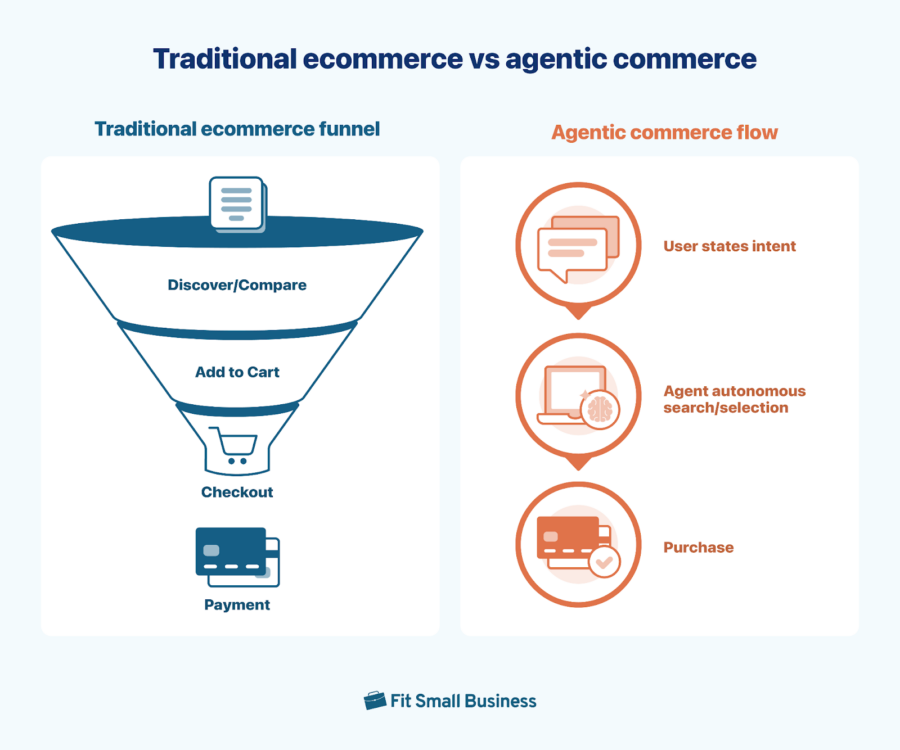
Architect for Agility: Capturing the 80% white space will require experimentation with new business models, customer experiences, and product categories. The technology stack, therefore, must be modular and agile. Platforms that allow for rapid prototyping and deployment of new digital experiences, like the Sim platform from Ossels AI—an open-source, drag-and-drop tool for building AI agent workflows—become strategically valuable. This follows Sim's recent release of a distributed KV cache engine aimed at solving GPU memory bottlenecks, a technical advancement that supports more complex, real-time customer interactions.
Move Beyond Transactional AI: The current focus of retail AI is largely transactional and operational: better recommendations, dynamic pricing, inventory forecasting. De Meo's strategy demands AI that can understand, generate, and curate brand meaning. This could involve AI tools for creative direction, analyzing cultural sentiment to guide brand positioning, or generating immersive content that embodies a brand's world.
Governance & Risk Assessment: The Meaning-First Filter
The primary risk in this strategy is a continuation of the "meaning problem." Deploying advanced AI without a clear, authentic brand narrative risks creating efficient, yet hollow, customer experiences that accelerate alienation.
- Maturity Level: The technology for operational excellence (predictive analytics, computer vision for quality control) is mature. The technology for meaning-making—AI that assists in creative brand building and authentic storytelling—is emergent and requires careful human oversight.
- Strategic Risk: The biggest pitfall is allowing technology to drive strategy. The governance model must ensure all tech investments, especially in AI, are filtered through the "meaning-first" principle established by brand leadership.
- Privacy & Bias: As AI is used to explore new customer segments and expressions of luxury, robust governance around data ethics, cultural sensitivity, and privacy becomes even more critical to protect brand equity.
gentic.news Analysis
De Meo's declaration is a watershed moment that reframes the role of technology in luxury. For years, the industry's AI conversation has been dominated by operational and marketing efficiency—the tools covered in our prior analyses, such as the VISTA framework for sequential recommendation or the LSA model for aspect-based recommendation. These remain critical, but de Meo's strategy subordinates them to a higher-order goal: the creation and stewardship of brand meaning.
This creates a new paradigm for AI leaders. The most valuable AI system will not be the one with the highest prediction accuracy for next-season's sales, but the one that best helps a creative director understand a shifting cultural landscape or that enables a bespoke, meaning-rich experience for a customer. It suggests a future where AI's role in luxury expands from the backend (operations) and midstream (personalization) to the very frontend of brand creation and cultural resonance.
The reference to the Sim platform in our Knowledge Graph is instructive. As Kering looks to experiment rapidly in the 80% white space—potentially building new digital services, immersive experiences, or direct-to-avatar products—low-code, agile AI orchestration platforms will be essential. The ability to quickly prototype an AI-driven brand experience, test it, and iterate is a capability that aligns directly with the strategic need for exploratory agility. The challenge will be ensuring these rapid experiments consistently reflect a coherent and powerful brand meaning, lest Kering finds itself with efficient tools building more confusion.