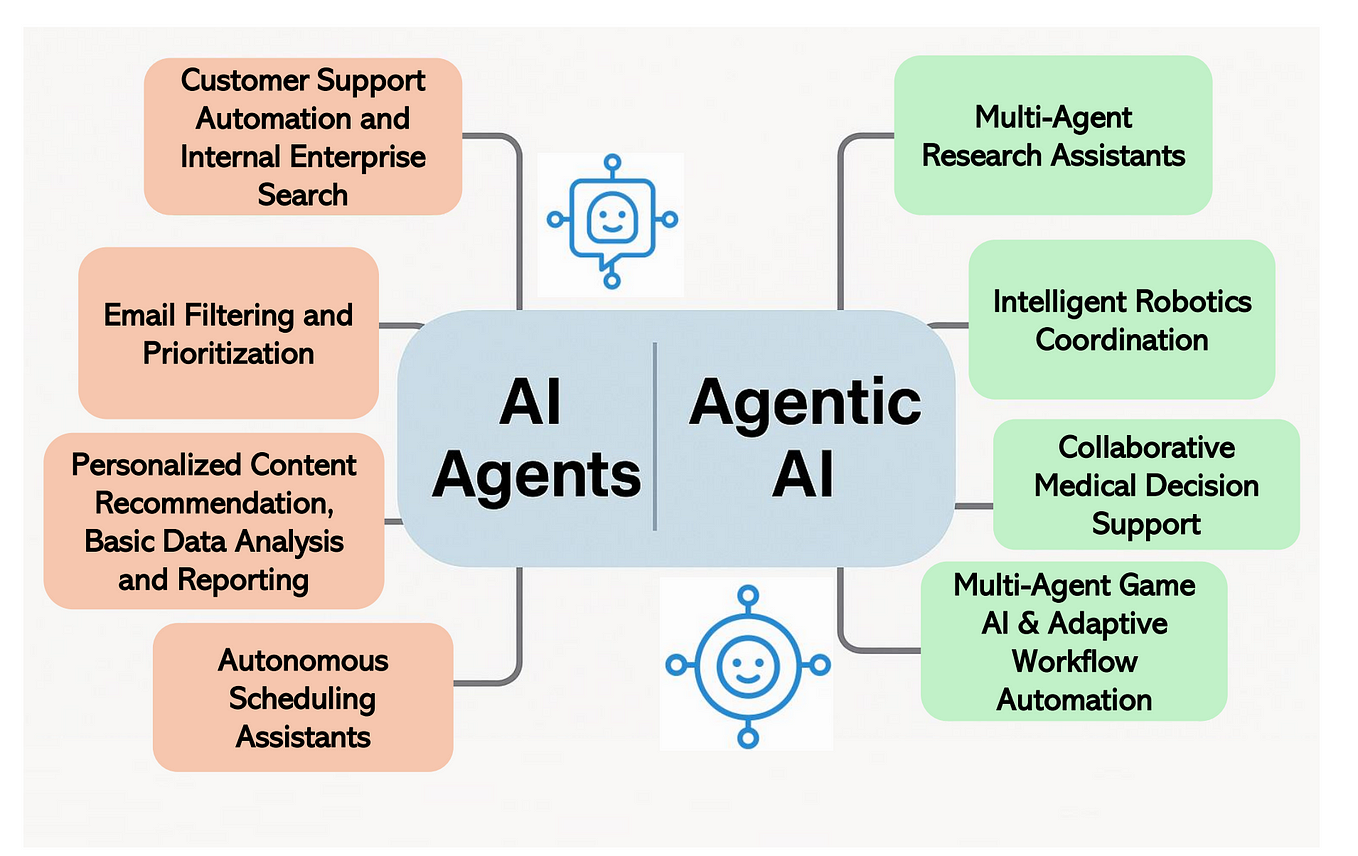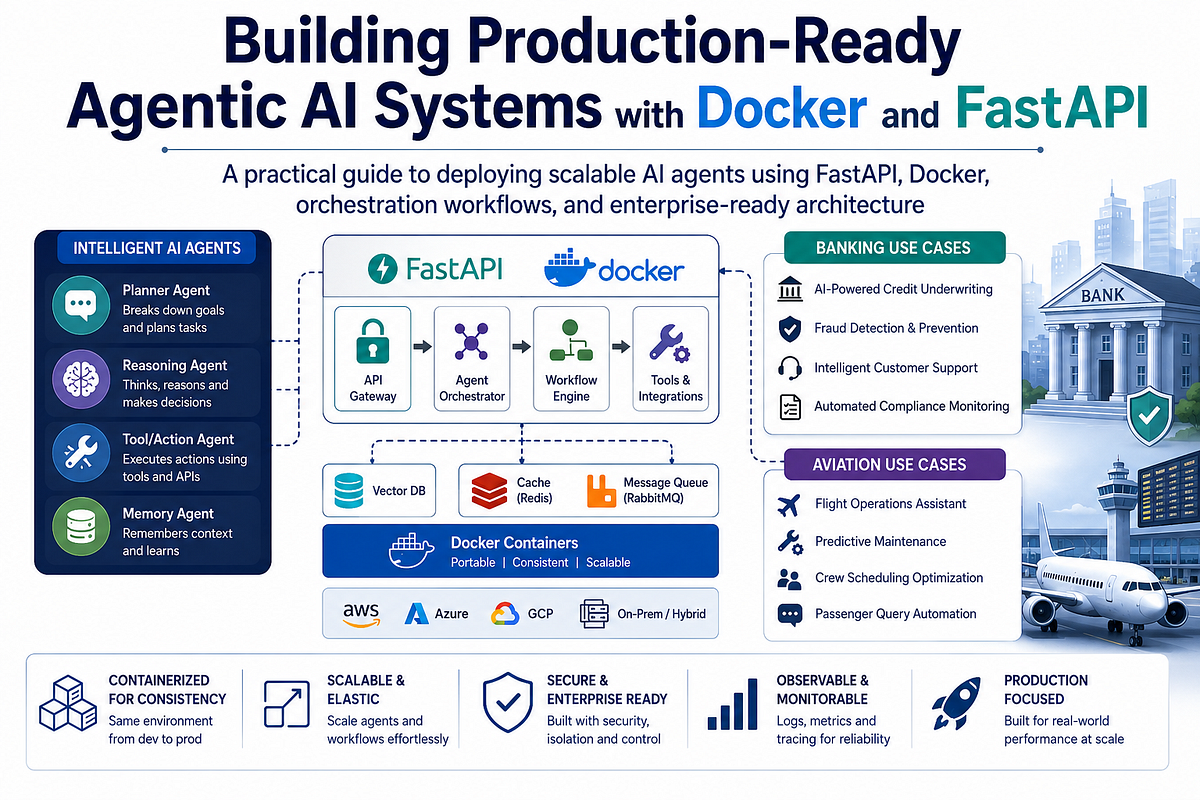
A sobering statistic is circulating among AI practitioners: 88% of AI agents never make it to production. Not because the underlying technology is flawed, but because the market is flooded with what industry insiders call "agent washing"—the practice of rebranding chatbots, robotic process automation (RPA) tools, and hardcoded scripts as "agentic AI" to capitalize on the hype.
According to an analysis from a practitioner who builds multi-agent systems for software development lifecycle (SDLC) automation, out of thousands of vendors claiming to sell AI agents, only about 130 are building genuinely agentic systems. The rest are, in essence, expensive chatbots with a new label. This has real consequences: a March 2026 survey of 650 enterprise tech leaders found that while 78% have at least one agent pilot running, only 14% have successfully scaled an agent to production.
For retail and luxury leaders, where AI promises transformative efficiency in personalization, supply chain, and customer service, this gap between pilot and production represents significant wasted investment and stalled innovation. The core issue is foundational—teams are often building on systems that were never truly agentic to begin with.
What Agent Washing Actually Looks Like
The analysis identifies three common patterns of agent washing:
- The Relabeled Automation: A marketing platform that orchestrates email sequences based on fixed, pre-defined rules gets rebranded as an "agentic marketing system." The underlying logic hasn't changed; only the marketing has.
- The Chatbot Upgrade: A customer service bot that routes tickets to human agents based on simple keyword matching is suddenly called an "autonomous support agent." It's still matching keywords and routing tickets.
- The Single-LLM Wrapper: A tool that makes a single API call to a large language model (like GPT), formats the response, and returns it. This is an API call with formatting, not an agent. A true agent makes numerous internal calls to reason, plan, execute tools, evaluate results, and iterate.
The common thread? None of these systems genuinely decide what to do next. They follow a script. When the script doesn't cover a situation, they break.
The 5-Point "Is This Actually an Agent?" Checklist
To cut through the noise, the analysis provides a concrete, five-point checklist derived from evaluating and building production systems.
1. Does It Reason About What to Do Next?
A real agent receives a high-level goal and decides its own sequence of steps. It does not follow a fixed, directed acyclic graph (DAG) or a hardcoded workflow. The test: give the system a novel task it hasn't seen before. Does it figure out a viable path, or does it crash?
2. Does It Recover When a Step Fails?
This is where most "agents" expose themselves. A real agent handles failure as part of its core workflow—it can retry with a different approach, fall back to an alternative tool, or gracefully degrade its output. An agent-washed product typically crashes, returns garbage, or silently ignores the failure. The test: deliberately break one of its dependencies (e.g., rate-limit an API). Does it adapt or die?
3. Does It Complete Tasks End-to-End Without Hand-Holding?
Real agents take a goal and deliver a result. They don't stop at every minor checkpoint to ask a human what to do next. While human-in-the-loop (HITL) is valid for high-stakes decisions, there's a difference between an agent that does 95% of the work and surfaces a key decision point, versus a system that needs human input at every step but labels each step an "agent action." The test: give it a multi-step task and walk away. Is it done, intelligently blocked, or did it fail silently?
4. Does It Use Tools Dynamically?
A real agent selects and uses tools (like APIs, databases, search functions) based on what the situation demands, not a pre-programmed sequence. The key signal: can the agent use a tool it wasn't explicitly instructed to use for this specific task? If it can reason about its available tool inventory and pick the right one, that's real agency. The test: give it a task that requires a novel combination of tools. Does it compose the right set?
5. Does It Handle Novel Inputs?
The demo always works. The question is what happens with input the system has never encountered. An agent-washed product falls apart outside its training distribution. A real agent applies its reasoning capability to novel situations—perhaps not perfectly, but it doesn't catastrophically break or hallucinate. The test: feed it an input that's structurally different from the demo examples. Real agents degrade gracefully.
What Production-Ready Agents Actually Look Like
Passing the checklist gets you to "real agent." But there's another gap between "real agent" and "agent that can survive in a live retail environment." Production-ready agents have two critical, non-negotiable attributes:
They're Observable. Every decision, intermediate reasoning step, tool selection, and retry must be logged and traceable. When a customer-facing agent makes a bizarre recommendation at 2 AM, you need to reconstruct its entire thought process to debug it. Without comprehensive observability, you cannot responsibly deploy.
They're Cost-Controlled. The analysis highlights a stark number: an unconstrained agent solving a single software engineering task can cost $5–8 in API fees. At scale, this is untenable. Production agents implement strategies like model routing—using expensive frontier models (like GPT-4) only for complex reasoning steps, and cheaper, smaller models for simpler tasks. They also implement strict budget caps and kill switches to prevent runaway costs.
The Academic Counterpoint: AutoModel for Recommender Systems
This practical critique of the agent landscape is complemented by academic research pushing the boundaries of what's possible. The arXiv paper "AutoModel: An Agent Based Architecture for the Full Lifecycle of Industrial Recommender Systems" (arXiv:2603.26085v1) presents a vision of a fully agentic recommendation engine.
Instead of a fixed recall-and-rank pipeline, AutoModel organizes recommendation as a set of interacting, evolving agents with long-term memory and self-improvement capabilities. It instantiates three core agents:
- AutoTrain: For automated model design, training, and reproduction of academic papers.
- AutoFeature: For autonomous data analysis and feature evolution.
- AutoPerf: For performance monitoring, deployment, and online experimentation.
These agents are connected by a shared coordination and knowledge layer. In a case study, the paper_autotrain module demonstrated how AutoTrain could automate the reproduction of a research paper's model—closing the loop from parsing the method to code generation, large-scale training, and offline evaluation, significantly reducing manual engineering effort.
Retail & Luxury Implications: From Hype to Hard ROI
The juxtaposition of the critical industry analysis and the ambitious academic research defines the current moment for retail AI leaders.
The immediate priority is vendor and tool evaluation. Before signing a seven-figure contract for an "agentic personalization engine" or an "autonomous supply chain optimizer," apply the 5-point checklist. Is the system reasoning and recovering, or is it a sophisticated but ultimately brittle workflow? The 88% failure rate suggests most current offerings will fall short.
The promise is profound. A true multi-agent system, like the AutoModel vision applied to retail, could manage the entire lifecycle of a recommendation system: one agent continuously A/B testing new algorithms, another mining customer interaction data for new behavioral signals, and a third managing the resource allocation and rollout of winning models—all with minimal human intervention. This moves from static personalization to a living, learning commercial engine.
The path forward is incremental. The leap from today's often-washed chatbots to a fully agentic AutoModel is vast. The pragmatic approach for retailers is to:
- Start with internal, non-customer-facing agents where failure is less brand-damaging (e.g., automated data quality checks, inventory report generation).
- Demand full observability and cost controls from day one in any pilot.
- Build expertise in-house to evaluate agentic claims critically, using frameworks like the one presented here.
The era of agentic AI in retail is coming, but its first phase is necessarily one of skepticism, rigorous evaluation, and foundational building. The brands that skip this step in their rush to adopt will likely join the 88% whose agents never see the light of day.