The Innovation — What the source reports
According to a report from Modern Retail, home improvement giant Lowe’s is engaged in a strategic effort to manage and prevent "AI agent overload." While the specific details of Lowe's internal initiatives are not fully detailed in the provided source, the core challenge is clear: as the company experiments with and deploys various autonomous AI agents—software systems that use large language models to perceive, decide, and act—it faces the risk of creating a fragmented, inefficient, and potentially chaotic digital ecosystem.
The term "overload" suggests a scenario where too many agents are developed in silos, performing overlapping or conflicting tasks, leading to wasted resources, inconsistent customer or employee experiences, and increased operational complexity. Lowe’s proactive stance indicates a move from ad-hoc experimentation to governed implementation, aiming to establish frameworks that ensure these powerful tools work in a coordinated, secure, and effective manner.
Why This Matters for Retail & Luxury
Lowe's experience is a canary in the coal mine for the entire retail and luxury sector. The potential applications for AI agents are vast and compelling:
- Hyper-Personalized Customer Service: Agents could act as 24/7 personal shopping assistants, handling complex inquiries, managing post-purchase care, and facilitating bespoke product configurations.
- Intelligent Supply Chain & Inventory Management: Autonomous agents could monitor global stock levels, predict regional demand shifts, and automatically initiate replenishment or inter-store transfers.
- Automated Visual Merchandising & Content Creation: Agents could generate and A/B test product description copy, create social media content tailored to different audiences, or even propose virtual store layouts.
- Employee Co-pilots: In-store staff could use agentic tools to instantly access deep product knowledge, handle complex customer requests (like sourcing rare materials), or manage inventory tasks via natural language.
However, Lowe’s identified challenge underscores that the business value of these agents is not in their isolated capabilities, but in their orchestration. An unmanaged proliferation leads to a "tower of Babel" problem where agents cannot communicate, may work at cross-purposes, and create security and data governance nightmares.
Business Impact — Quantified if available, honest if not
The direct business impact of preventing agent overload is primarily defensive and strategic, though it enables future offensive gains. Unchecked proliferation leads to:
- Increased Costs: Duplicative development efforts, multiple licensing fees for similar LLM backbones, and the computational overhead of running numerous unoptimized agents.
- Operational Friction: Conflicting agent actions (e.g., one agent recommending a price increase while another initiates a promotion) and broken customer experiences.
- Security & Compliance Risks: Every new agent is a potential vector for data leakage or a point of failure in regulatory compliance (e.g., GDPR, CCPA), especially in luxury where customer data is highly sensitive.
By establishing governance early, Lowe’s is investing in a foundation that will allow it to scale AI agent value efficiently. The impact is the avoidance of future technical debt and the acceleration of reliable, integrated agent deployment.
Implementation Approach — Technical requirements, complexity, effort
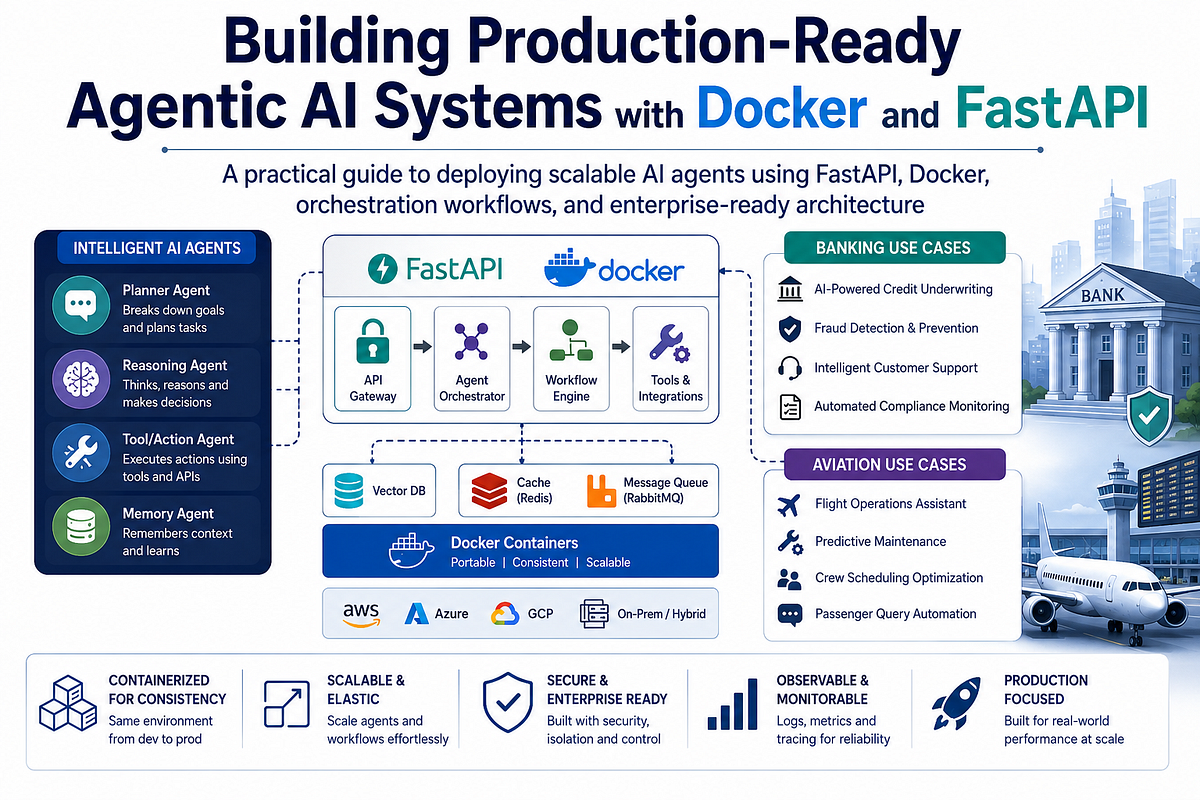
Addressing agent overload requires a shift from project-based AI to platform-based AI. The implementation is non-trivial and involves several key pillars:
- Centralized Agent Registry & Governance: A single source of truth documenting all active and in-development agents, their purposes, owners, and the data/APIs they access. This is a prerequisite for control.
- Standardized Development Framework: Providing teams with approved tools, LLM APIs (like Google's Gemini series or others), and architectural patterns (e.g., using the Universal Commerce Protocol for secure transactions) to build agents that are inherently interoperable.
- Orchestration Layer: A central system (potentially built on platforms like Google Cloud Vertex AI) to manage the handoffs, communication, and conflict resolution between agents. This layer decides which agent handles a given task or request.
- Unified Data & API Access: Agents must interact with clean, governed data sources and enterprise APIs through secure, standardized interfaces, not via individual, brittle connections.
The complexity is high, as it involves significant cross-departmental coordination, establishing new Center of Excellence (CoE) teams, and potentially retiring or consolidating existing rogue agents. The effort is strategic and ongoing, not a one-time project.
Governance & Risk Assessment — Privacy, bias, maturity level
Maturity Level: Lowe's public discussion of this challenge places it at an advanced stage of AI adoption—the "scale" phase. Many retailers are still in pilot mode. This indicates that agentic AI is moving from hype to operational reality for leading players.
Key Risks & Mitigations:
- Data Privacy & Security: Each agent increases the attack surface. Mitigation requires strict access controls, auditing all agent actions, and ensuring data anonymization where possible. Luxury brands, with their ultra-high-net-worth clientele, must be especially vigilant.
- Brand Voice & Experience Dilution: An uncoordinated swarm of agents could communicate in inconsistent tones, damaging a carefully cultivated brand image. Governance must include brand guideline enforcement and centralized content approval workflows for customer-facing agents.
- Bias & Fairness: Agents trained on or interacting with biased data can perpetuate discrimination in product recommendations, marketing, or pricing. Continuous monitoring for bias in agent decisions is essential.
- Vendor Lock-in: Over-reliance on a single LLM provider (e.g., Google's Gemini ecosystem) creates risk. A multi-model strategy, using open-source options where feasible, provides resilience.
Lowe’s journey is a critical case study. It demonstrates that the next frontier in retail AI is not just building intelligent agents, but building the intelligent organization capable of managing them.