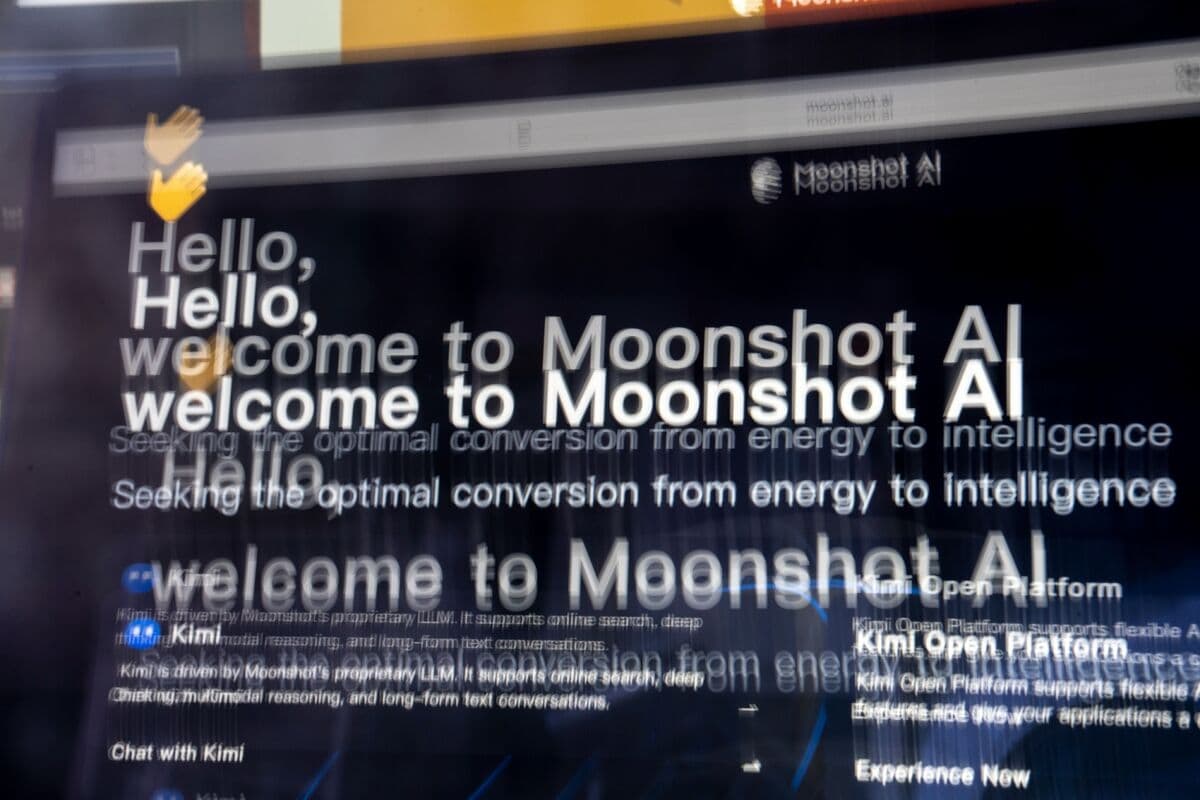
Chinese artificial intelligence startup Moonshot AI is in advanced talks to raise as much as $1 billion in an expanded funding round, a deal that would value the Beijing-based company at approximately $18 billion. This staggering figure represents a more than fourfold increase in the company's valuation in just three months, according to a report from Bloomberg. The funding round underscores the explosive growth and intense investor interest in China's homegrown AI developers as they accelerate efforts to compete with established leaders in Silicon Valley.
The Meteoric Trajectory of a Chinese "AI Tiger"
Founded just over two years ago, Moonshot AI has been dubbed one of China's "AI Tiger" companies by investors, a label reflecting its aggressive growth and potential to become a dominant force. The company's journey to an $18 billion valuation is breathtakingly fast, even by the standards of the high-flying AI sector. This latest round follows a previous funding achievement in late February 2026, where the company was reported to have reached a $10 billion valuation. The leap from $10 billion to $18 billion in a matter of weeks signals not just confidence in Moonshot specifically, but a broader bet on China's strategic position in the global AI landscape.
Moonshot AI is best known for developing Kimi, a popular large language model (LLM) and AI assistant in China, and its related project Kimi Claw. The company's technical approach has drawn attention, including its use of techniques like model distillation.
Context: A Competitive and Contested Landscape
This funding news arrives amid a complex backdrop of global AI competition and technical intrigue. Notably, in late February, AI safety and research company Anthropic identified Moonshot AI as orchestrating a model distillation attack on its own AI system, Claude. Model distillation is a technique where a smaller, less resource-intensive model is trained to mimic the behavior of a larger, more powerful one. While a standard research practice, framing it as an "attack" by Anthropic highlights the increasingly competitive and proprietary nature of advanced AI model development. This event underscores the high-stakes environment where companies are fiercely guarding their technological advantages while seeking to learn from—or replicate—the capabilities of rivals.
Furthermore, the AI sector globally is grappling with significant constraints. Recent analysis from March 2026 indicates that compute scarcity is making AI development extraordinarily expensive, forcing companies to prioritize high-value tasks over dreams of widespread, low-cost automation. This scarcity elevates the importance of massive funding rounds like Moonshot's, as capital is needed not just for talent but to secure access to the vital semiconductor and cloud infrastructure required to train cutting-edge models.
Implications for the Global AI Order
The monumental valuation of Moonshot AI carries several profound implications:
Decoupling of AI Leadership: The funding is a powerful signal that substantial capital within China is committed to building domestic, sovereign AI capabilities that compete directly with Silicon Valley giants like OpenAI, Anthropic, and Google. It challenges the notion of a single, US-centric center of gravity for foundational AI innovation.
Validation of the Chinese AI Ecosystem: The willingness of investors to assign an $18 billion price tag to a two-year-old startup demonstrates deep belief in the underlying talent, research, and market potential within China. It suggests that entities like Moonshot are seen as viable vehicles to capture value from AI's integration into the digital management of enterprises and the broader white-collar economy.
Intensification of the Talent and Resource War: This capital infusion will allow Moonshot to aggressively hire top researchers and engineers, further heating up the global competition for AI talent. It also provides the war chest necessary to navigate the expensive compute landscape, potentially locking in advantages that less-funded rivals cannot match.
Geopolitical Dimensions: As AI becomes increasingly central to economic and strategic power, the rise of well-capitalized national champions like Moonshot adds a new layer to US-China technological competition. The flow of investment into such companies will be closely watched by policymakers on both sides of the Pacific.
Looking Ahead: Challenges on the Horizon
Despite the investor euphoria, Moonshot AI and its peers face formidable challenges. Beyond the technical hurdles and compute scarcity, the AI industry is beginning to show complex societal impacts. Recent research has revealed that AI adoption is creating a workplace divide, boosting the productivity of experienced workers while paradoxically reducing the hiring and training opportunities for young talent. Furthermore, as AI begins to tangibly appear in official productivity statistics—helping to resolve the long-standing "productivity paradox"—the pressure will mount for these costly technologies to demonstrate clear, measurable returns on investment at a macroeconomic scale.
For Moonshot AI, the $18 billion valuation is not a finish line but a starting gate. It brings immense resources alongside equally immense expectations. The company must now execute on its roadmap, evolve its Kimi models, navigate an intricate global competitive landscape, and prove that its technology can generate sustainable value. Its journey will be a critical case study in whether China can cultivate AI giants that not only rival but potentially redefine the frontiers of what's possible in artificial intelligence.
Source: Bloomberg, "China AI Startup Moonshot Snags Funds at $18 Billion Valuation" (March 14, 2026). Additional context integrated from the provided knowledge graph.