Key Takeaways
- Researchers propose a novel ensemble method for collaborative filtering that uses shared user and item embeddings within a weighted similarity framework.
- It simplifies architecture, reduces computational overhead, and maintains competitive accuracy across different recommendation scenarios.
What Happened
A new research paper, "Collaborative Filtering Through Weighted Similarities of User and Item Embeddings," proposes a novel ensemble method for recommender systems. The work addresses a persistent tension in the field: the push toward increasingly complex neural architectures versus the enduring value of simpler, more interpretable methods like matrix factorization (MF).
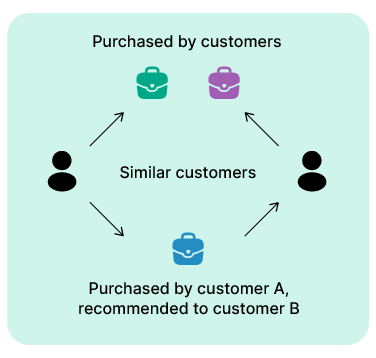
The core innovation is a unified framework that combines two fundamental recommendation strategies—user-item (personalized recommendations based on a user's history) and item-item ("customers who bought this also bought")—using a single set of shared user and item embeddings. These embeddings are derived from a base matrix factorization algorithm.
The model then generates its final top-N recommendations by calculating a weighted similarity score. This score blends:
- The similarity between a target user's embedding and a candidate item's embedding (user-item component).
- The similarity between a candidate item's embedding and the embeddings of items the user has already interacted with (item-item component).
A key design principle is architectural simplicity. The model reuses the hyperparameters from the underlying MF algorithm, eliminating the need for separate, costly fine-tuning of the embeddings for each recommendation task. The authors provide an open-source implementation to facilitate adoption.
Technical Details
The method operates in a classic collaborative filtering setting, relying solely on user-item interaction data (e.g., clicks, purchases, ratings).
- Embedding Generation: A standard matrix factorization technique (like Alternating Least Squares or Singular Value Decomposition) is first applied to the interaction matrix to produce dense, low-dimensional vector representations for every user and every item.
- Similarity Calculation: For a given user (u) and a candidate item (i), two cosine similarity scores are computed:
- (sim_{ui}): Direct similarity between user (u)'s embedding and item (i)'s embedding.
- (sim_{ii}): An aggregated similarity between item (i)'s embedding and the embeddings of all items in user (u)'s history.
- Weighted Ensemble: A final relevance score is calculated as a weighted sum: (score(u,i) = \alpha \cdot sim_{ui} + (1-\alpha) \cdot sim_{ii}).
- The parameter (\alpha) controls the blend between the two strategies. An (\alpha) near 1.0 favors pure user-item recommendations, while an (\alpha) near 0.0 favors item-item recommendations.
- Robustness: The paper's experiments demonstrate that this method performs robustly across different datasets where the optimal recommendation strategy might vary. The system can adapt by tuning the single (\alpha) parameter rather than retraining entire model architectures.
The research was validated through extensive experiments on multiple public datasets, where it achieved competitive performance with state-of-the-art neural methods while offering significantly reduced computational overhead and easier implementation.
Retail & Luxury Implications
For retail and luxury AI teams, this research presents a compelling option for practical, maintainable recommendation engines. While massive neural models deployed by tech giants capture headlines, this work underscores that elegant, hybrid solutions can deliver substantial business value without commensurate complexity.

Potential Applications & Considerations:
- Efficiency for Niche Audiences & Long-Tail Items: Luxury retail often deals with smaller, high-value customer cohorts and limited-inventory items. A lightweight, efficient model that performs well on sparse data can be more practical than a data-hungry giant neural network. This method could power recommendations on boutique brand sites, private client portals, or for new collections with limited interaction history.
- Interpretability & Control: The weighted parameter (\alpha) offers merchants and CRM teams a tangible lever. They could theoretically adjust the blend between personalized taste (user-item) and stylistic or complementary bundling (item-item) based on campaign objectives—for example, pushing complete looks (high item-item) versus personalized discovery (high user-item).
- Foundation for Hybrid Systems: The paper explicitly positions itself within the trend of hybrid models. Luxury retailers, who often blend collaborative filtering with rich content-based features (fabric, color, designer, silhouette), could use this unified embedding framework as a stable, efficient backbone. The shared embeddings could be enriched with metadata and fed into downstream models.
- A Pragmatic Counter-Narrative: For technical leaders being pressured to adopt the latest trillion-parameter architecture, this research provides a scientifically backed justification for choosing simpler, more robust solutions where appropriate. It validates the strategy of building on battle-tested MF techniques while strategically incorporating modern ensemble concepts.
The gap between this academic proof-of-concept and a production system involves integrating it with a real-time serving infrastructure, A/B testing frameworks, and potentially combining it with other signals (real-time session data, image-based similarities). However, its simplicity lowers the barrier to prototyping and experimentation significantly.