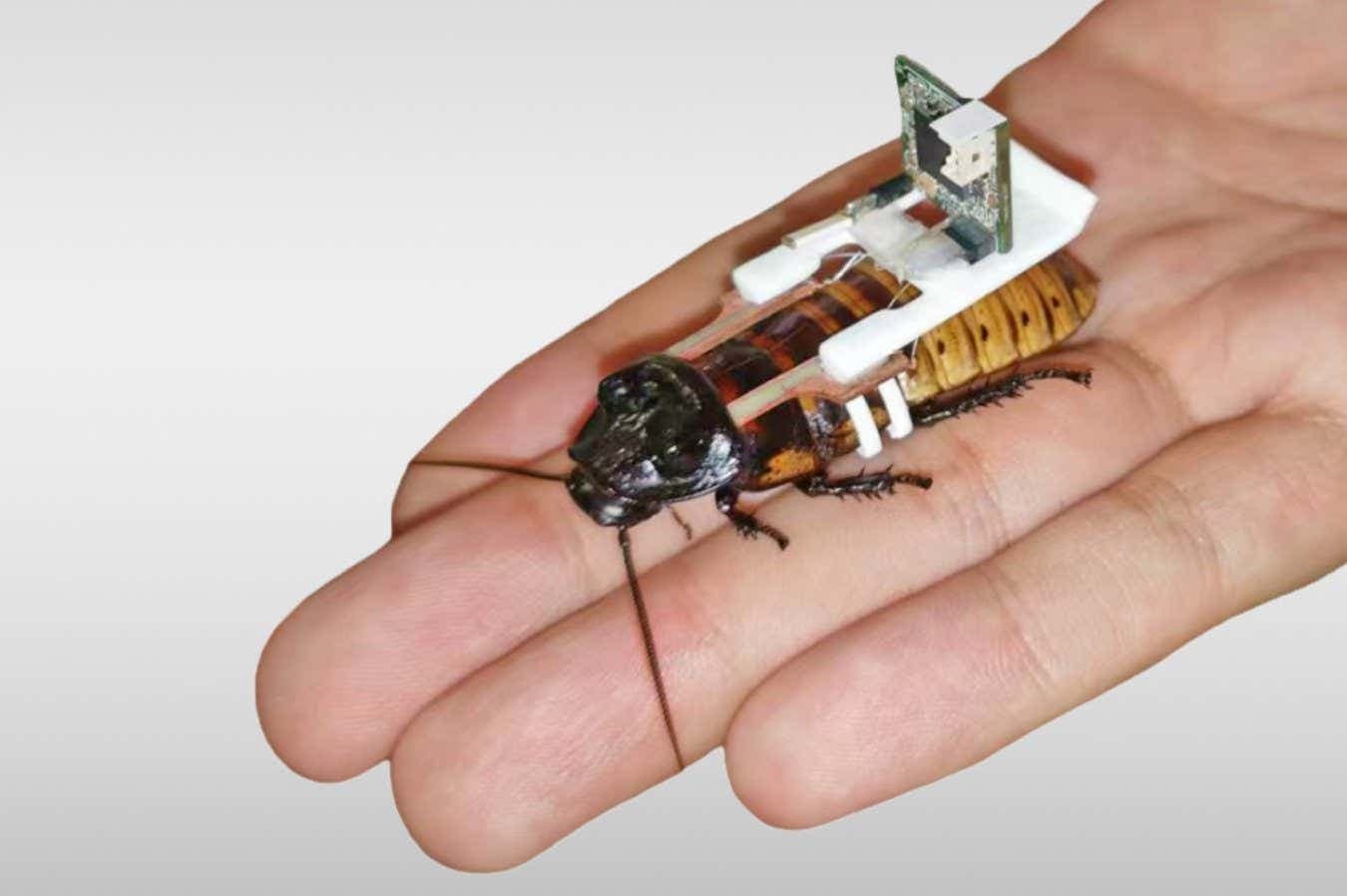
A brief social media post from AI researcher Rohan Paul indicates that NATO is conducting tests involving a novel form of battlefield reconnaissance: cyborg insects. According to the post, German defense startup SWARM Biotactics is behind the technology, which involves equipping live cockroaches with electronic backpacks to create AI-guided biohybrid systems.
What Happened

The report, based on a retweet from AI observer Rohan Paul, states that "NATO [is] testing real cockroaches for war situations." The technology is attributed to SWARM Biotactics, a German defense startup. The core concept involves using live insects as platforms, fitting them with lightweight sensor and communication packages—often called "backpacks"—to navigate complex, denied environments where traditional drones or robots might fail.
Context & Technical Rationale
The use of insects as platforms for electronic payloads is not a new idea in research labs; it's a subfield of biohybrid systems or cyborg insects. The fundamental advantage is biological: a cockroach is an exceptionally robust, small, energy-efficient mobile platform capable of traversing rubble, small openings, and uneven terrain that challenges wheeled or legged robots.
The presumed technological leap from SWARM Biotactics likely lies in the miniaturization of the payload and the implementation of AI-driven guidance. Instead of merely recording and transmitting data from a passively roaming insect, an AI system could interpret sensor data (from cameras, microphones, or chemical sensors) and issue stimuli to steer the cockroach toward points of interest. This could involve interfacing with the insect's nervous system or using sensory cues (like small electrical pulses to antennae) to direct movement.
For NATO, testing such systems aligns with a focus on gaining intelligence, surveillance, and reconnaissance (ISR) advantages in urban or complex terrains. A cyborg insect could be deployed to scout inside buildings, tunnels, or dense rubble where radio signals are weak and larger systems are too conspicuous or incapable of entry.
Known Challenges & Ethical Considerations

Previous research in this area, such as work from institutions like North Carolina State University on remote-controlled cyborg cockroaches, has faced significant hurdles. These include:
- Miniaturization: Creating a power source, processor, sensors, and transmitter small and light enough not to impede the insect.
- Control Fidelity: Achieving reliable, precise navigation in unpredictable real-world environments.
- Power: Operating for a useful mission duration before requiring a recharge.
- Ethics & Public Perception: The use of live animals in warfare raises distinct ethical and legal questions compared to purely mechanical systems.
The NATO testing phase is crucial to determine if SWARM Biotactics has made practical progress in overcoming these barriers.
gentic.news Analysis
This development sits at a specific and contentious intersection of trends we've been tracking: the militarization of bio-inspired robotics and the push for asymmetric ISR tools. While the core concept is years old, a NATO evaluation signifies a serious step toward potential operational deployment. It reflects a continued search for solutions to the "last meter" problem in reconnaissance—gathering data from the most confined, hostile spaces.
Technically, the key differentiator for SWARM Biotactics is unlikely to be the insect platform itself, but the AI and micro-electronics stack. The real test is whether their AI can perform real-time sensor processing and pathfinding on a severely constrained compute budget, translating high-level objectives into reliable insect guidance. If successful, it represents a novel application of edge AI for embodied intelligence.
From a defense industry perspective, this aligns with a broader pattern of militaries exploring small, cheap, and potentially disposable autonomous systems—a trend exemplified by the shift towards drone swarms. A cyborg insect could be seen as the ultimate miniaturization of this concept, leveraging millions of years of evolutionary engineering. However, the scalability and logistical challenges of maintaining live insect colonies for military use remain a significant practical hurdle compared to manufacturing thousands of micro-drones.
Frequently Asked Questions
What is SWARM Biotactics?
SWARM Biotactics is a German defense startup developing biohybrid reconnaissance systems. Their reported technology involves fitting live insects, specifically cockroaches, with AI-guided sensor backpacks to navigate complex environments for military or security applications.
How do you control a cyborg cockroach?
Control systems typically interface with the insect's sensory organs. A common method researched in labs involves attaching micro-electrodes to the antennae or cerci (sensory appendages). By sending small electrical pulses, researchers can trick the insect into perceiving a obstacle or stimulus, causing it to turn in a desired direction. AI algorithms would process camera feed and other sensor data to determine where to steer the insect.
Is using live insects in warfare ethical?
The use of cyborg insects in warfare raises significant ethical questions distinct from those surrounding robots. Concerns include animal welfare, the potential for suffering, and the application of legal frameworks like the principles of distinction and proportionality to living platforms. There is no broad international consensus on this issue, as the technology is still emerging.
What are the advantages over a tiny drone?
Cockroaches possess superior mobility in cluttered, confined spaces (like rubble), have innate camouflage, and are highly energy-efficient, deriving mobility power from consumed food. They can also be more resilient to minor physical damage. The main disadvantages are the lack of direct control compared to a drone, ethical issues, and potential limitations in payload capacity and mission reliability.