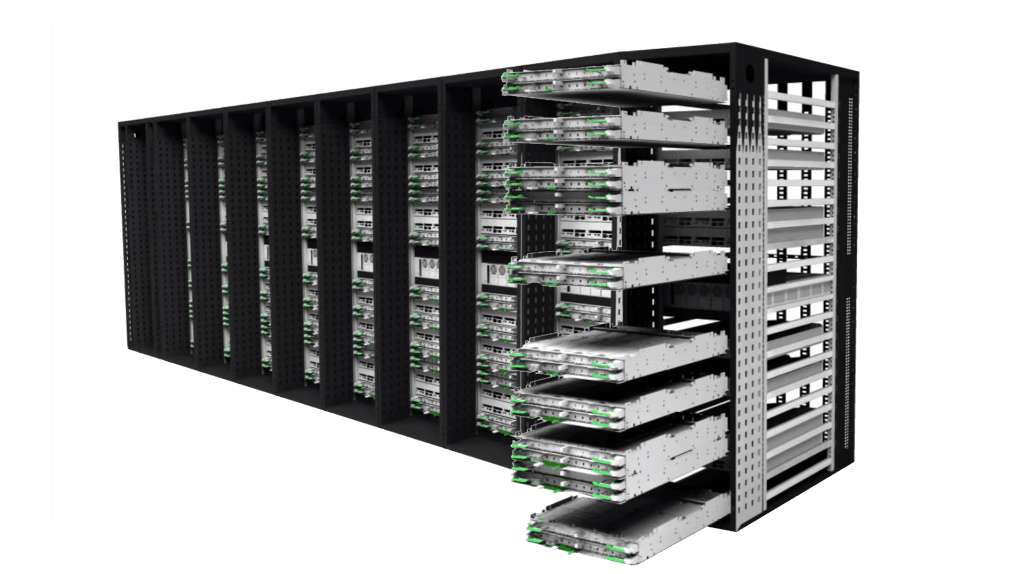
The Open Compute Project Foundation published data center architecture standards for integrating multi-modal QPU infrastructure into existing data center environments. The standard targets rack form factors, power delivery, cooling, and networking for quantum processing units.
Key facts
- OCP released architecture standards for multi-modal QPU integration.
- Covers rack form factors, power, cooling, and networking.
- Not prescriptive about qubit modalities — superconducting, trapped ion, photonic, neutral atom.
- Quantum processors require cryogenic cooling to 15-20 millikelvin.
- OCP standards typically take 12-18 months for production hardware adoption.
Key Takeaways
- OCP published data center standards for QPU integration, aiming to standardize quantum-classical hybrid infrastructure.
- The standard covers rack, power, cooling, and networking.
What OCP's QPU Standard Covers
The Open Compute Project (OCP) Foundation released architecture standards for integrating quantum processing units (QPUs) into data centers According to the Quantum Computing Report. OCP's standard covers rack form factors, power delivery, cooling, and networking for QPU hardware. The initiative aims to reduce the fragmentation that has slowed quantum-classical hybrid deployments.
The standard is not prescriptive about specific qubit modalities — superconducting, trapped ion, photonic, and neutral atom — allowing hardware vendors to comply regardless of underlying technology. OCP's involvement signals that quantum computing is moving from lab experiments toward production data center deployments.
Why This Matters for AI Infrastructure
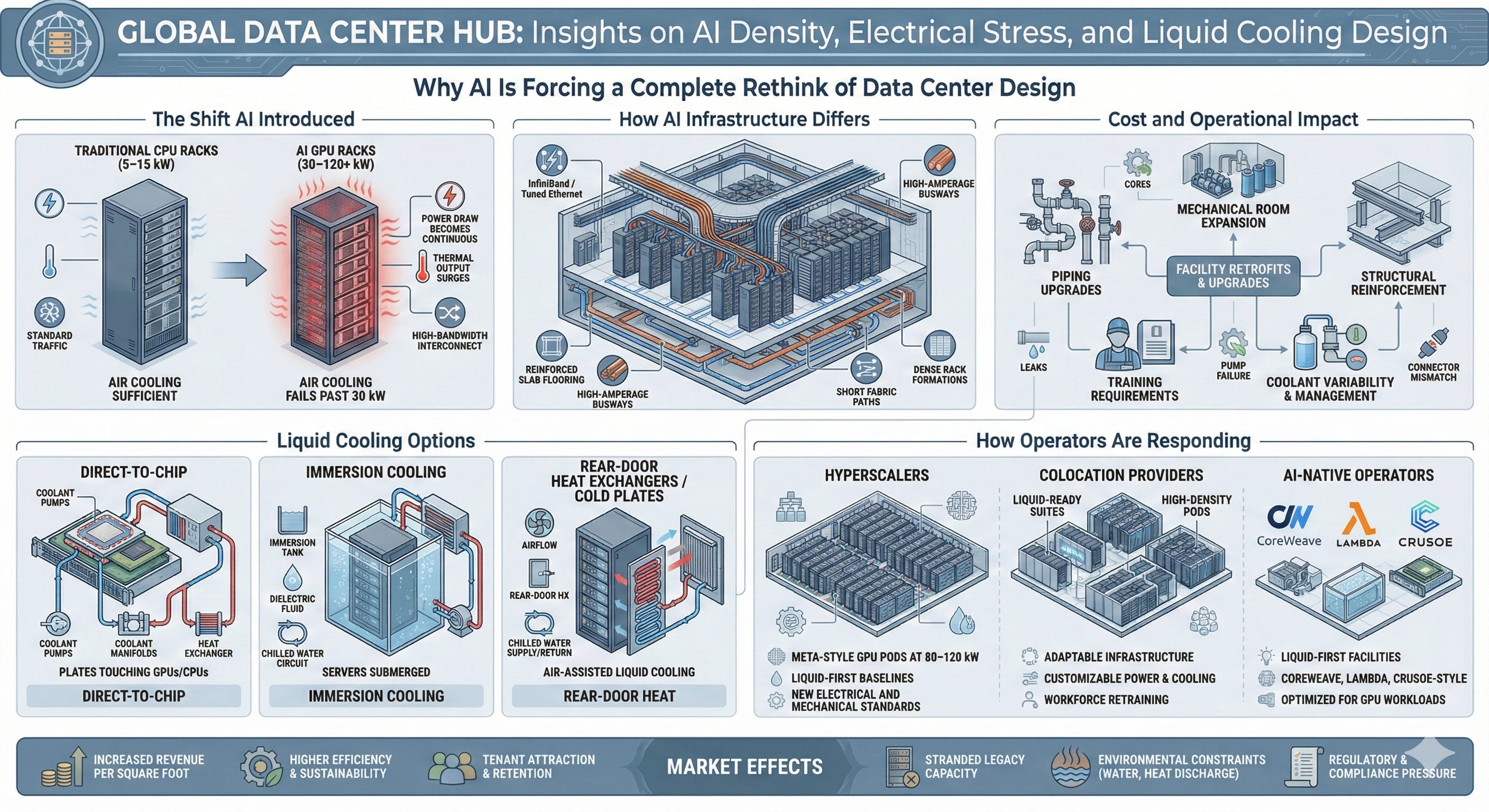
For AI operators already running GPU clusters at 40+ kW per rack, the QPU standard introduces a new set of constraints. Quantum processors typically require cryogenic cooling to near absolute zero (15-20 millikelvin for superconducting qubits), specialized shielding against electromagnetic interference, and low-latency classical networking for error correction and readout.
Google, which operates its own quantum hardware (Sycamore and Willow processors) and competes with IBM, IonQ, and Rigetti, has been a key contributor to OCP's data center standards. Google's TPU infrastructure already uses OCP-compliant rack designs, and the company committed $11 billion per year to SpaceX compute in June 2026, signaling its appetite for non-standard data center configurations.
AMD, which competes with Nvidia in AI accelerators, also participates in OCP. The standard could accelerate hybrid architectures where classical GPUs handle pre- and post-processing while QPUs execute specific quantum circuits — a pattern IBM has demonstrated with its Qiskit Runtime.
The Standardization Gap
Unlike GPU clusters, where Nvidia's NVLink and InfiniBand have created de facto standards, quantum hardware remains fragmented. Each vendor ships proprietary control electronics, cryostats, and software stacks. OCP's standard addresses only the physical infrastructure layer — power, cooling, networking — not the control plane or quantum-classical interface.
The foundation did not disclose the number of member companies that contributed to the standard or a timeline for adoption. OCP standards typically take 12-18 months to appear in production hardware, per historical patterns.
What to watch
Watch for the first OCP-compliant QPU rack hardware from vendors like IBM, IonQ, or Rigetti within the next 12-18 months. Also track whether Google's next-generation quantum processor (beyond Willow) adopts the standard for its cloud data centers.
Source: news.google.com