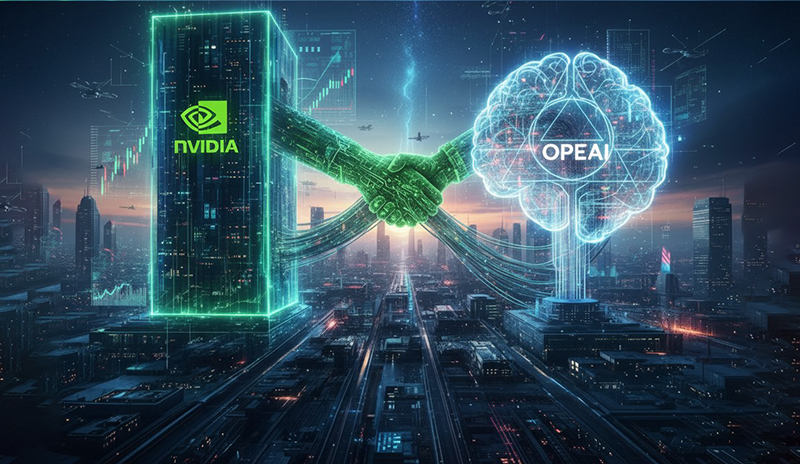
OpenAI has expanded its already record-breaking private funding round by an additional $10 billion, bringing the total capital raised past the $120 billion mark. The company's Chief Financial Officer, Sarah Friar, disclosed the increase in an interview with CNBC, noting that this expansion had been anticipated when the initial $110 billion round was announced. Friar indicated this is likely OpenAI's final major private financing event before a potential initial public offering (IPO) targeted for later this year.
The Deal
The $10 billion top-up introduces several new institutional investors to OpenAI's cap table. According to the report, the new participants include venture capital firm Andreessen Horowitz, investment management firms D.E. Shaw Ventures and T. Rowe Price, and global alternative asset managers TPG and MGX. Existing strategic partner Microsoft is also participating in the expanded round, with Friar describing the tech giant as "an incredible partner."
The Microsoft Dependency and Risk
The funding news arrives amidst a period of visible strategic recalibration within the critical OpenAI-Microsoft partnership. A previously leaked investor document reportedly listed Microsoft as OpenAI's single biggest risk factor—a characterization Friar did not dispute but framed as unsurprising given the depth of the relationship. OpenAI's infrastructure and a significant portion of its compute rely heavily on Microsoft's Azure cloud platform.
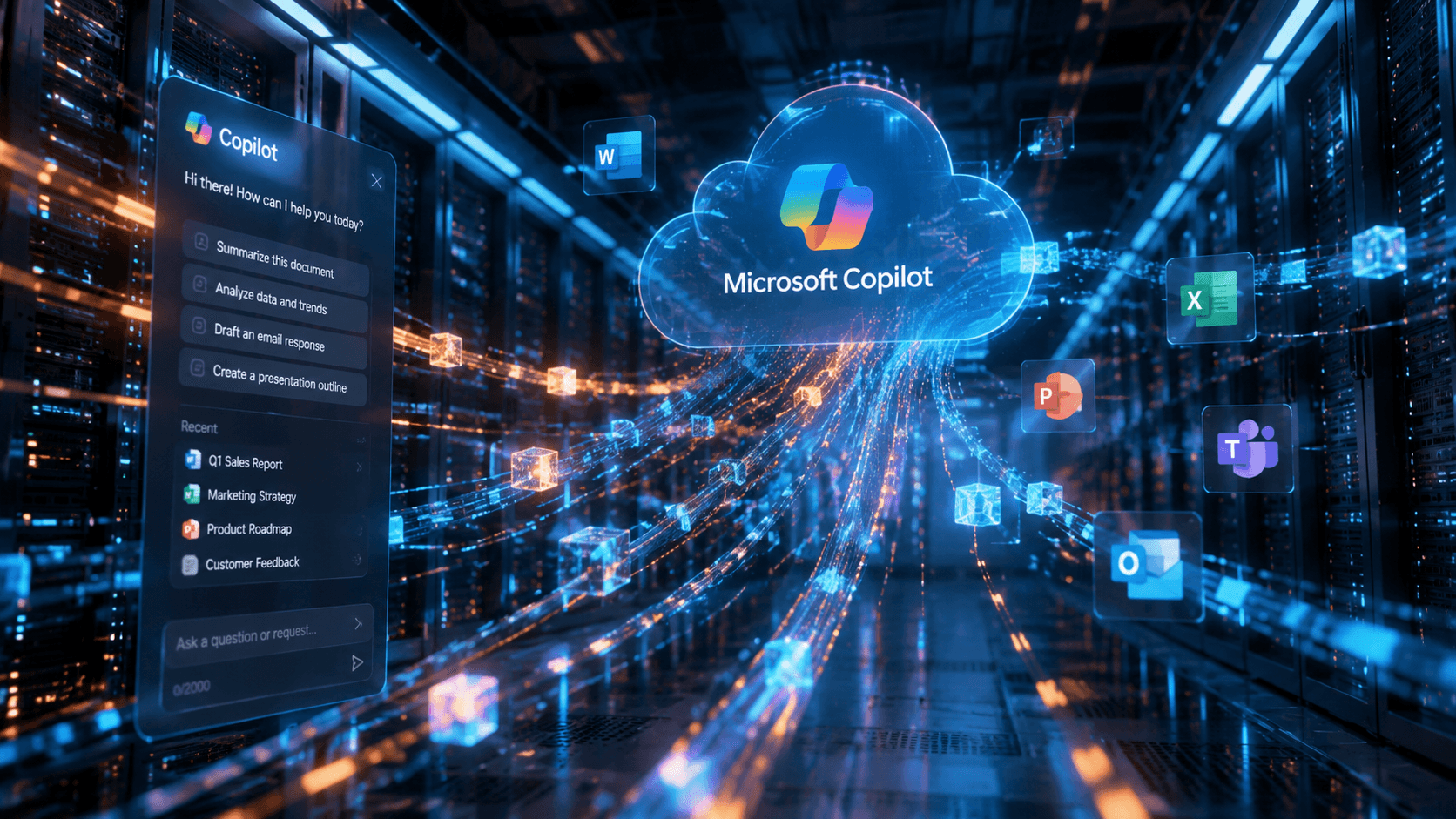
However, the dependency is increasingly mutual. OpenAI's models, including GPT-4o, GPT-5.2 Pro, and the recently teased 'Spud', form the core intelligence for Microsoft's flagship Copilot ecosystem. Any disruption to OpenAI's operations or model roadmap would pose a substantial risk to Microsoft's AI product strategy.
Recent moves by Microsoft have highlighted growing fissures in the alliance. The company is publicly accelerating efforts to develop its own in-house models targeting "super intelligence," reducing its long-term reliance on OpenAI's research. More concretely, Microsoft has begun integrating technology from Anthropic—specifically its Cowork assistant—into parts of the Copilot suite. Anthropic is widely regarded as OpenAI's most direct competitor in the enterprise AI market, making this integration a significant competitive signal.
Context and Trajectory
This massive capital infusion follows a clear pattern of activity from OpenAI's leadership. Just days ago, we reported that CEO Sam Altman was shifting his personal focus toward raising capital, securing AI supply chains, and overseeing the construction of datacenters. The $120 billion war chest directly supports these ambitions, providing the resources to compete in the escalating global compute race.
The funding also comes on the heels of significant internal reorganization. OpenAI recently renamed its product organization to 'AGI Deployment' and has been winding down specific projects to reallocate resources. This includes discontinuing the standalone Sora AI video app and developer access, consolidating video capabilities into ChatGPT, and redirecting the Sora research team toward world-model applications for robotics. These moves suggest a strategic pivot toward more commercially focused and compute-efficient AGI-aligned projects, a shift we detailed in our coverage of OpenAI's new focus on product discovery and specialized commerce applications.
gentic.news Analysis
This $120 billion financing round is less about funding immediate operations and more about securing a dominant position in the pre-IPO landscape. It allows OpenAI to present an unparalleled balance sheet to public market investors later this year, effectively setting a floor for its valuation. The participation of traditional asset managers like T. Rowe Price and TPG is particularly telling; these firms typically invest at the late-stage, pre-IPO phase and their involvement is a strong signal of confidence in the near-term public offering.
The evolving dynamic with Microsoft, however, is the critical subplot. Our knowledge graph shows the OpenAI → partnered → Microsoft relationship is one of the most documented in our system. The recent integration of Anthropic's Cowork into Copilot, confirmed by multiple sources, represents the most tangible evidence yet of Microsoft's "multi-model" strategy to de-risk its AI stack. This doesn't spell an immediate breakup—the mutual dependency is too deep—but it does mean OpenAI can no longer consider Microsoft its exclusive distribution channel. This likely motivates OpenAI's own recent commercial pivot towards direct product discovery and specialized applications, as covered in our March 25th report.
Furthermore, this fundraise must be viewed in the context of the broader competitive arms race. With Anthropic, Google (with Gemini), and Meta all aggressively funded, $120 billion provides OpenAI the runway to simultaneously train next-generation frontier models (like 'Spud'), build massive compute infrastructure, and acquire talent without immediate revenue pressure. The risk, as always with private valuations of this scale, is that the eventual public markets must agree that the path to profitability justifies the number.
Frequently Asked Questions
How much is OpenAI worth now?
While an official post-money valuation has not been disclosed, a $120 billion funding round typically implies a valuation significantly higher than that amount. Pre-IPO funding rounds often occur at a discount to the anticipated public market price, suggesting OpenAI's internal and investor valuation is likely well above $120 billion. For context, a related report from March 25th indicated SoftBank was leveraging asset-backed financing to fund a potential $30 billion investment in OpenAI.
When is the OpenAI IPO date?
OpenAI has not announced a specific date. CFO Sarah Friar stated in the CNBC interview that a potential IPO is targeted for "later this year." This would likely place it in the second half of 2026, pending market conditions and regulatory approvals.
Who are OpenAI's main competitors?
OpenAI's primary competitors in the frontier AI model space are Anthropic (creator of Claude), Google (Gemini), and Meta (Llama series). In specific product segments, it also competes with companies like GitHub (for Copilot) and various AI video and commerce platforms. The competitive landscape is a key factor in its strategic decisions, such as shifting the Sora team to robotics research.
Why is Microsoft investing more if they are also working with Anthropic?
Microsoft's strategy is to ensure leadership in the AI platform layer, regardless of which model provider leads in capabilities. By investing in OpenAI, it maintains a deep strategic and financial stake in the current market leader. By integrating Anthropic, it hedges against potential slowdowns or strategic missteps at OpenAI and keeps pressure on its primary partner. This multi-vendor approach is standard practice for large platform companies to manage supply chain risk.