What Happened
Researchers from the Music Information Retrieval (MIR) community have published a systematic evaluation of nine state-of-the-art pretrained audio representations in the context of Music Recommender Systems (MRS). The study, posted to arXiv on April 25, 2026, directly addresses a longstanding gap: while pretrained models have proven effective for tasks like auto-tagging and genre classification, their utility for recommendation—especially cold-start scenarios—has remained largely unexplored.
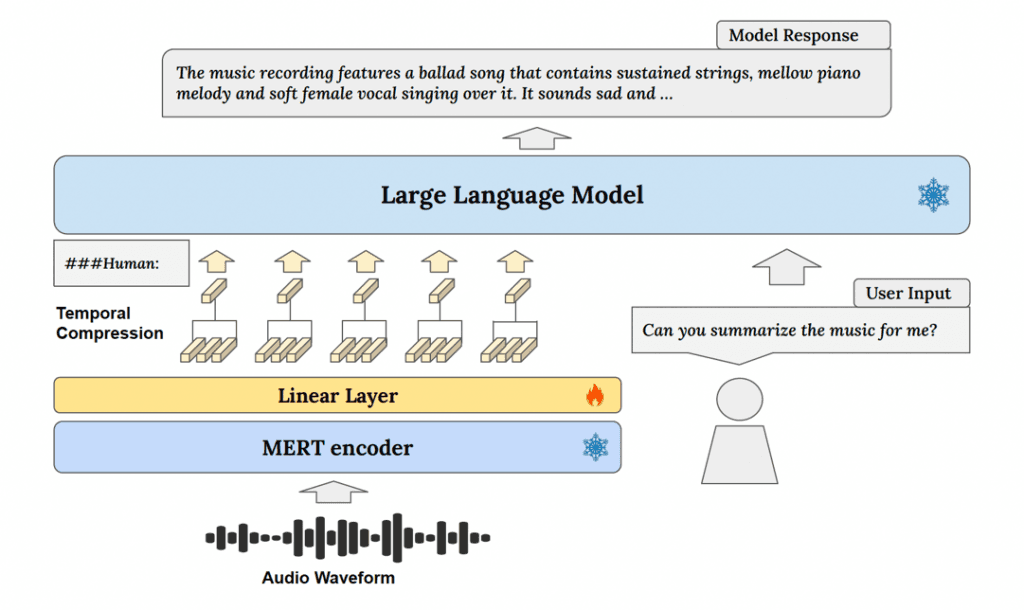
The paper tests models including MusicFM, Music2Vec, MERT, EncodecMAE, Jukebox, MusiCNN, MULE, MuQ, and MuQ-MuLan across five recommendation approaches: K-Nearest Neighbours (KNN), Shallow Neural Network, Contrastive Multi-Modal projection, a Hybrid model, and BERT4Rec.
Technical Details
The researchers evaluated each backend model in both hot-start (items with existing interaction data) and cold-start (new items with no user history) scenarios. The core finding: pretrained audio representations exhibit significant performance disparity between traditional MIR tasks and music recommendation. This suggests that the musical information captured by these models—optimized for tasks like genre tagging—may not align well with what makes for effective recommendations.
This follows a pattern we have seen across AI domains: models fine-tuned for classification often fail to generalize to ranking or personalization tasks. The Recommender Systems community has traditionally favored end-to-end neural network training, which the paper notes may be partly why this gap has persisted.
Retail & Luxury Implications
For luxury retail, this research has direct relevance to any brand offering personalized audio experiences—whether through in-store soundscapes, branded playlists, or audio-based product discovery in e-commerce.

Consider a luxury fashion house like Gucci or Louis Vuitton that curates seasonal playlists for stores or digital campaigns. If they were to build an AI-driven music recommendation system for VIP clients (e.g., "songs that match your style"), they would need to be aware that off-the-shelf pretrained audio models may not perform well—especially for new or niche tracks.
Similarly, luxury hospitality brands like Aman or Four Seasons, which invest heavily in ambient audio branding, could face cold-start challenges when introducing new music into their recommendation engines.
Business Impact
The practical implication is clear: don't assume transfer learning works across tasks. A model that excels at tagging a track as "jazz" or "electronic" may fail entirely at predicting which track a user will enjoy next. For retail AI teams, this means:
- Higher development costs: Custom fine-tuning or hybrid architectures may be required.
- Cold-start remains hard: New music releases, emerging artists, or niche genres will be poorly served by generic pretrained models.
- Data collection is critical: Without rich user interaction data, even the best audio representations won't yield good recommendations.
This aligns with a broader trend we have covered: on April 21, 2026, a paper on "exploration saturation" in recommender systems was published, and another diagnosed critical failure modes of LLM-based rerankers in cold-start recommendation. The industry is grappling with the limits of transfer learning across tasks.
Implementation Approach
For teams looking to build audio-based recommendation systems, the research suggests:

- Benchmark your specific task: Don't rely on MIR benchmarks. Test pretrained models on your actual recommendation metrics.
- Consider hybrid approaches: The paper found that a Hybrid model (combining audio representations with collaborative filtering) showed promise.
- Plan for cold-start: If your catalog includes new music often, invest in user-side embeddings or multi-modal signals (e.g., visual, textual) to supplement audio features.
- Evaluate multiple backends: The nine models tested had different strengths. No single model dominated across all scenarios.
Governance & Risk Assessment
- Maturity: Low-to-moderate. This is foundational research, not production-ready.
- Bias risk: Pretrained models may encode genre or cultural biases from training data, potentially skewing recommendations toward mainstream content.
- Privacy: Audio features themselves don't raise privacy concerns, but user interaction data used for collaborative filtering does.
- Vendor lock-in: Relying on a single pretrained backend could limit flexibility as the field evolves.
gentic.news Analysis
This paper arrives at a moment when the recommender systems community is actively questioning assumptions about transfer learning. Our coverage of "exploration saturation" (April 21) and LLM-based reranker failures (April 21) paints a picture of a field in healthy self-correction.
The key insight for AI leaders in retail: task alignment matters more than model size or benchmark performance. A model that scores well on AudioSet or MagnaTagATune may be nearly useless for your specific recommendation use case. This is a cautionary tale for any team considering a "one model to rule them all" approach.
For luxury brands, where personalization is a core differentiator, this research underscores the importance of building recommendation systems tuned to your specific catalog and user base—not just plugging in the latest pretrained model from Hugging Face.
Bottom line: The gap between MIR and MRS is real. Plan accordingly.