What Happened
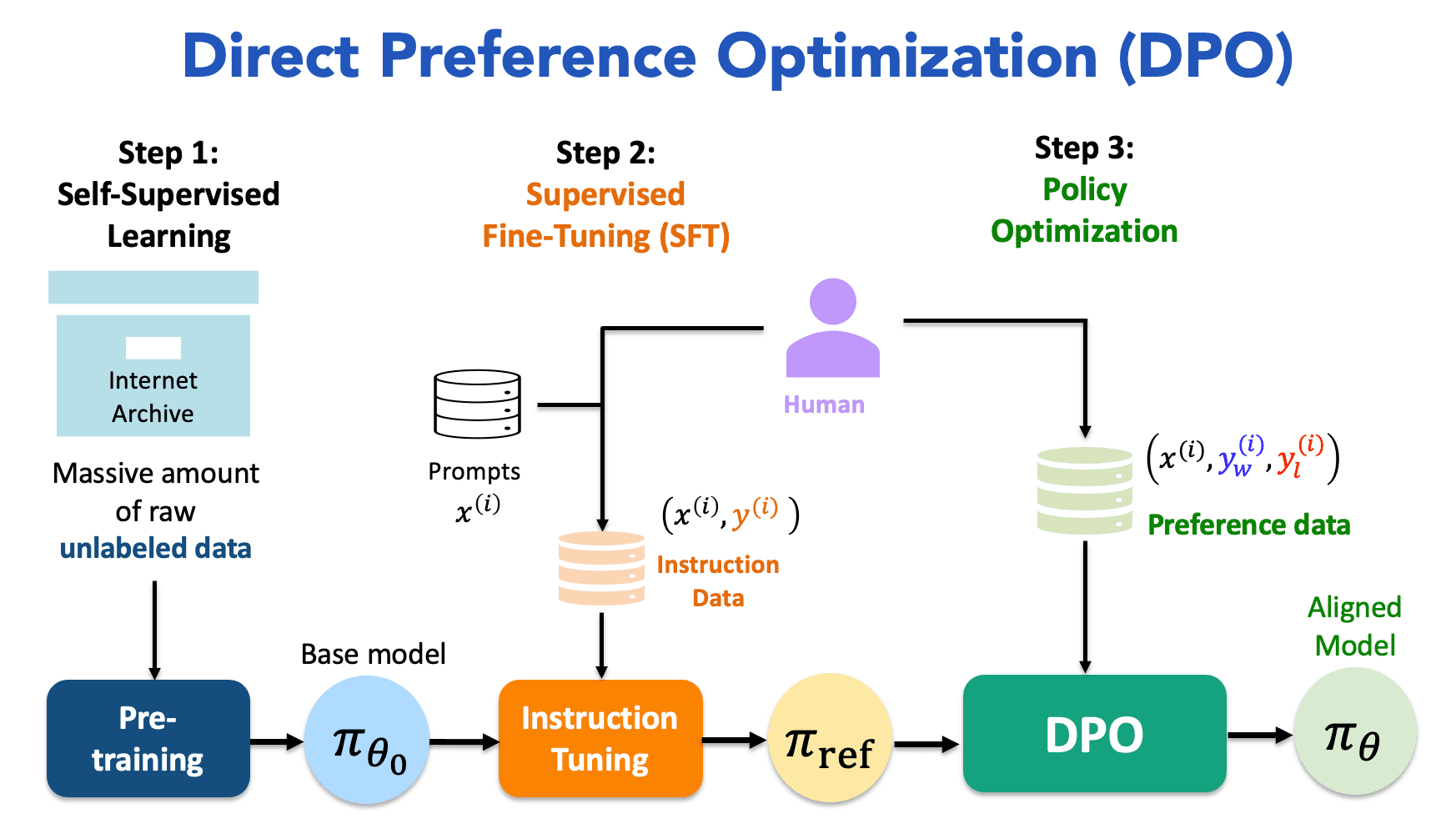
A new research paper titled "Aligning Multimodal Sequential Recommendations via Robust Direct Preference Optimization with Sparse MoE" was posted to arXiv on March 31, 2026. The work addresses a critical challenge in applying Direct Preference Optimization (DPO)—a technique popularized in large language model alignment—to recommender systems that rely on implicit feedback.
The core problem is straightforward but significant: in implicit feedback scenarios (like clicks, views, or purchases), items a user hasn't interacted with aren't necessarily negatives—they might be items the user would like but simply hasn't encountered yet. Treating all unobserved items as hard negatives during DPO training introduces "erroneous suppressive gradients" that degrade model performance.
Technical Details
The researchers systematically compared negative-selection strategies for DPO in multimodal sequential recommendation tasks. Their central finding was that replacing deterministic hard negatives with stochastic sampling from a dynamic top-K candidate pool consistently improved ranking metrics.
Key Innovation: Robust DPO (RoDPO)
- Dynamic Candidate Pool: Instead of using all unobserved items as negatives or a fixed set of hard negatives, RoDPO maintains a dynamic pool of likely candidates (top-K items from a base retriever) that gets updated during training.
- Stochastic Sampling: For each training step, negatives are randomly sampled from this pool, introducing controlled stochasticity that smooths optimization while retaining informative hard signals.
- Sparse Mixture-of-Experts Encoder: As an optional component, the framework can incorporate a sparse MoE encoder for efficient capacity scaling, allowing the model to handle multimodal features (text, images) without exploding inference costs.
The method was evaluated on three Amazon benchmarks (presumably product recommendation datasets), where it achieved up to 5.25% improvement in NDCG@5 compared to baseline DPO approaches, with nearly unchanged inference latency.
The researchers attribute RoDPO's effectiveness to two factors:
- Reduced False Negative Impact: By sampling from a dynamic pool of plausible candidates rather than treating all unobserved items as negatives, the method minimizes erroneous gradient signals that would suppress items users might actually prefer.
- Optimization Smoothing: The stochasticity acts as a regularizer, preventing the model from overfitting to potentially noisy negative pairs while maintaining exposure to challenging examples.
Retail & Luxury Implications
This research has direct implications for luxury and retail companies building next-generation recommendation systems, particularly those incorporating multimodal content (product images, descriptions, videos) and sequential user behavior.

Personalization at Scale: The ability to train more robust preference models from implicit feedback—without expensive explicit ratings—aligns perfectly with luxury retail's shift toward hyper-personalization. A high-end fashion platform could use RoDPO to better infer preferences from browsing sequences and purchase history, distinguishing between "not yet seen" and "genuinely disliked" items.
Multimodal Understanding: The optional sparse MoE component addresses a practical constraint: incorporating rich visual and textual features without compromising inference speed. For luxury goods where visual appeal and detailed craftsmanship descriptions matter, this enables deeper content understanding in real-time recommendations.
Cold Start Mitigation: While not the paper's primary focus, the dynamic candidate pool approach could help with new item introduction. By sampling negatives from a contextually relevant pool rather than all items, the model might better position new products against comparable alternatives rather than everything in the catalog.
Implementation Considerations:
- Data Requirements: Requires sequential user interaction data with multimodal item features.
- Technical Debt: Adds complexity to training pipelines (dynamic pool maintenance, sampling logic).
- Evaluation Rigor: The reported gains (5.25% NDCG@5) are meaningful but should be validated on proprietary datasets, as Amazon benchmarks may not reflect luxury domain nuances like higher price sensitivity and longer consideration cycles.
This work represents a technical refinement rather than a paradigm shift—it makes an existing advanced technique (DPO) more practical for real-world recommendation scenarios where implicit feedback dominates.