Eighteen months after its White House unveiling, Stargate has evolved from a $500 billion promise into a real-world test. The initiative, backed by OpenAI, SoftBank, and Oracle, now faces mounting risks around energy, financing, governance, and community consent.
Key facts
- Stargate announced January 2025 with $500B planned investment.
- Vantage Data Centers broke ground on $15B Wisconsin campus December 2025.
- Lighthouse campus planned for 902 MW IT capacity across 674 acres.
- Projects announced in Texas, Wisconsin, Ohio, New Mexico, Abu Dhabi, Norway.
- Oracle warned investors July 2026 AI data center ROI uncertain.
Announced in January 2025 by OpenAI, SoftBank, Oracle, and MGX, Stargate was pitched as the physical foundation for next-generation AI, with plans to deploy up to 10 GW of compute capacity and invest hundreds of billions of dollars in data centers, power systems, and supporting infrastructure across the US According to Datacenter Knowledge.
Since its start, Stargate has expanded well beyond its Texas roots. New campuses have been announced in Wisconsin, Ohio, New Mexico, and elsewhere, and international projects have emerged in Abu Dhabi and Norway. In December 2025, Vantage Data Centers broke ground on its Lighthouse campus in Port Washington, Wisconsin – a $15 billion Stargate-related project that is planned to deliver four data centers totaling 902 MW of IT capacity across 674 acres, featuring closed-loop cooling and other sustainability-focused design elements.
The initiative’s success now hinges on whether it can scale faster than the mounting risks around energy, financing, governance, and community consent. According to Lilli Flynn, DCByte senior analyst for the Northeast/Mid-Atlantic US, Stargate is increasingly operating as a prototype for gigawatt-scale AI campuses integrated with dedicated energy strategies, rather than a traditional hyperscale data center expansion. “The combination of behind-the-meter generation, co-located energy infrastructure, and phased GPU deployment reflects a shift toward vertically coordinated ‘AI industrial parks’ rather than standalone data center assets,” she said.
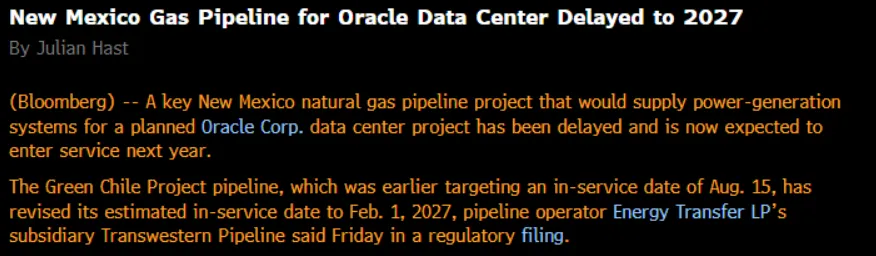
This model is already being adopted across the market, particularly for AI training clusters that require high-density rack power and rapid scaling capability. The project’s unusually broad ecosystem of stakeholders — including SoftBank, Oracle, OpenAI, and MGX — adds complexity to governance and financing decisions. Notably, Oracle warned investors in July 2026 that AI data center spending may not achieve expected ROI, per our previous reporting.
What to watch
Watch for Stargate’s first operational campus milestone — likely the Texas site — and whether SoftBank’s next equity tranche materializes. Community consent battles in Wisconsin and Ohio could set precedent for permitting timelines, while Oracle’s Q3 2027 earnings call may reveal if its Stargate-related capital expenditure yields revenue growth.
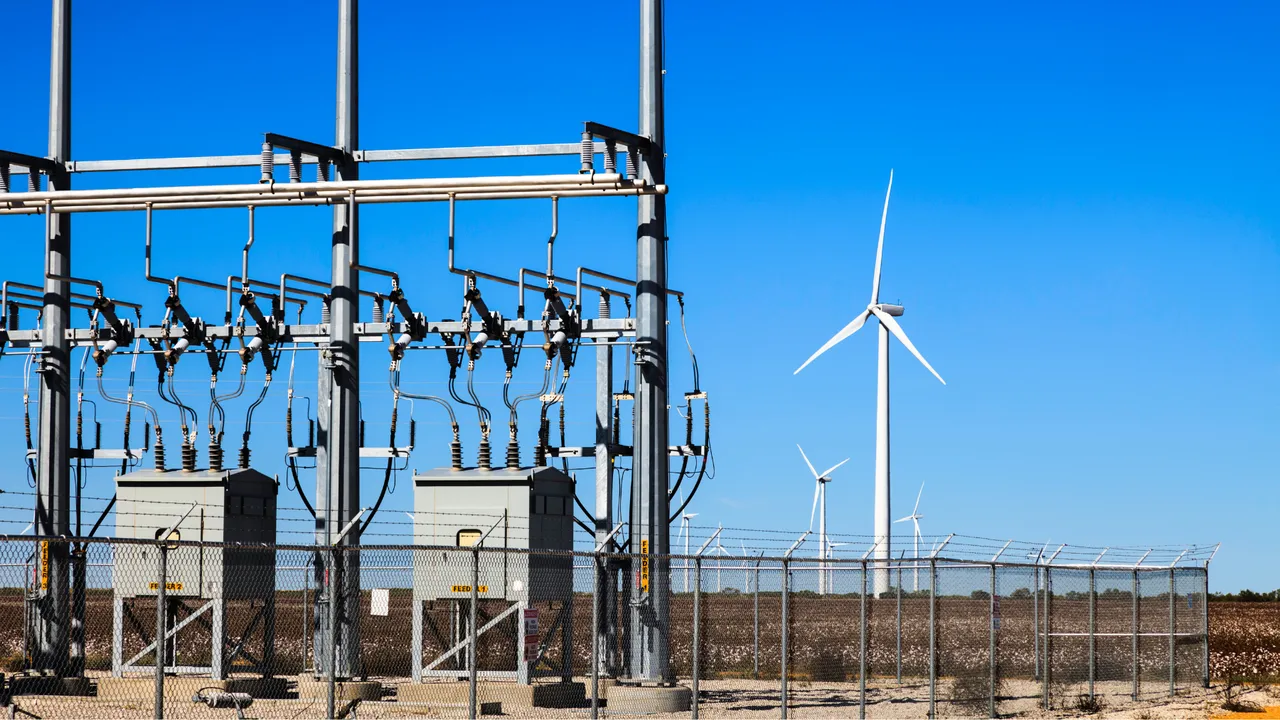
Source: datacenterknowledge.com
[Updated 03 Jul via nvidia_blog]
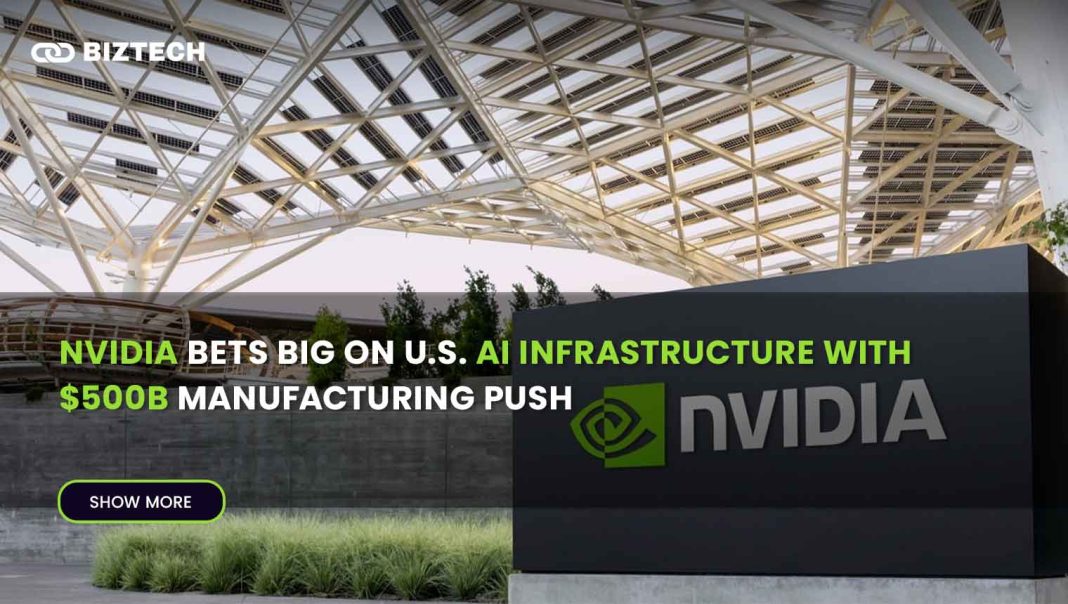
NVIDIA CEO Jensen Huang stated, "AI is driving a once-in-a-generation opportunity to reinvigorate American manufacturing and supply chains," as the company plans to produce up to $500 billion of AI infrastructure in the U.S. with partners including TSMC, Foxconn, and Wistron. Public First estimates that in 2026 alone, NVIDIA-driven AI demand will contribute $485 billion to the U.S. GDP and support over 100,000 jobs [per NVIDIA blog]. This parallels Stargate's ambition but highlights a chip-centric approach to scaling AI infrastructure.