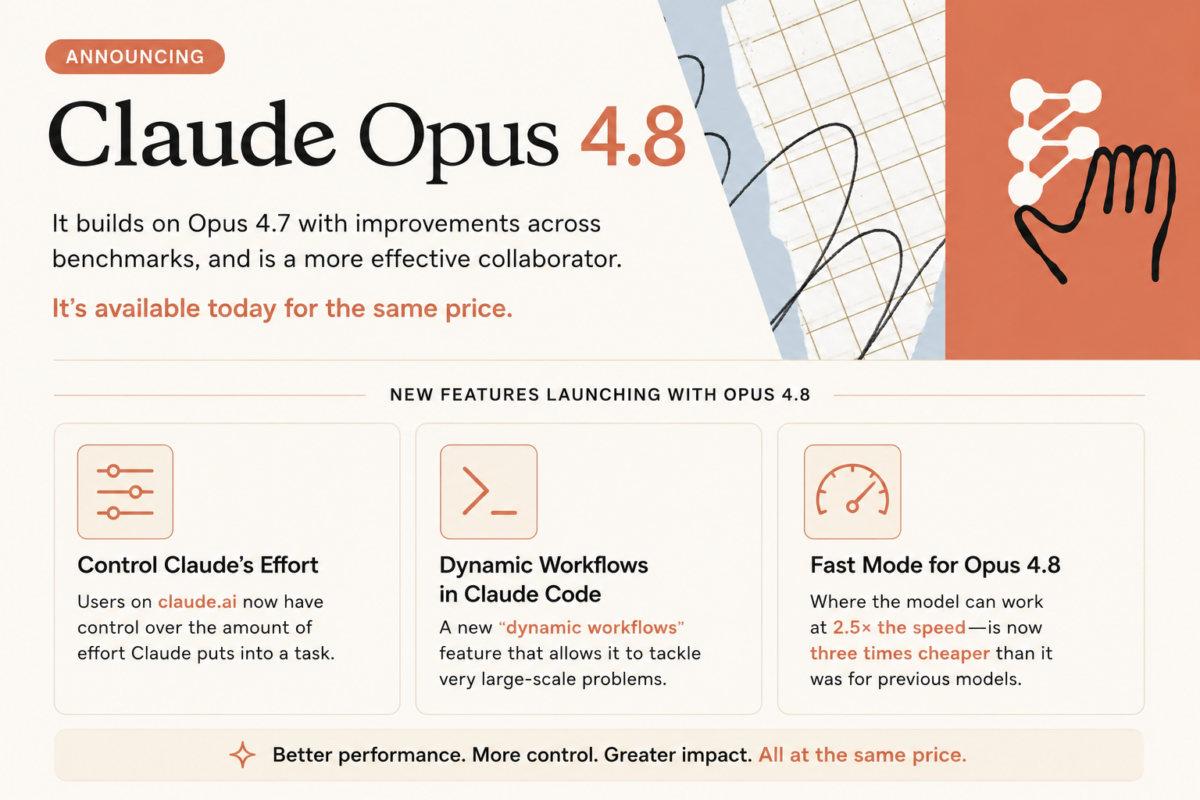
Replica, a 27B-parameter agent, beat Claude Opus 4.8 and GPT-5.5 on held-out research replication, per @omarsar0. The result challenges the scale-centric assumption in agentic AI.
Key facts
- Replica has 27B parameters
- Outperformed Claude Opus 4.8 on held-out replication
- Outperformed GPT-5.5 on same benchmark
- Claim sourced from @omarsar0 tweet
- No methodology or scores disclosed
A 27B-parameter agent named Replica has outperformed both Claude Opus 4.8 and GPT-5.5 on held-out research replication benchmarks, according to @omarsar0. The claim, posted as a tweet, provides no quantitative scores, methodology, or training details, but the implication is clear: a model roughly 100x smaller than frontier systems can match or exceed them on a specific agentic task.
Key Takeaways
- A 27B agent named Replica reportedly beat Claude Opus 4.8 and GPT-5.5 on held-out research replication, per @omarsar0.
- No methodology or scores disclosed, so the claim is unverified but suggests efficiency can rival scale.
What the claim means for agent design
Research replication — taking a paper's method and reproducing its results — is a demanding agentic benchmark. It requires parsing academic text, generating code, running experiments, and iterating on failures. That Replica achieves this with 27B parameters suggests that task-specific training and inference-time strategies can substitute for raw scale. This aligns with recent work on smaller, specialized agents that outperform generalists on narrow domains, though the source provides no ablation or comparison to prior state-of-the-art small models.
The held-out nature of the benchmark is critical. If Replica's training data included the target papers, the result would be less meaningful. The tweet asserts the tasks were held-out, but no release of the benchmark or evaluation protocol was provided. Without that, the claim is unverifiable and should be treated with caution.
Efficiency vs. scale: the broader pattern
This result, if confirmed, would join a growing body of evidence that parameter count is not the sole determinant of agentic performance. Techniques like reinforcement learning from verifiable rewards, tool-use fine-tuning, and test-time compute scaling can close the gap with much larger models. For practitioners, the implication is practical: a 27B model can run on a single GPU, cutting inference cost and latency compared to a 500B-parameter frontier model.
Still, the tweet is a single data point from an unofficial source. No benchmark leaderboard, code release, or paper accompanies it. The AI community has seen similar claims before — some validated, many not. Until Replica's methodology and results are published, the claim should be treated as an intriguing signal, not a settled fact.
What to watch
Watch for a formal write-up from the Replica team, including benchmark scores, training details, and a public evaluation harness. If Replica's results are reproducible on standard agentic benchmarks like GAIA or SWE-Bench, it would mark a significant shift toward efficiency-focused agent design.
[Updated 15 Aug via the_decoder]
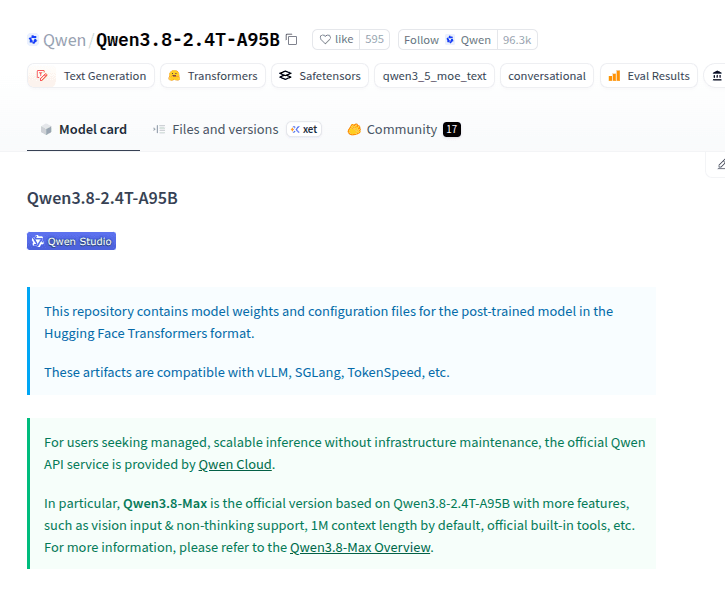
The 27B parameter count matches Alibaba's newly released Qwen3.8-27B, an open-weight model under Apache 2.0 that Qwen claims outperforms its larger Qwen3.7-Plus in coding and office tasks, with native 262K-token context and improved agent capabilities [per The Decoder]. This suggests Replica may be built on or inspired by Qwen3.8, and the open release could enable verification of the replication benchmark claims.