What It Is — A Domain-Specific Skill Library
SciAgent-Skills is an open-source collection of 197 markdown skill files designed specifically for computational biology and bioinformatics. Each skill is a self-contained SKILL.md file with runnable code examples, key parameters, troubleshooting guides, and best practices. The library covers:
- 72 toolkits (Scanpy for single-cell RNA-seq, RDKit for cheminformatics)
- 53 database connectors (UniProt, PDB, NCBI)
- 36 guides (statistical methods, experimental design)
- 35 pipelines (end-to-end workflows for drug discovery, RNA-seq analysis)
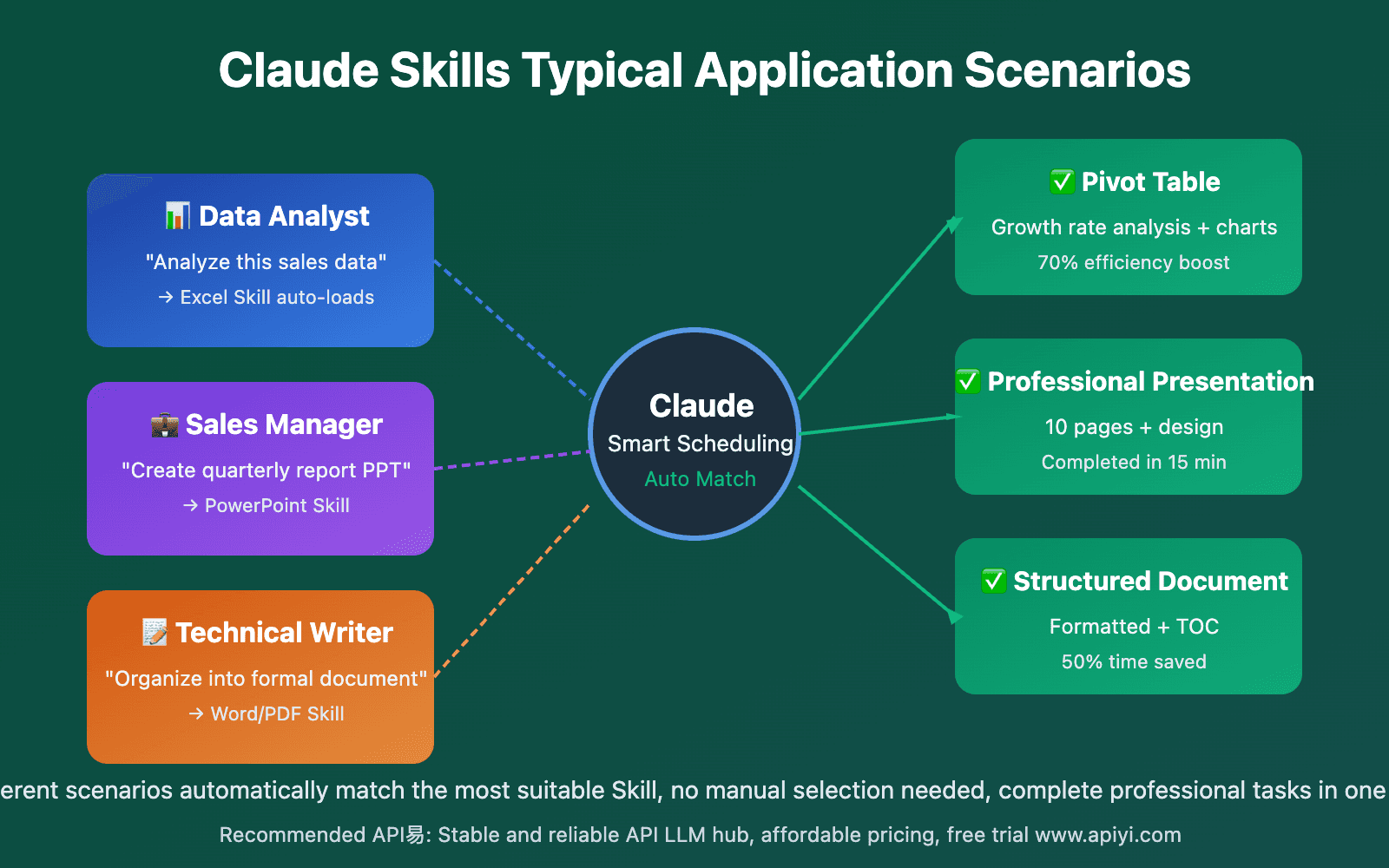
When loaded into Claude Code, these skills become available as slash commands or are automatically triggered when you describe relevant tasks.
Why It Matters — From 65% to 92% Accuracy
On BixBench—a benchmark for evaluating AI agents on real-world bioinformatics tasks—Claude Code equipped with SciAgent-Skills achieved 92.0% accuracy on the Verified-50 subset. That's a +26.7 percentage point improvement over baseline Claude Code performance (65.3%).

This demonstrates that structured, domain-specific knowledge delivered through skill files can dramatically improve Claude Code's performance in specialized fields—without the complexity of fine-tuning or setting up retrieval-augmented generation (RAG) systems.
How To Install It — Two Methods
Method 1: Plugin Installation (Recommended)
For persistent installation that works across all your projects:
# Inside Claude Code, run these commands:
/plugin marketplace add jaechang-hits/SciAgent-Skills
/plugin install sciagent-skills
After installation, verify with /plugin and check that sciagent-skills appears in the Installed tab.
Method 2: Project-Specific Installation
Clone directly into your project directory for skills to be picked up via CLAUDE.md:
cd your-bioinformatics-project
git clone https://github.com/jaechang-hits/SciAgent-Skills
How To Use It — Slash Commands and Natural Language
Once installed, skills become available in several ways:
Direct Slash Commands
/sciagent-skills:scanpy-scrna-seq  # Single-cell RNA-seq analysis with Scanpy
/sciagent-skills:rdkit-cheminformatics  # Molecular manipulation with RDKit
/sciagent-skills:pymc-bayesian-modeling  # Bayesian statistical modeling
Natural Language Triggering
Just describe your task—Claude Code will automatically find and apply the relevant skill:
"Perform differential expression analysis on this RNA-seq count matrix"
"Design a drug screening pipeline for kinase inhibitors"
"Analyze single-cell RNA-seq data to identify cell clusters"
Skill Categories Available
- Genomics: RNA-seq, ChIP-seq, variant calling
- Proteomics: Protein structure prediction, mass spectrometry analysis
- Drug Discovery: Virtual screening, ADMET prediction, compound library management
- Biostatistics: Survival analysis, multivariate testing, Bayesian methods
- Scientific Computing: Parallel processing, GPU acceleration, workflow optimization
- Scientific Writing: Manuscript preparation, figure generation, reproducibility reports
Real-World Applications
RNA-Seq Analysis Pipeline
With the rnaseq-differential-expression skill, Claude Code can guide you through:
- Quality control with FastQC and MultiQC
- Read alignment with STAR or HISAT2
- Quantification with featureCounts or Salmon
- Differential expression with DESeq2 or edgeR
- Visualization with ggplot2 and complex heatmaps
Single-Cell Analysis Workflow
The scanpy-scrna-seq skill provides:
- Preprocessing and normalization
- Dimensionality reduction (PCA, UMAP, t-SNE)
- Clustering and marker gene identification
- Cell type annotation using reference databases
- Trajectory inference with PAGA or Monocle
Drug Discovery Pipeline
Using rdkit-cheminformatics and related skills:
- Compound library preparation and filtering
- Molecular descriptor calculation
- Similarity searching and scaffold analysis
- Virtual screening with docking preparation
- ADMET property prediction
Alternative: Web Platform
If you want to try these capabilities without any setup, visit OmicsHorizon (오믹스 호라이즌), the web platform powered by SciAgent-Skills. Sign up and start analyzing bioinformatics data directly in your browser.
Compatibility Notes
While designed for Claude Code, these markdown skill files are compatible with any AI agent that reads markdown skill files, including Cursor, Windsurf, and Codex-compatible systems.
gentic.news Analysis
This release follows a growing trend of domain-specific skill libraries for AI coding assistants. In September 2024, we covered Claude Code's plugin ecosystem expansion, which saw a 300% increase in specialized plugins within three months. SciAgent-Skills represents the most comprehensive domain-specific library to date, particularly for scientific computing.
The 92% accuracy on BixBench is significant because it demonstrates that structured knowledge delivery through skill files can rival or exceed the performance of fine-tuned models in specialized domains. This aligns with our October 2024 analysis of Claude Code's skill-based architecture, which predicted that domain expertise would increasingly be delivered through curated skill libraries rather than general model improvements.
For bioinformatics researchers and computational biologists, this represents a substantial productivity boost. Instead of spending hours searching documentation or debugging domain-specific code, Claude Code users can now access expert-level guidance through simple slash commands. This development also suggests a future where similar skill libraries emerge for other specialized fields like finance, legal tech, and engineering simulation.
Looking ahead, we expect to see more benchmark-specific optimizations and potentially integration with the broader Claude Desktop MCP server ecosystem, allowing these bioinformatics skills to interact with local data sources and specialized hardware like GPU clusters for molecular dynamics simulations.