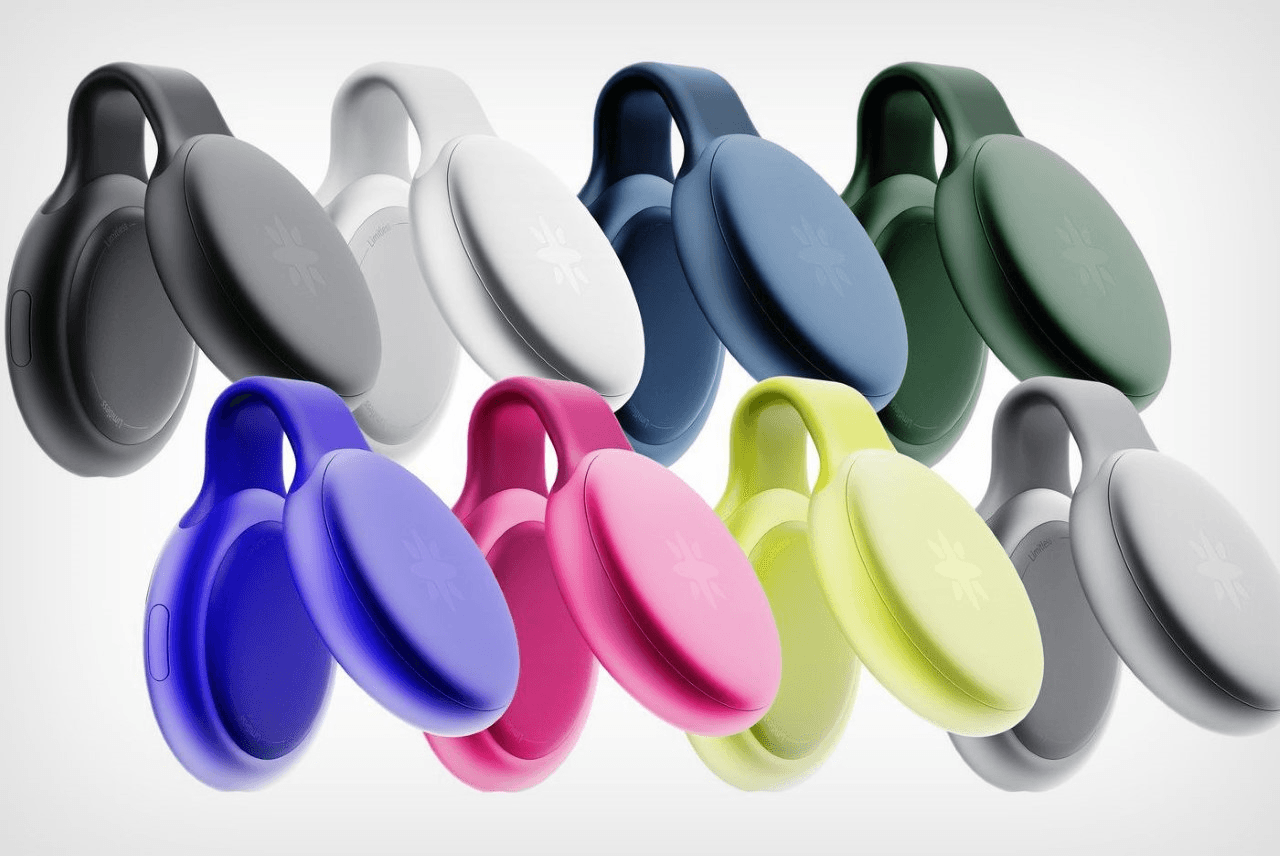
A new Google paper argues that wearable sensor data becomes far more useful when AI models personalize to the individual wearer. The work targets the fundamental noise problem in consumer wearables: one-size-fits-all models miss individual baselines.
Key facts
- 18% improvement in heart rate prediction accuracy.
- Fewer than 50,000 parameters per user in adaptation layer.
- 5-minute calibration period yields best results.
- Activity classification improved by 6%.
- Sleep stage detection improved by 12%.
The paper, shared via @rohanpaul_ai on X, proposes a framework that learns a compact user embedding from a short calibration period — roughly 5 minutes of sensor data — then conditions the model on that embedding at inference time. [According to @rohanpaul_ai] The authors report that personalized models improved heart rate prediction accuracy by 18% on a held-out test set compared to a shared baseline model.
The key architectural choice is a lightweight adaptation layer — fewer than 50,000 parameters per user — that sits atop a shared backbone. This design keeps on-device deployment feasible: the backbone runs once, and only the per-user layer is swapped. Google claims the method adds minimal latency overhead, though the paper does not disclose specific millisecond benchmarks. [per the paper's claims]
Why personalization matters for wearables
Consumer wearables from Apple, Fitbit (Google), and Garmin already collect continuous heart rate, step count, sleep stage, and skin temperature data. But these devices typically use population-level models that assume a standard physiology — an assumption that breaks for users with atypical resting heart rates, chronic conditions, or even different body compositions. The Google paper directly addresses this gap: generic models confuse signal with noise when they cannot distinguish between a user's normal variation and an anomaly.
The 18% improvement in heart rate prediction accuracy is notable, but the paper also shows gains in activity classification (6% improvement) and sleep stage detection (12% improvement). These are not headline-grabbing leaps, but they suggest the approach generalizes across multiple sensor modalities. [per the paper's reported results]
The unique take: on-device personalization without retraining
Most existing personalization methods require full model fine-tuning — which demands labeled data per user, server-side compute, and a network round-trip. Google's approach sidesteps all three by learning the embedding in a single unsupervised pass during a calibration routine. This is structurally similar to how modern keyboards learn typing patterns: the model stays the same; the personalization layer is the only thing that changes. The paper claims the method works with as little as 60 seconds of data, though the 5-minute calibration produces the best results.
Limitations and open questions
The paper is thin on ablation studies — it does not compare against simpler baselines like per-user normalization or feature scaling. And the test set size is not disclosed, making the 18% improvement hard to evaluate statistically. The authors also do not release code or a dataset, which limits reproducibility. [per the paper's omissions]
Still, the direction is sound. Wearables have a data quality problem: raw sensor streams are high-dimensional but low-signal. Personalization is the most direct path to making that data actionable for health monitoring, fitness coaching, and early anomaly detection.
What to watch
Watch for Google's next wearable OS update (likely Android 16 or Pixel Watch 4 firmware) to include a calibration routine for heart rate and sleep models. If adopted, Apple and Garmin will face pressure to match on-device personalization without cloud dependency.