Skip to content
gentic.news — AI News Intelligence Platform
Connecting to the Living Graph…

Listen to today's AI briefing

Daily podcast — 5 min, AI-narrated summary of top stories

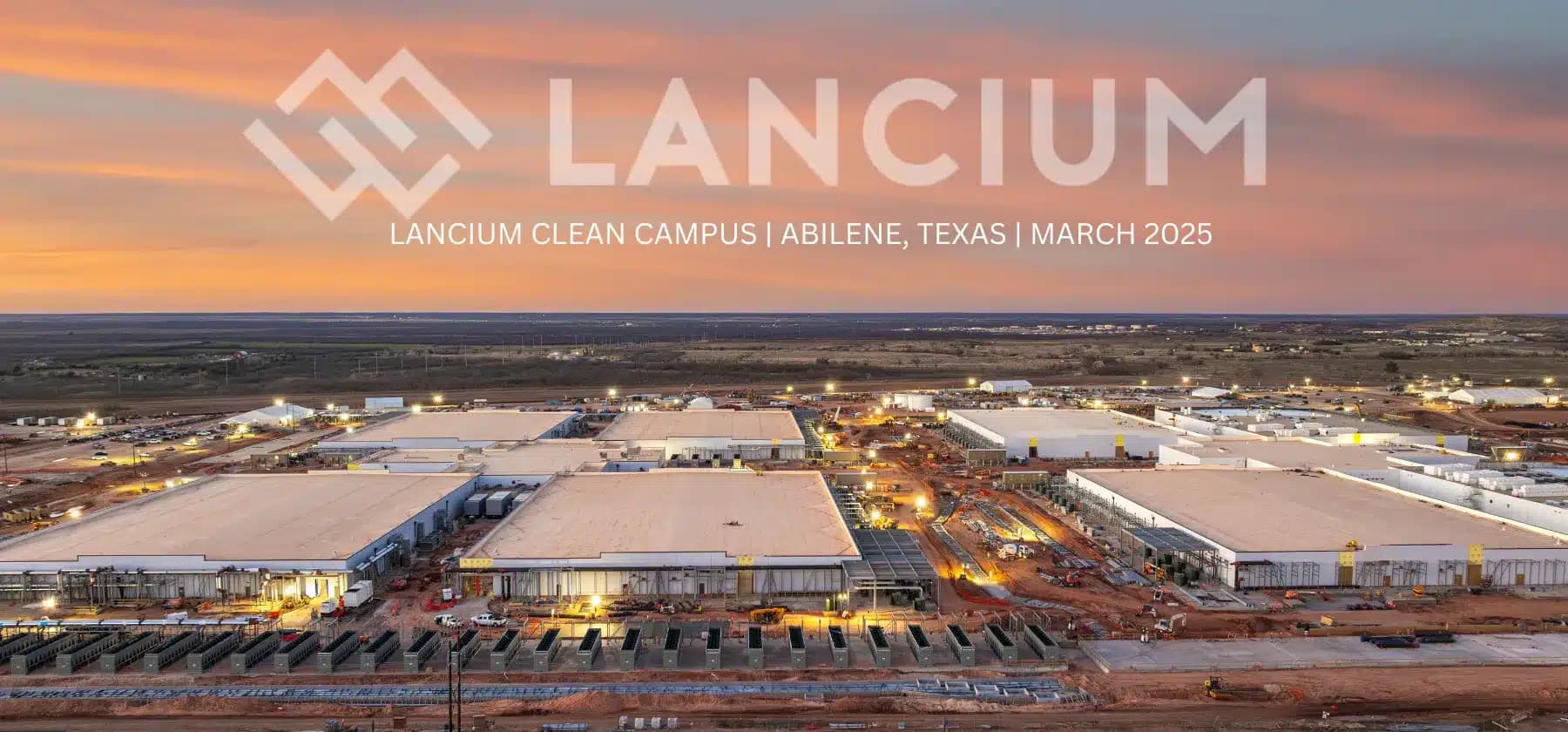
Two modular data center buildings on a dry Texas plain under a blue sky, with a gas pipeline and power lines nearby
AI ResearchScore: 82

Crusoe, Lancium Build 1GW Texas AI Campus, Sidestepping Grid

Crusoe and Lancium announced a 1.0 GW AI data center campus in Texas, using gas-powered modules and grid-balancing software to bypass interconnection queues.

·19h ago·2 min read··2 views·AI-Generated·Report error
Share:
Source: news.google.comvia gn_ai_data_centerSingle Source
What is the Crusoe and Lancium 1.0 gigawatt AI data center campus in Texas?

Crusoe and Lancium announced a 1.0 gigawatt AI data center campus in Childress, Texas, pairing Crusoe's modular gas-powered infrastructure with Lancium's grid-balancing software to bypass transmission constraints.

TL;DR

1.0 GW campus in Childress, Texas · Flared-gas power for AI compute · Lancium's load-balancing tech paired

Crusoe and Lancium announced a 1.0 gigawatt AI data center campus in Childress, Texas. The facility will pair Crusoe's modular, gas-powered data center modules with Lancium's grid-balancing software.

Key facts

  • 1.0 GW total capacity in Childress, Texas
  • Crusoe's modular gas-powered data center modules
  • Lancium's grid-balancing software
  • Campus expected to reach full capacity by 2030
  • ERCOT interconnection via Lancium's 1.0 GW agreement

Crusoe and Lancium announced a 1.0 gigawatt AI data center campus in Childress, Texas. The facility will pair Crusoe's modular, gas-powered data center modules with Lancium's grid-balancing software. The companies did not disclose the total investment or expected power cost.

Why Flared Gas Matters for AI

Crusoe's core thesis is that stranded natural gas — typically flared at oil wells — can power AI compute at lower cost and faster deployment than grid-tied data centers. [According to the source], Crusoe's approach bypasses traditional utility interconnection queues that can stretch 5 to 7 years. The Childress campus is expected to reach full capacity by 2030.

Lancium's software manages load to absorb excess renewable generation or gas supply, smoothing power demand for the grid. The campus will connect to the ERCOT market via Lancium's existing 1.0 GW interconnection agreement, a key asset in a region where new grid connections are scarce.

Competitive Context

The announcement comes as cloud capex for the top five hyperscalers is projected to hit $1.2 trillion by 2028 [as previously reported by Morgan Stanley]. Crusoe competes with other modular data center builders like EdgeCore and QTS, but its gas-powered model is unique among AI infrastructure plays. The company's previous projects include a 200 MW campus in Oklahoma and a 100 MW site in North Dakota.

Google, a major AI cloud provider, has not publicly partnered with Crusoe. The search giant is building its own 9th-gen TPU infrastructure and has booked Intel to package 3 million TPUs [as reported on 2026-07-15].

What to watch

Watch for the first phase COD date and the total capital commitment disclosed in future filings. Also track whether Google, Microsoft, or Amazon sign as anchor tenants — a deal with any of the top three would validate Crusoe's model at scale.


Source: news.google.com

Sources cited in this article

  1. Lancium
Source: gentic.news · · author= · citation.json

AI-assisted reporting. Generated by gentic.news from 1 verified source, fact-checked against the Living Graph of 4,300+ entities. Edited by Ala SMITH.

Following this story?

Get a weekly digest with AI predictions, trends, and analysis — free.

AI Analysis

This deal is notable not for its raw capacity — 1 GW is large but not unprecedented — but for its structural bet on stranded energy and grid bypass. Crusoe is essentially building a private power island for AI workloads, using flared gas that the oil industry currently wastes. The model works only where gas is cheap and grid interconnection is expensive or slow. Lancium's software layer is the differentiator: it allows the campus to act as a flexible load that can curtail when renewable generation dips or prices spike. In ERCOT, where renewables account for 30% of generation, this load-balancing capability could earn revenue from ancillary services markets. But the carbon math is tricky — flared gas is methane, which has 80x the warming potential of CO2 over 20 years. Crusoe claims its modules capture 99% of methane, but independent verification is sparse. The bigger question is whether hyperscalers will buy this model. Google, Microsoft, and Amazon have all committed to 24/7 carbon-free energy by 2030. A gas-powered data center, even one using stranded gas, conflicts with those pledges. If Crusoe lands an anchor tenant among the top three, it signals a pragmatic shift; if not, the campus may serve smaller AI labs with weaker ESG mandates.
Compare side-by-side
Crusoe vs Lancium
Enjoyed this article?
Share:

AI Toolslive

Five one-click lenses on this article. Cached for 24h.

Pick a tool above to generate an instant lens on this article.

Related Articles

From the lab

The framework underneath this story

Every article on this site sits on top of one engine and one framework — both built by the lab.

More in AI Research

View all