Japan and Nvidia announced a 140MW AI factory with 27,500 Rubin GPUs and 13,750 Vera CPUs. The state-backed Noetra consortium will build the facility to train open multimodal models for physical AI under the FRONTia program.
Key facts
- 27,500 Rubin GPUs and 13,750 Vera CPUs
- 140MW power capacity for the AI factory
- 382 Vera Rubin NVL72 racks in the build
- ¥387.3 billion first-year NEDO funding
- $1.9B–$2.7B estimated rack hardware cost
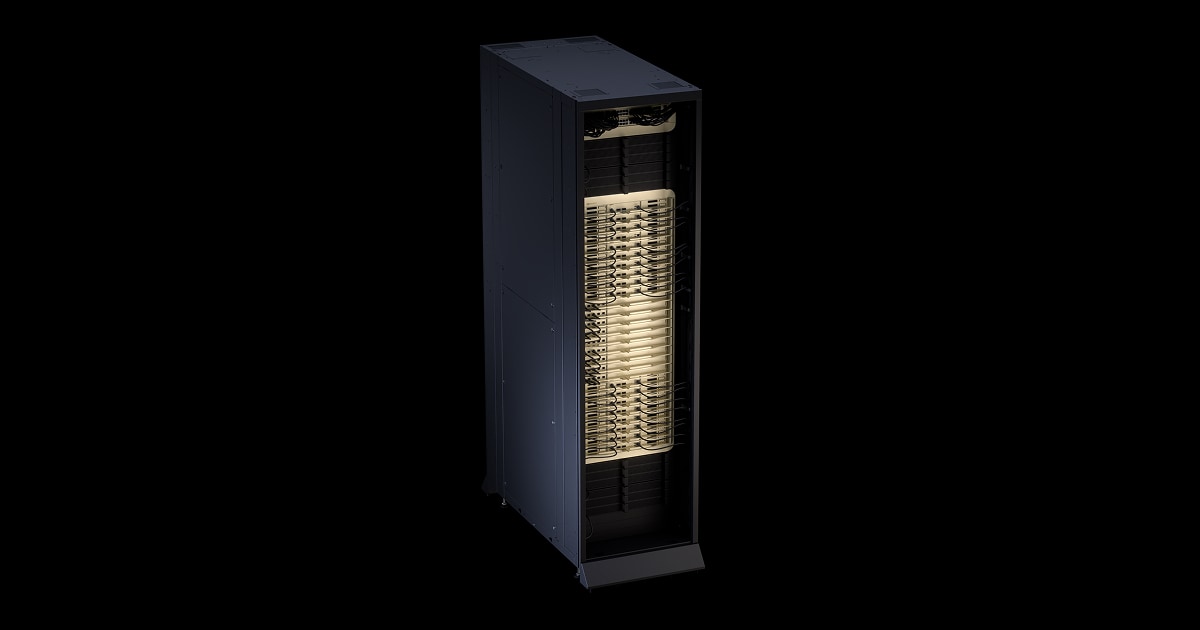
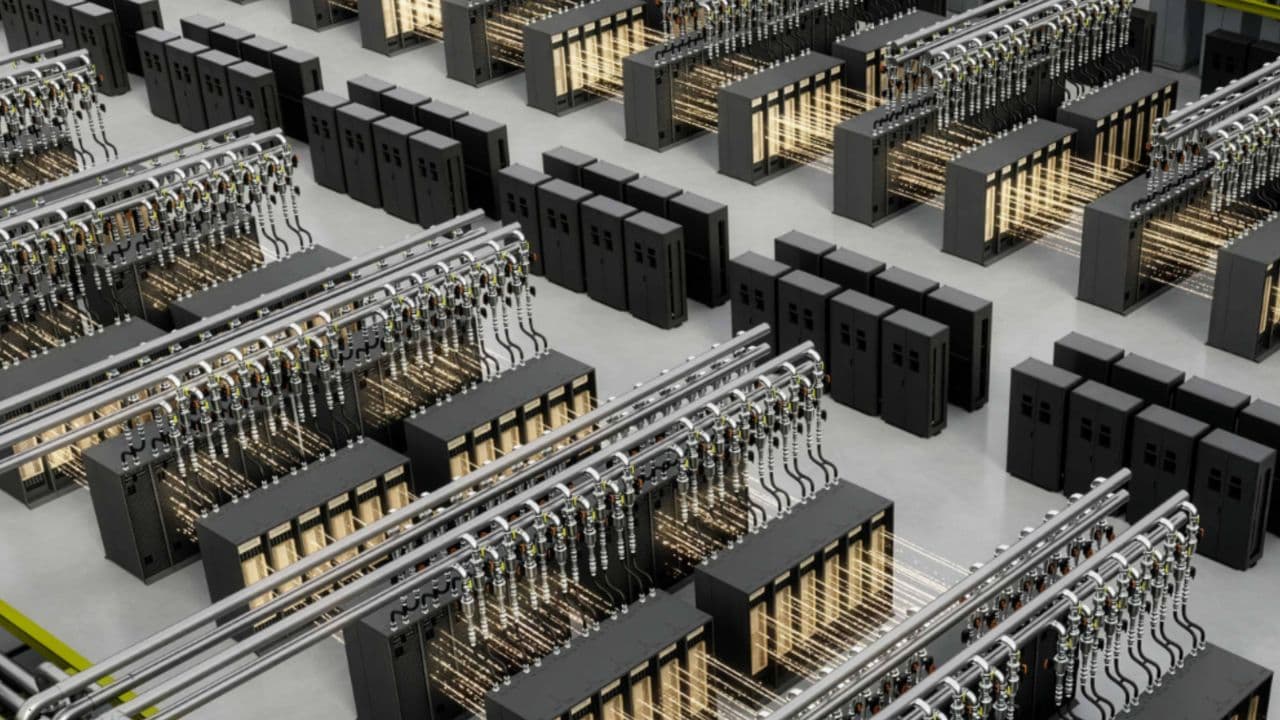
Nvidia and Japan's Noetra Corp. unveiled plans for a 140-megawatt AI factory packing 27,500 Rubin GPUs and 13,750 Vera CPUs According to Tom's Hardware. The facility, built from 382 Vera Rubin NVL72 racks on Nvidia's DSX reference platform, will train open multimodal foundation models for robotics, digital twins, and industrial automation, with pretrained weights shared broadly with domestic developers.
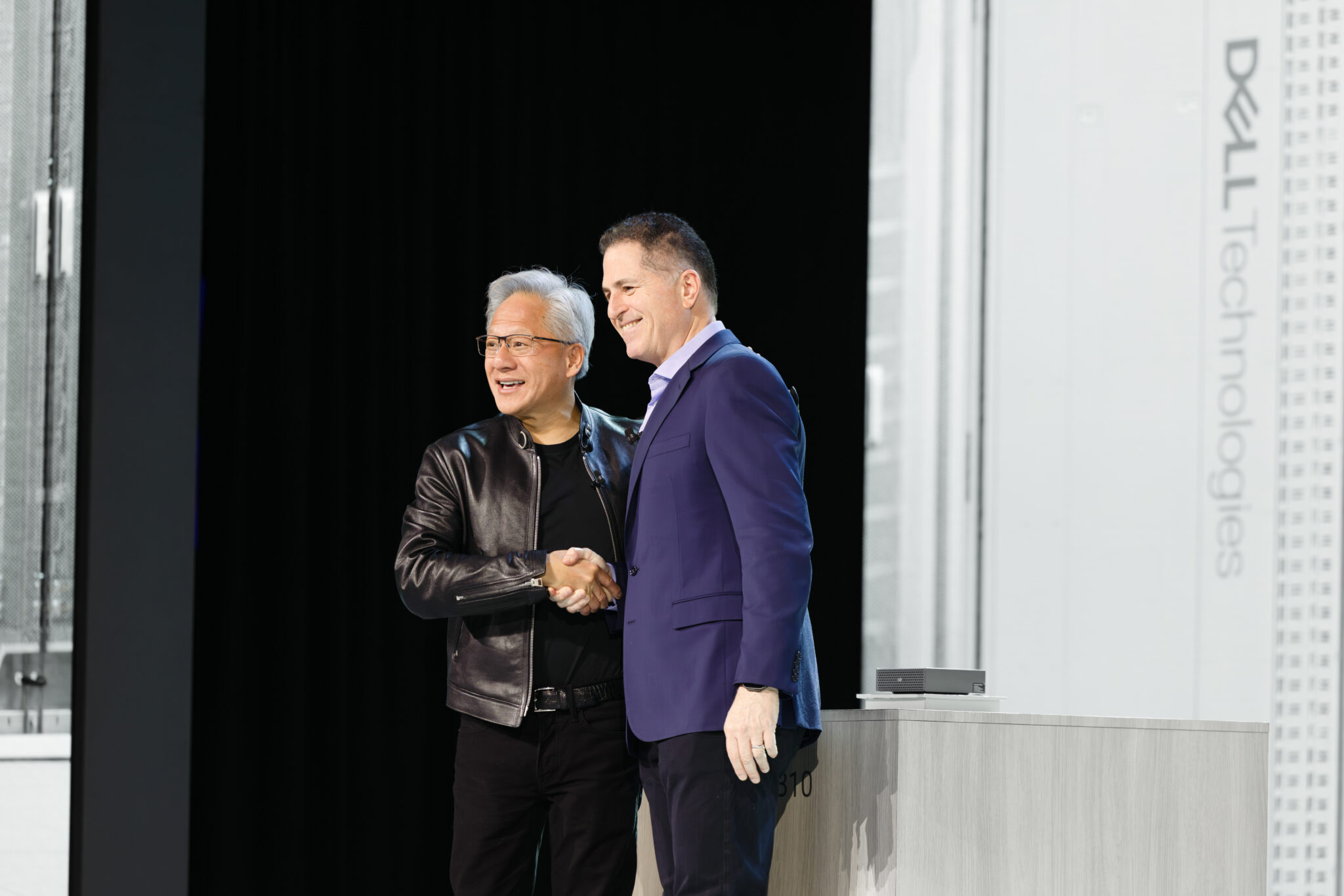
"Japan invented modern manufacturing. Now, it is building the AI factories that will power the next industrial revolution," said Jensen Huang, Nvidia CEO, in the announcement.
The Numbers Behind the Build
The chip counts divide exactly into 382 Vera Rubin NVL72 racks, each housing 72 Rubin GPUs and 36 Vera CPUs. Neither company disclosed the project's cost, but VR200 NVL72 systems are currently quoted at $5 million to $7 million apiece, putting rack hardware alone between $1.9 billion and $2.7 billion. Morgan Stanley estimates Nvidia will charge $55,000 per Rubin GPU in volume, pricing the GPU silicon at roughly $1.5 billion before memory, networking, and cooling.
No deployment timeline was given, but Rubin racks are only expected to reach volume production in the second half of 2026, and Nvidia said the facility will support trillion-parameter model training "as the AI factory expands," suggesting a phased ramp.
Who's Behind Noetra
Noetra is a new consortium founded by SoftBank Corp., Sony, NEC, and Honda, with investment from 44 companies and organizations. Noetra and the national research institute AIST won a NEDO public tender on June 30 to run the FRONTia project from fiscal 2026 through fiscal 2030, with ¥387.3 billion (roughly $2.4 billion) in first-year funding and up to ¥1 trillion (roughly $6.1 billion) over five years [Asia Times reported]. Funding beyond the first two years is subject to annual stage-gate reviews.
Noetra's roadmap targets a reasoning foundation model in fiscal 2026, an omni-modal model processing text, images, video, and audio by fiscal 2028, and "real-world native AI" capable of spatial awareness by fiscal 2030, per NEC.
Why This Differs From Other Japanese AI Builds
The AI factory follows SoftBank's Blackwell-based DGX supercomputer, announced in 2024, and FugakuNEXT, the $740 million RIKEN, Fujitsu, and Nvidia zetta-scale system due around 2030. But this is the first state-tendered national infrastructure rather than a corporate or scientific machine. Japan's AI Robotics Strategy, released in March, targets more than 30% of the global AI robotics market by 2040, an opportunity the government estimates at $133 billion.
The unique angle: this is a sovereign AI bet dressed as a robotics play. Unlike the U.S. where hyperscalers build private clusters, Japan is treating AI compute as public infrastructure — and conditioning the full $6.1 billion on annual stage-gate reviews that will test whether the open-model strategy delivers real-world robot autonomy. If Noetra's fiscal 2026 reasoning model falls short, the government can pull the plug on subsequent funding.
Key Takeaways
- Japan and Nvidia announced a 140MW AI factory with 27,500 Rubin GPUs.
- The $2B+ state-backed facility will train open models for robotics under FRONTia.
What to watch
Watch for Noetra's fiscal 2026 reasoning foundation model release and whether it passes the first stage-gate review, which would unlock the next tranche of ¥387.3 billion. Also track Rubin rack delivery timelines — any delay past H2 2026 would push the entire FRONTia schedule right.
Source: tomshardware.com