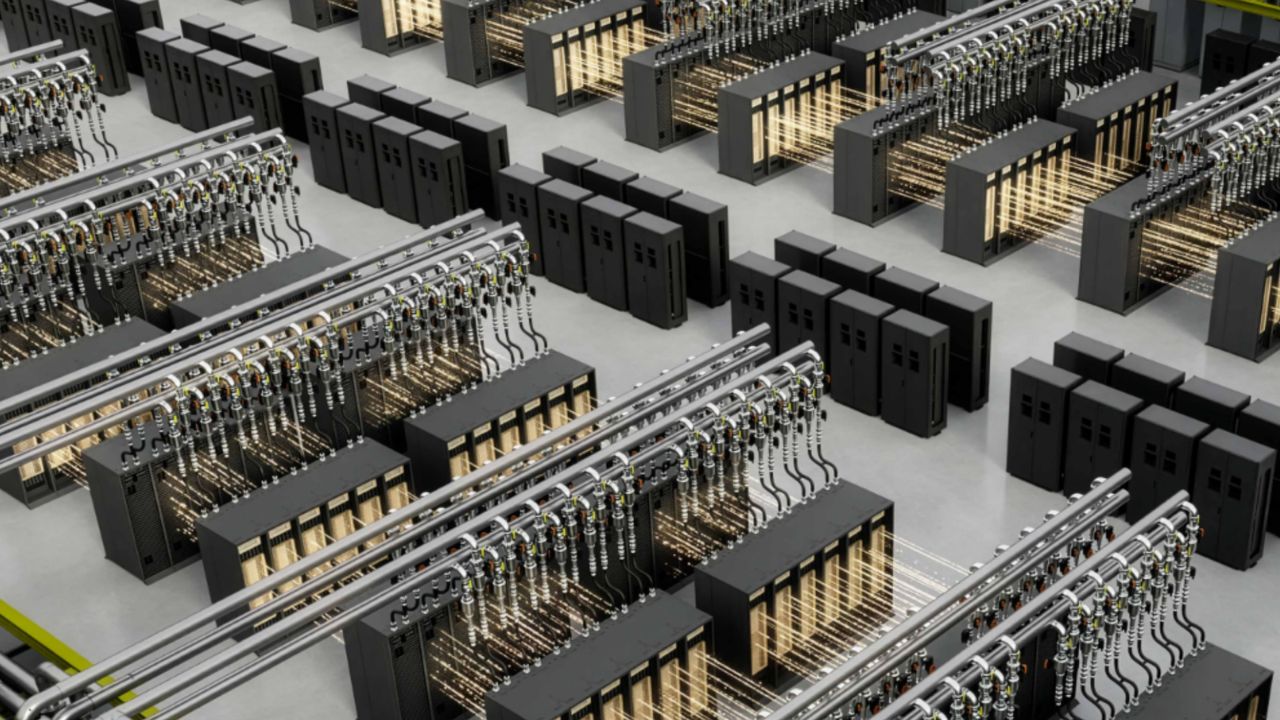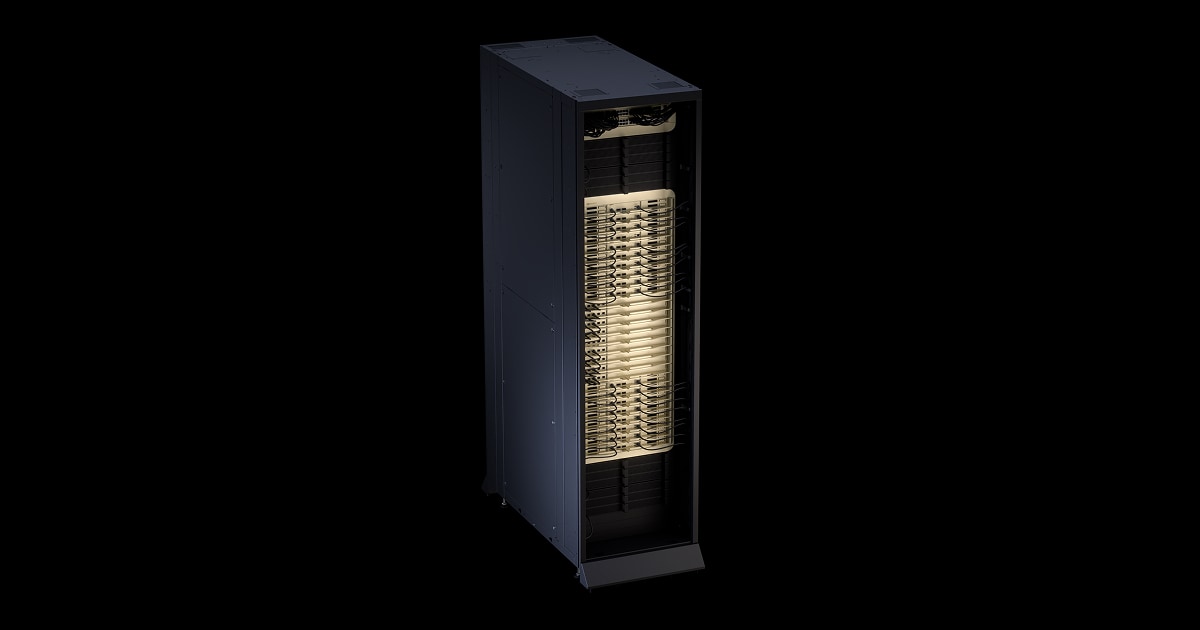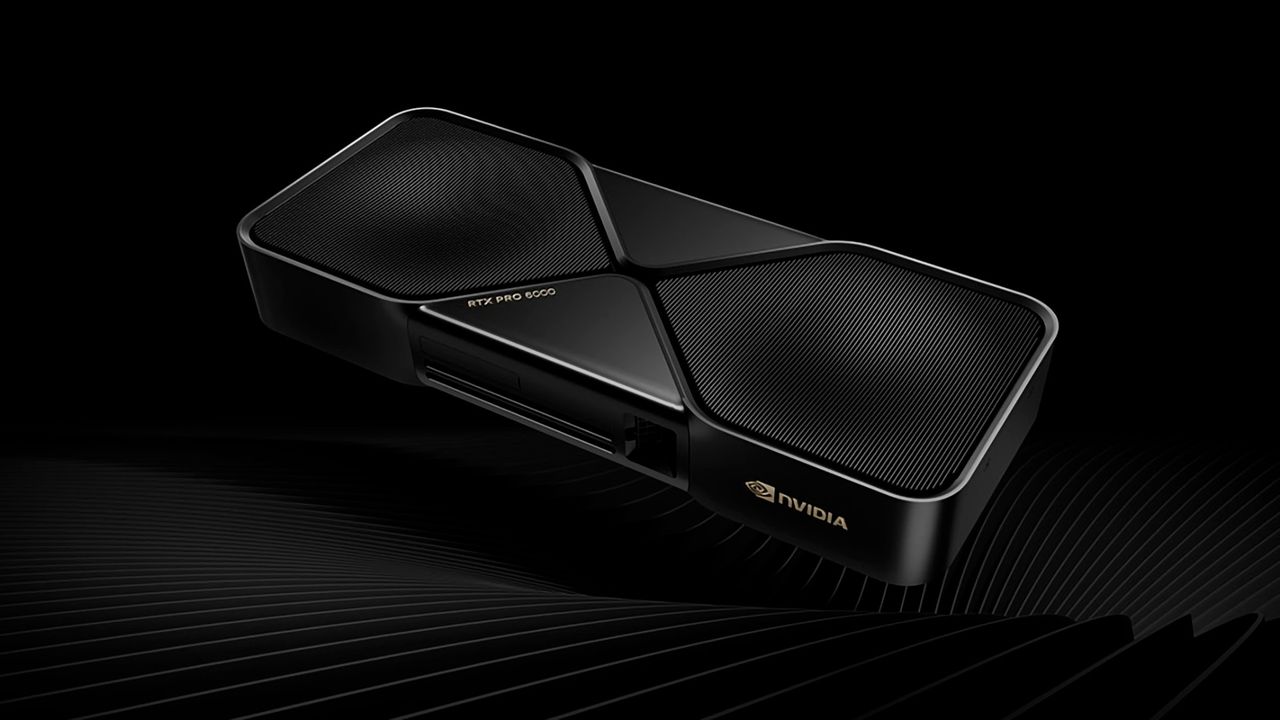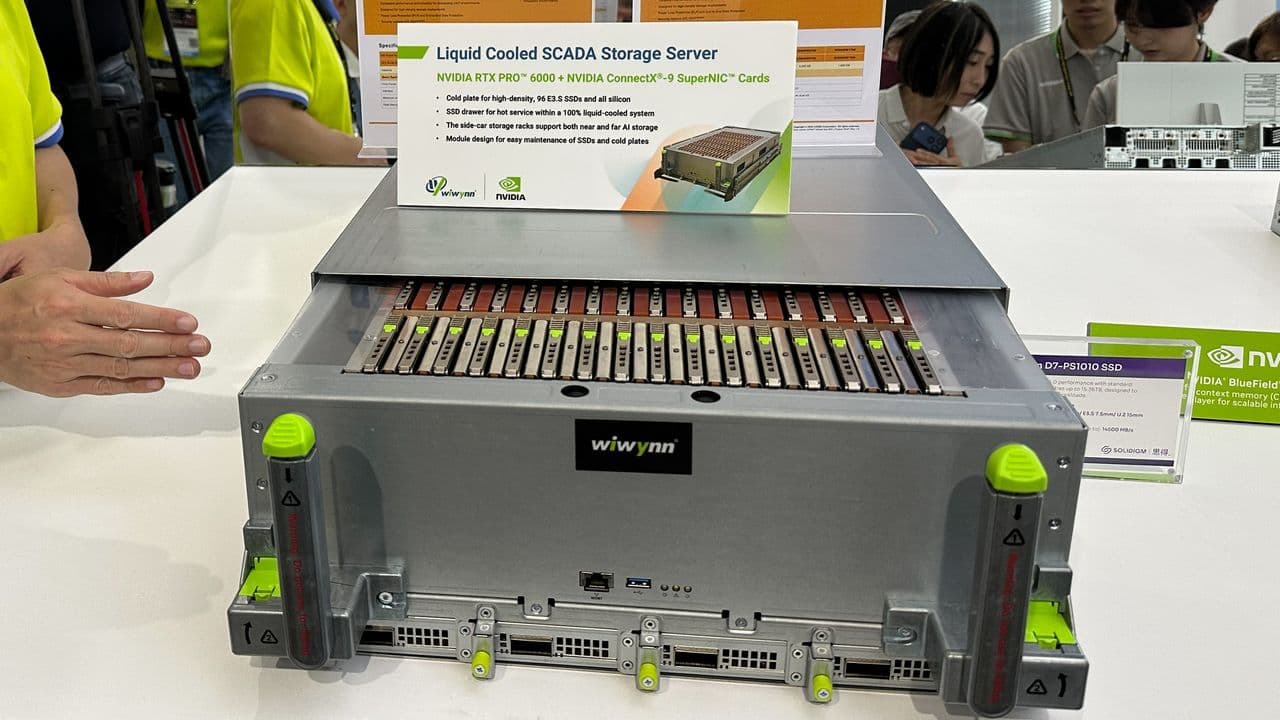
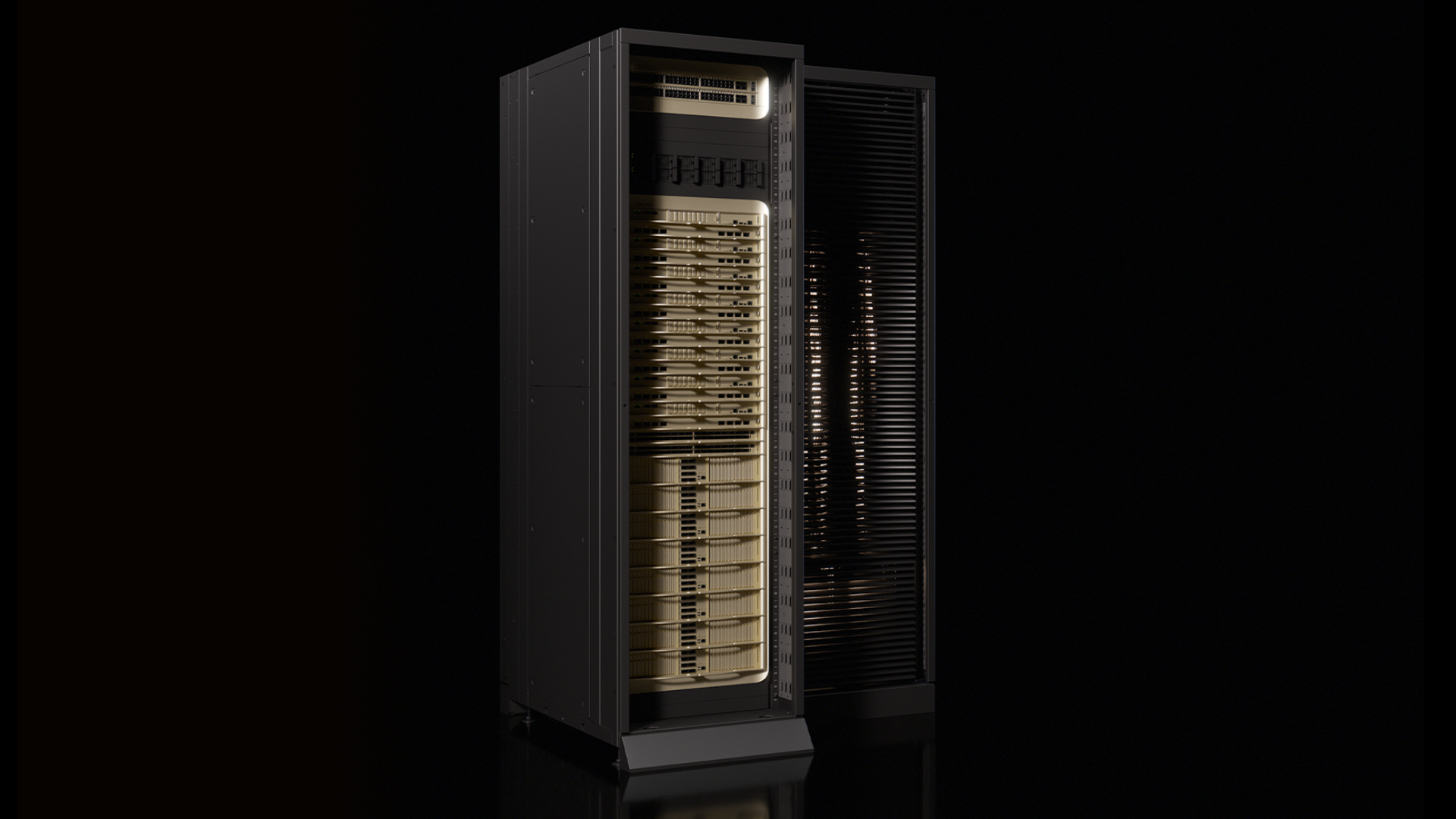
Wiwynn demonstrated the first Nvidia SCADA server at Computex 2026, packing 96 liquid-cooled SSDs for 2.9 PB of storage. The system uses four blackwell" class="entity-chip">RTX Pro 6000 Blackwell GPUs to handle storage I/O directly, bypassing the CPU bottleneck.
Key facts
- 96 liquid-cooled E3.S SSDs in a single SCADA server.
- 2.949 PB max storage with 96x 30.72 TB Micron 9650 Pro drives.
- 528 million IOPS aggregated random read speed claimed.
- Four RTX Pro 6000 Blackwell GPUs handle I/O directly.
- SCADA previewed late 2025, first server demo at Computex 2026.
At Computex 2026, Wiwynn showed one of the industry's first Nvidia SCADA (SCaled Accelerated Data Access) servers, targeting the extreme data demands of AI inference and training workloads. The machine is based on Nvidia's Vera CPU, four RTX Pro 6000 Blackwell graphics cards, four PCIe 6.x switches, and four ConnectX-9 SuperNIC cards According to Tom's Hardware.
Key Takeaways
- Wiwynn showed first Nvidia SCADA server at Computex 2026: 2.9 PB storage, 528M IOPS, GPUs bypass CPU for I/O.
- Marks shift in AI storage architecture.
Why SCADA Removes the CPU
Modern AI inference workloads—vector search, retrieval-augmented generation (RAG), graph analytics, and KV-cache retrieval—rely on fine-grained random accesses often involving data blocks smaller than 4KB, with extreme parallelism from thousands of GPU threads. Traditional CPU-centric I/O creates bottlenecks because the CPU must issue commands, manage requests, and control data transfers. Even GPUDirect Storage leaves the CPU on the control path.
The SCADA platform, previewed in late 2025, lets GPUs initiate and control storage I/O operations directly, without involving a central processor. SCADA runs on PCIe 6.x hardware from partners like Broadcom and Micron, and customers can build their own SCADA machines with commercially available components. Wiwynn appears to be among the first server makers to showcase a SCADA server.
Storage and Performance Specs
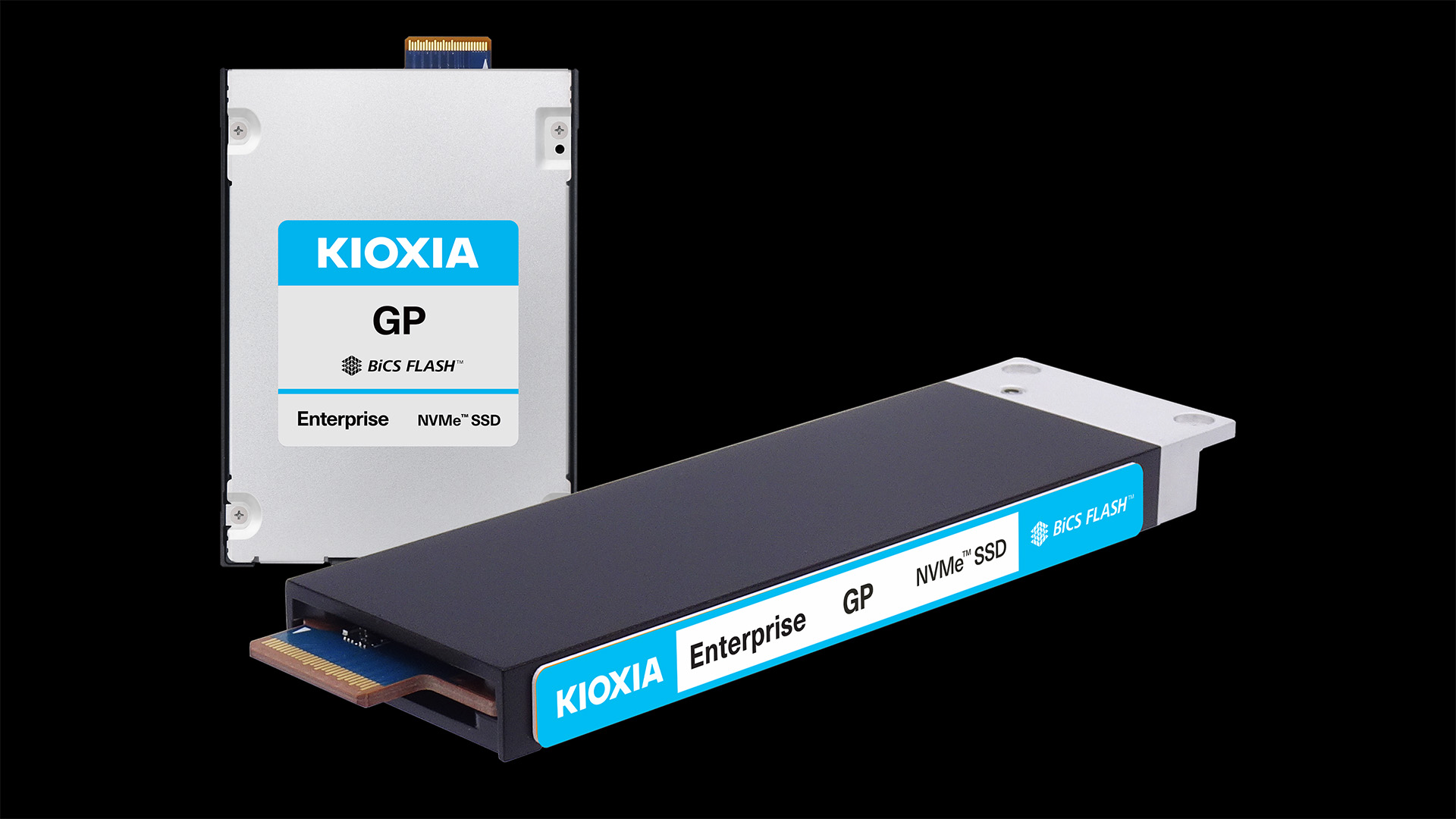
Wiwynn's SCADA server supports up to 96 liquid-cooled E3.S SSDs. When equipped with 96 30.72 TB Micron 9650 Pro drives with a PCIe 6.0 interface, the server stores 2.949 PB of data. Wiwynn claims an aggregated random read speed of 528 million IOPS, though the company did not disclose latency figures or power consumption.
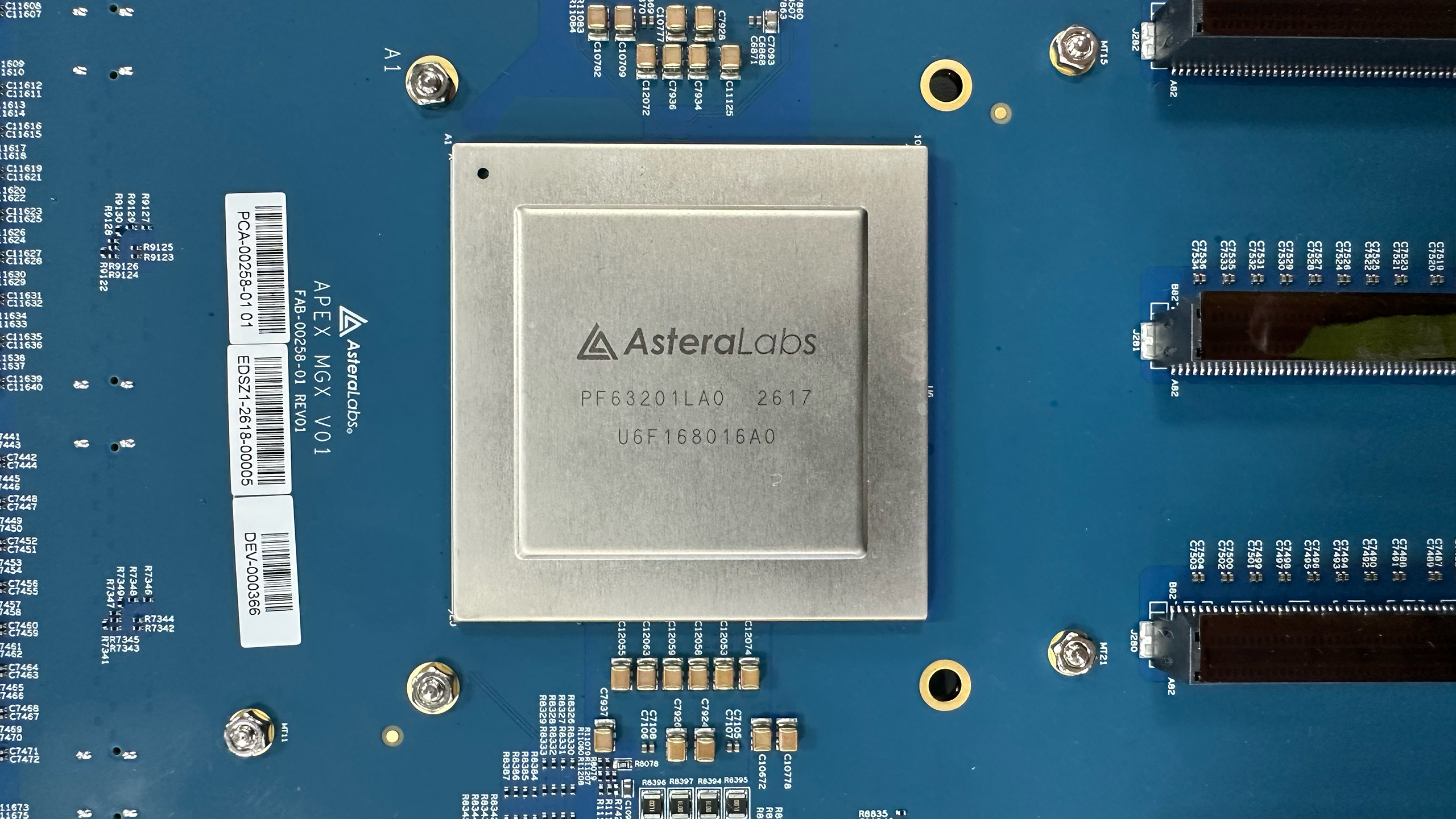
The server leverages Nvidia's Blackwell architecture, which was also featured in recent Nvidia announcements including NVFP4 4-bit precision for Blackwell GPUs and the Vera Rubin NVL72 rack shown by Supermicro. This aligns with Nvidia's broader push to eliminate I/O bottlenecks as AI models grow—the Nemotron 3 Ultra 550B open-weight model released earlier this month demands massive dataset throughput.
A Structural Observation
The SCADA server arrives at a moment when the industry is racing to scale AI infrastructure. KKR's $10B Helix Digital Infrastructure launch and OpenAI's 10GW Ohio data center plans underscore the demand for storage that keeps pace with compute. But SCADA's real significance is architectural: it challenges the assumption that CPUs must mediate all storage access. If GPUs can own the I/O path, the traditional server hierarchy flips—storage becomes a peer to compute, not a peripheral.
This is not just a faster SSD enclosure. It is a rethinking of the data plane for AI clusters, one that could reshape how hyperscalers design their storage backends. The question is whether SCADA's PCIe 6.0 dependency and liquid-cooling requirements will limit adoption to top-tier operators.
What to watch
Watch for benchmark results from hyperscalers deploying SCADA in production, particularly latency-per-query for RAG workloads. Also track whether Broadcom and Micron ramp PCIe 6.0 switch and SSD supply—SCADA's adoption depends on component availability.
Source: tomshardware.com