Nvidia's Latin America chief denied Anthropic's allegations that the region has become a channel for restricted AI chips flowing into China. The denial, reported by Pandaily, comes amid escalating tensions between the two AI giants over export controls.
Key facts
- Nvidia's Latin America chief denied Anthropic's chip smuggling allegations.
- Anthropic claimed Latin America channels restricted chips to China.
- Nvidia expressed frustration with U.S. export controls.
- Anthropic is reportedly seeking $2B at a $30-40B valuation.
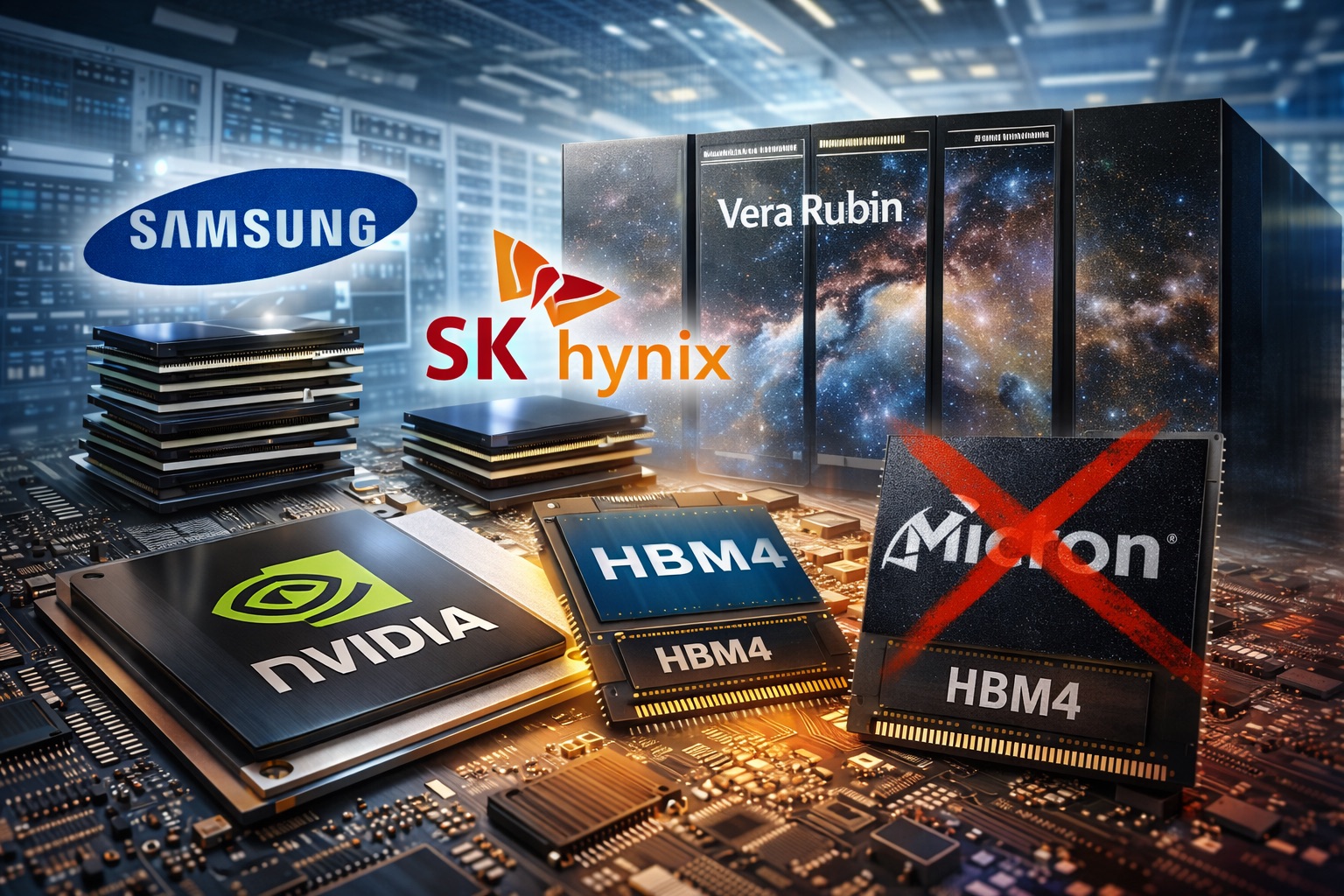
- Nvidia qualified HBM4 for Vera Rubin from Samsung, SK Hynix, Micron.
Nvidia's Latin America chief has publicly refuted Anthropic's claims that the region is being used as a smuggling route for restricted AI chips into China. According to Pandaily, the executive expressed frustration with U.S. export controls, which have created complex compliance challenges for global chip sales.
Background of Allegations
Anthropic, the AI safety company founded by former OpenAI executives Dario and Daniela Amodei, had previously raised concerns about Latin America becoming a transshipment hub for Nvidia's high-end chips, including the H100 and Blackwell series, which are restricted under U.S. export rules. The allegations surfaced as part of Anthropic's broader advocacy for tighter AI governance, a stance that has put it at odds with Nvidia's commercial interests.
Nvidia's denial is notable for its directness. The Latin America chief stated that the company found no evidence of such smuggling and criticized the regulatory environment that forces companies to navigate conflicting demands from different governments. This echoes a pattern seen in recent weeks: Nvidia has been vocal about the costs of export controls, including in its NVFP4 announcement where it highlighted the need for efficient AI compute to offset supply chain restrictions.
Industry Context
The denial comes at a tense moment for both companies. Anthropic has been on a funding spree, reportedly seeking $2B at a $30-40B valuation, and recently published research on model scaling with Stanford, MIT, and Harvard. Nvidia, meanwhile, is preparing for its Vera Rubin platform with qualified HBM4 memory from Samsung, SK Hynix, and Micron. The chip smuggling allegations add a geopolitical dimension to their rivalry, which already includes competition in AI models—Anthropic's Claude Opus 4.6 and Claude Sonnet 4.6 versus Nvidia's hardware ecosystem.
Unique Take: A Proxy War Over Export Controls
This public spat is less about actual smuggling and more about each company's strategic positioning. Anthropic, as a safety-focused firm, benefits from tighter export controls that limit competitors' access to advanced chips. Nvidia, as a hardware vendor, loses revenue when restrictions shrink its addressable market. The Latin America denial is Nvidia's attempt to push back against a narrative that could lead to even stricter regulations, which would harm its bottom line while potentially slowing Anthropic's competitors.
Nvidia's frustration with U.S. export controls is well-documented. The company has argued that restrictions are ineffective and merely push demand to other suppliers like AMD. Anthropic's allegations, whether substantiated or not, serve to reinforce the case for more controls, a dynamic that pits the two companies' interests directly against each other.
What to Watch
The key metric to track is whether the U.S. Commerce Department's Bureau of Industry and Security (BIS) opens an investigation into Latin American chip flows. If it does, it will signal that Anthropic's allegations have gained traction. Additionally, watch for Nvidia's Q2 2026 earnings call, where executives may address the impact of export controls on Latin American revenue. Any changes to the Entity List or new licensing requirements for Latin American countries would be a clear escalation.
Source: pandaily.com
Key Takeaways

- Nvidia's Latin America chief denied Anthropic's allegations of chip smuggling to China via the region, expressing frustration with U.S.
- The denial highlights tensions between AI safety and hardware sales.