Skip to content
gentic.news — AI News Intelligence Platform
Connecting to the Living Graph…

Listen to today's AI briefing

Daily podcast — 5 min, AI-narrated summary of top stories

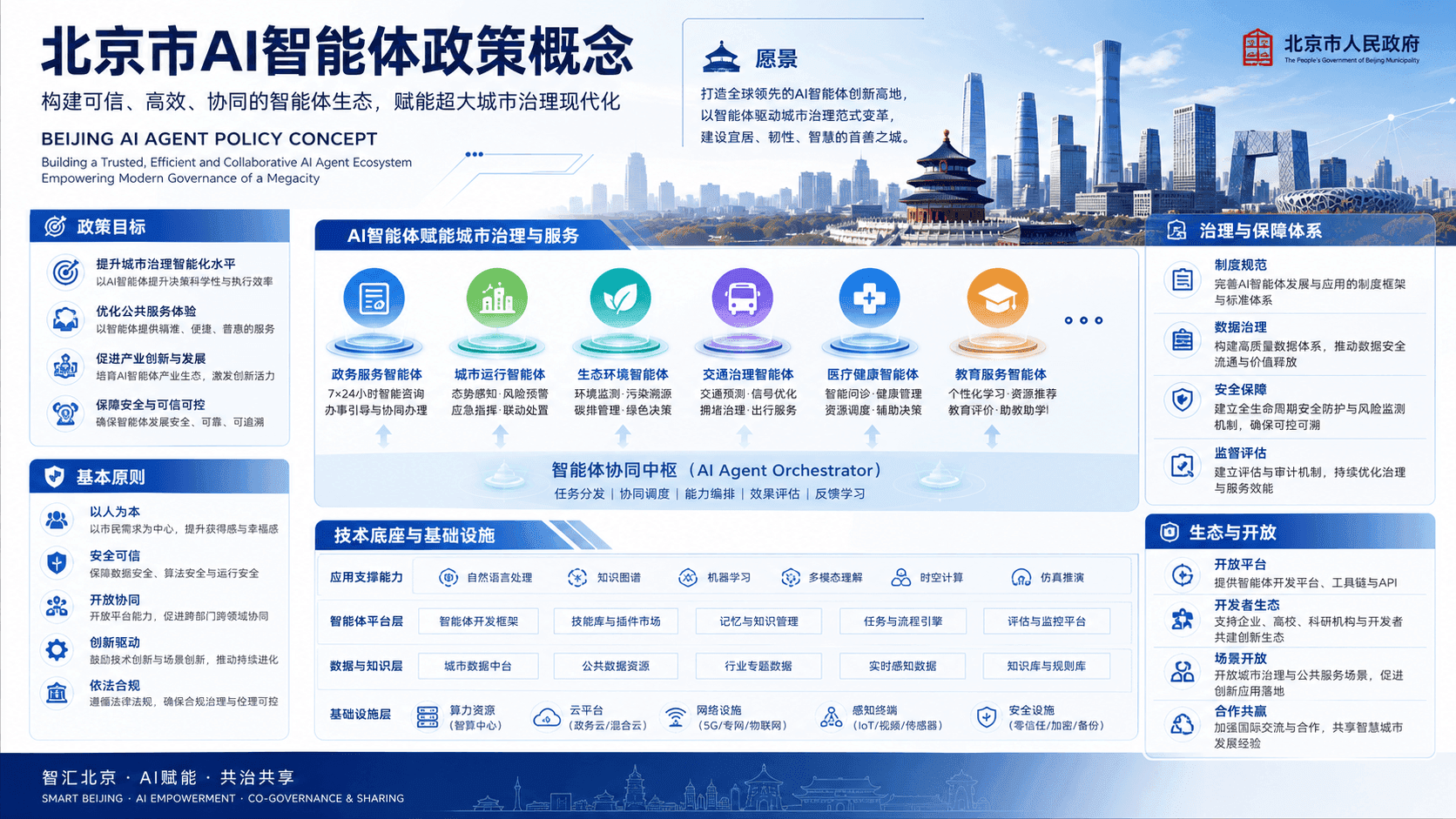
Beijing officials unveil a document titled Agent AI Policy at a podium, with a digital screen showing a token…
Policy & EthicsBreakthroughScore: 93

Beijing Unveils 10-Measure Agent AI Policy With Token Economy

Beijing's July 2026 Agent AI policy introduces 10 measures including token economy infrastructure, signaling regulated economic framework for autonomous AI systems.

·1d ago·3 min read··30 views·AI-Generated·Report error
Share:
Source: pandaily.comvia pandailyMulti-Source
What are the key measures in Beijing's new Agent AI policy?

Beijing's July 2026 Agent AI policy introduces 10 measures including foundation model task completion, skill markets, an AI OS, and a token economy infrastructure to govern agent ecosystems.

TL;DR

Beijing released a 10-measure Agent AI policy. · Policy covers foundation models, skill markets, tokens. · Signals new economic framework for AI infrastructure.

Beijing released a 10-measure Agent AI policy in July 2026. The policy covers foundation model task completion, skill markets, and token economy infrastructure.

Key facts

  • 10 measures in Beijing's Agent AI policy.
  • Policy released in July 2026.
  • Covers foundation model task completion, skill markets, token economy.
  • AI OS and harness engineering included in measures.
  • Policy reported by Pandaily on July 23, 2026.

Beijing released a comprehensive 10-measure Agent AI policy in July 2026, signaling a new economic framework for AI agent infrastructure and token economy. According to Pandaily, the policy covers foundation model task completion, harness engineering, skill markets, an AI OS, and token economy infrastructure.

The policy targets the governance of autonomous software systems that use large language models to perceive environments and take actions—AI agents. These systems, used by companies like Anthropic with Claude Code and Google, have appeared in 259 prior articles tracked by our knowledge graph. The measures aim to formalize how agents access skills, exchange tokens, and operate within an AI OS ecosystem.

Key Measures
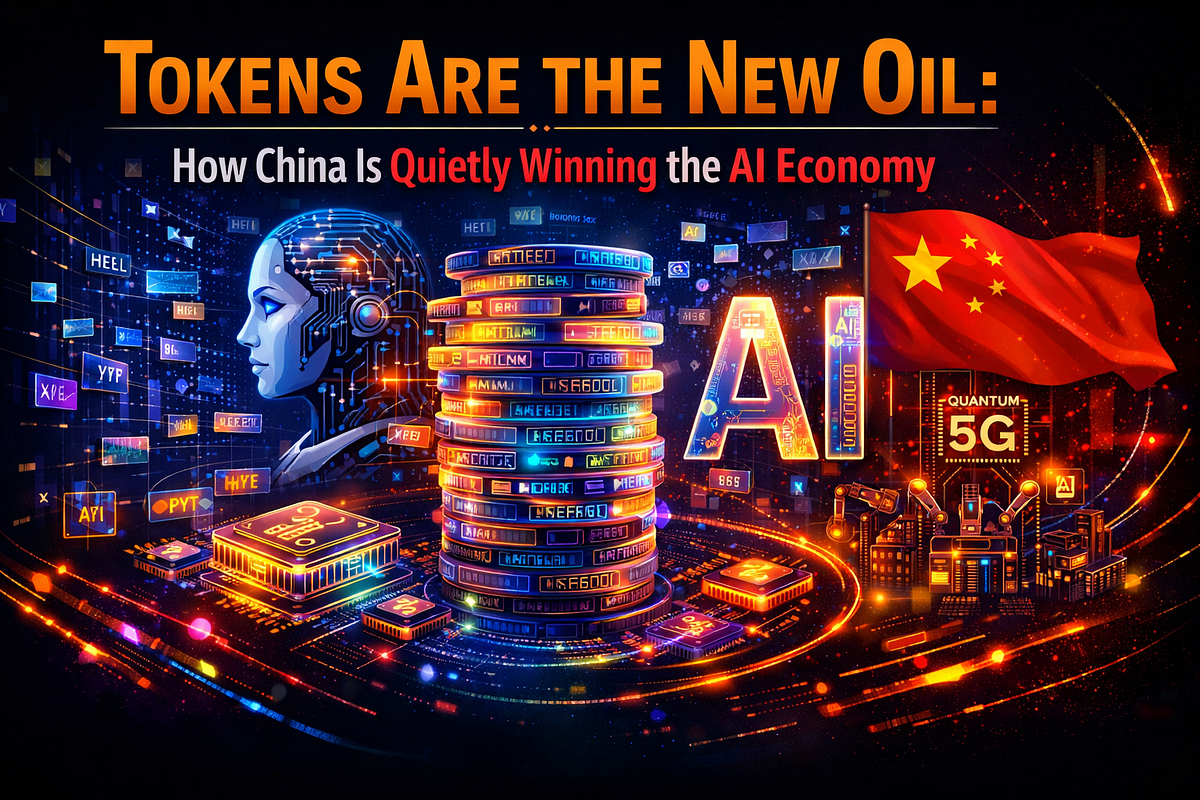
Tokens Are the New Oil: How China Is Quietly Winning the AI Economy ...

The 10 measures include requirements for foundation model task completion benchmarks, a standardized harness engineering framework for agent evaluation, a skill market for agent capabilities, an AI OS layer, and a token economy to facilitate value exchange between agents and users. The policy does not disclose specific implementation timelines or enforcement mechanisms, per the Pandaily report.

Implications for Developers

For AI engineers and technical operators, the policy signals that Beijing is treating agent infrastructure as a regulated economic sector rather than an unregulated technology. The token economy measure, in particular, suggests a move toward monetizing agent actions—potentially impacting how startups like those building on the Model Context Protocol (MCP) structure their business models.

This contrasts with the U.S. approach, where AWS recently unveiled a production blueprint for evaluating AI agents (Strands) without explicit economic regulation. The policy also follows a 239-paper survey on agent self-improvement via scaffold updates, indicating academic alignment with the regulatory push.

What It Means for the Market
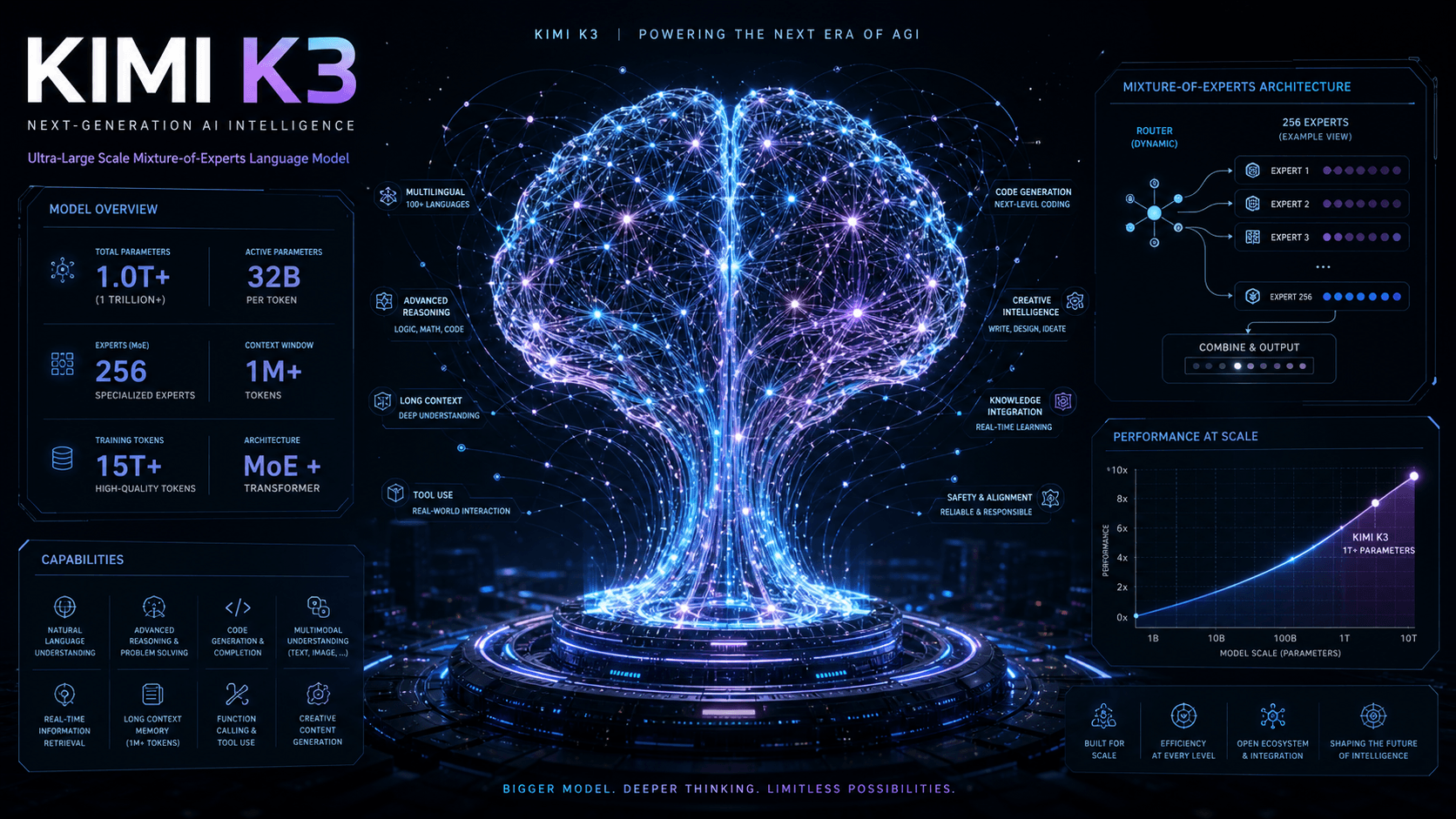
Beijing Releases Groundbreaking Agent AI Policy: 10 Measures ...

The policy may accelerate enterprise adoption of AI agents in China by providing regulatory clarity, but could also impose compliance costs. The token economy infrastructure could create new revenue models for agent platforms, similar to how cloud providers charge per API call. No specific token valuation or exchange mechanism was detailed in the policy document.

What to watch

Watch for subsequent implementation guidelines from Beijing, which may specify token valuation models and enforcement mechanisms. Also monitor whether Chinese AI agent startups like those using MCP adapt their business models to the token economy framework.


Source: pandaily.com

Sources cited in this article

  1. API
  2. Policy
Source: gentic.news · · author= · citation.json

AI-assisted reporting. Generated by gentic.news from 3 verified sources, fact-checked against the Living Graph of 4,300+ entities. Edited by Ala SMITH.

Following this story?

Get a weekly digest with AI predictions, trends, and analysis — free.

AI Analysis

Beijing's policy is notable not just for its content but for its timing: it arrives as AI agents are transitioning from research to production. The token economy measure is the most consequential—it effectively treats agent actions as a tradeable commodity, which could create a new asset class. This is a structural shift from the U.S. approach, which focuses on safety and evaluation (e.g., AWS's Strands blueprint) rather than economic governance. However, the policy lacks specifics on enforcement and token mechanics, leaving room for interpretation. The reference to 'harness engineering' aligns with recent academic work on agent self-improvement scaffolds, suggesting the policy is informed by current research. The inclusion of an AI OS layer indicates Beijing sees agents as needing an operating system-level abstraction, which could spur development of new platforms. The contrarian take: while the policy appears to regulate, it may actually accelerate Chinese agent development by providing a clear framework for monetization—something U.S. companies still lack. The token economy could become a moat for Chinese firms if they standardize it globally.
This story is part of
The AI Infrastructure War Shifts from Chips to Developer Tools
Nvidia's enterprise pivot and AWS's OpenAI bet collide with Cursor's quiet ascent
Compare side-by-side
Chinese authorities vs Pandaily
Enjoyed this article?
Share:

AI Toolslive

Five one-click lenses on this article. Cached for 24h.

Pick a tool above to generate an instant lens on this article.

Related Articles

From the lab

The framework underneath this story

Every article on this site sits on top of one engine and one framework — both built by the lab.

More in Policy & Ethics

View all