SSSTC expanded its immersion-cooling SSD portfolio at Computex 2026. The new drives target AI data center thermal challenges, where GPU clusters routinely exceed 50 kW per rack.
Key facts
- SSSTC expanded immersion-cooled SSD lineup at Computex 2026.
- Drives target AI data center thermal challenges.
- Google building $5B+ Texas data center for Anthropic.
- SSSTC did not disclose pricing or availability.
- Samsung PM9D3a offers up to 30.72 TB with immersion support.
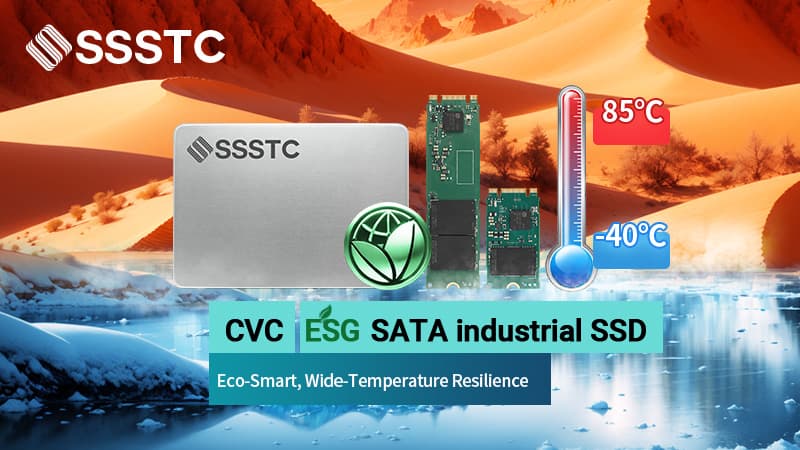
SSSTC, a subsidiary of Taiwan-based memory and storage firm, unveiled an expanded line of immersion-cooled SSDs at Computex 2026 in Taipei. The company according to Yahoo Finance Singapore said the drives are engineered for direct liquid cooling environments, a rapidly standardizing requirement for high-density GPU clusters used in AI training and inference.
The expansion comes as AI data centers push past traditional air-cooling limits. Google, for instance, has committed to 24/7 carbon-free energy by 2030 and is building a $5B+ Texas data center for Anthropic with 500 MW capacity — facilities where immersion cooling is increasingly specified. SSSTC did not disclose pricing, capacity, or availability windows for the expanded lineup, which the company positions against offerings from Samsung, Kioxia, and Micron.
Why immersion cooling matters for SSDs
Standard SSDs degrade rapidly in immersion fluids if not purpose-built. The dielectric fluids used in single-phase and two-phase immersion cooling can corrode connectors, warp seals, and cause data errors. SSSTC's portfolio addresses this with sealed enclosures and fluid-resistant materials, though the company has not published reliability data or MTBF ratings for the new drives.
The competitive landscape
SSSTC competes in a market where Samsung and Micron already offer liquid-cooled enterprise SSDs. Samsung's PM9D3a, announced in early 2026, supports both air and immersion cooling with capacities up to 30.72 TB. SSSTC's advantage, if any, lies in its Taiwan-based manufacturing proximity to server ODM giants like Wistron and Quanta, which assemble a large share of AI servers for hyperscalers including Google Cloud.
What SSSTC didn't say
The company did not specify which immersion fluid standards the drives comply with (e.g., 3M Novec, engineered fluids from Solvay or Chemours), nor did it disclose whether the drives support PCIe 5.0 or the newer PCIe 6.0 interface. Given that AI workloads benefit from higher bandwidth, the absence of PCIe 6.0 support would limit the drives to existing GPU server designs.
What to watch

Watch for SSSTC to disclose pricing and availability at the OCP Global Summit in October 2026, and whether the drives achieve PCIe 6.0 certification — a key differentiator for next-gen AI server architectures.
Source: news.google.com