The Innovation — What the Source Reports
According to a report highlighted by Chain Store Age, the landscape of online commerce is on the cusp of a profound transformation driven by Agentic AI. The core prediction is stark: up to half of all online transactions could be facilitated by autonomous AI agents by 2027.
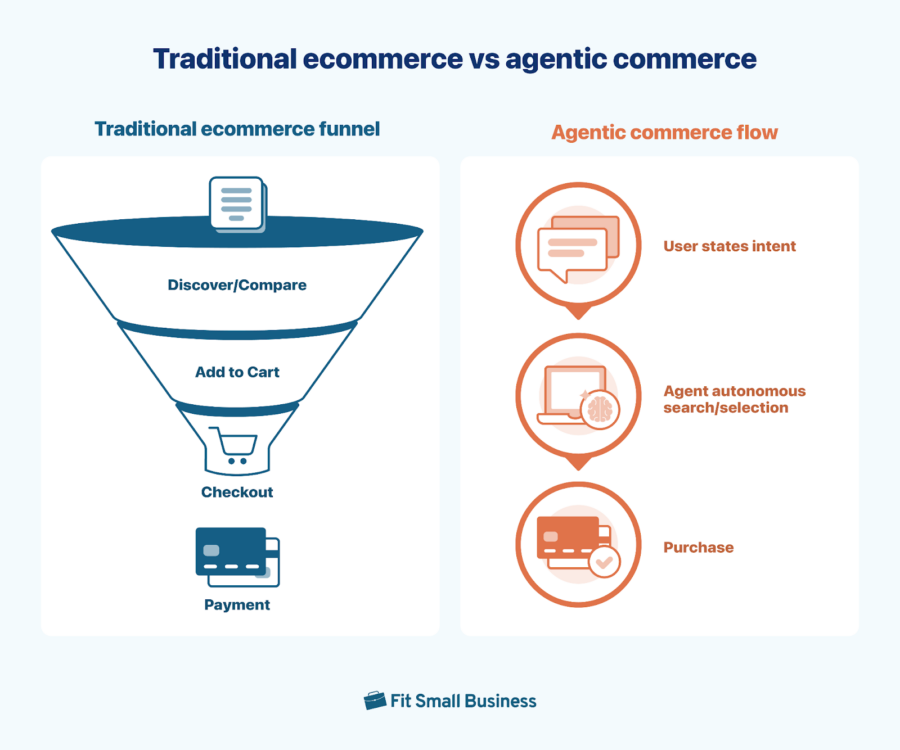
This forecast points to a paradigm shift from today's predominantly human-driven or simple automated checkout processes. Agentic AI refers to systems that can operate autonomously to achieve complex goals. In a retail context, this means AI that doesn't just recommend a product but can actively research, compare, negotiate, and complete a purchase on behalf of a user based on high-level instructions (e.g., "Find me a sustainable wool coat under $800 for an upcoming trip to London").
The report's timing aligns with a surge in industry activity and capability. The knowledge graph context shows Google's recent launches—like AI agents integrated into Google Maps and the removal of rate limits for its Gemini API—signal a rapid infrastructure build-out necessary to support such agentic ecosystems at scale. The massive $650 billion investment by tech giants in AI compute, as noted, provides the foundational horsepower for these complex, multi-step AI tasks.
Why This Matters for Retail & Luxury
For luxury and premium retail, the implications are particularly nuanced and significant:
- The End of the Simple Funnel: The customer journey ceases to be a linear path from browse to cart. An agent could simultaneously check inventory across a brand's website, its boutique partners, and pre-owned markets, handle authentication queries, and secure the item—all while the customer is offline. Conversion becomes an event orchestrated in the background.
- Hyper-Personalization at Scale: Agents will leverage deep customer knowledge—style preferences, size, budget cycles, ethical values—to act as a perfect personal shopper. For luxury, this means an AI that understands not just that a client likes handbags, but that they prefer limited-edition releases from a specific maison, in specific colors, and are willing to be waitlisted.
- Brand Relationship Management: The primary commercial interface for a high-value client could become their AI agent, not the brand's website or sales associate. This shifts competitive dynamics. Loyalty will be influenced by which brands' systems are most agent-friendly—providing rich, accurate, and machine-readable product data, seamless API-based purchasing, and exclusive agent-accessible inventory.
- Reinventing Clienteling: In-store and remote sales associates will be augmented by corporate AI agents. An associate could task an agent with compiling a curated selection of looks for a client based on past purchases and current runway trends, generating a personalized lookbook and securing the items before the client meeting even begins.
Business Impact
The projected 50% figure is a market-wide forecast, but its impact on luxury will be measured in Average Order Value (AOV) and Customer Lifetime Value (CLV), not just transaction volume.
- AOV Potential Increase: Agents optimized for fulfilling a complete need (e.g., "a full black-tie ensemble") will drive basket sizes larger than those built by a human browsing session.
- Inventory Efficiency: AI agents could dynamically manage and sell inventory, including last-season or exclusive items, to the most perfectly matched clients, reducing discounting pressure.
- Service Cost Reallocation: While potentially reducing friction and service overhead in some areas, the premium on providing exceptional, agent-accessible data and experiences will require significant investment in back-end tech stacks.
Implementation Approach
Building for an agentic future is less about creating the consumer-facing agent and more about preparing the digital infrastructure for agents to interact with. The technical requirements are foundational:
- API-First, Headless Commerce: Robust, well-documented APIs for product discovery, inventory checks, and transaction completion are non-negotiable. The checkout process must be fully automatable via API calls.
- Structured, Rich Product Data: Agents will rely on high-fidelity, structured data—far beyond basic titles and images. This includes detailed material provenance, craftsmanship notes, sustainability certifications, dimensional data, and style attributes in a consistent, machine-readable schema (think enhanced Schema.org or custom knowledge graphs).
- Agent Authentication & Authorization: Secure systems must be developed to authenticate AI agents acting on behalf of a known customer, managing permissions and ensuring compliance with purchase limits or exclusive access rules.
- Orchestration Layer: Brands may need to develop or integrate an internal agent orchestration platform to manage interactions between external customer agents, internal inventory/CRM systems, and human sales staff.
The complexity is high, requiring close collaboration between e-commerce, data engineering, and IT security teams. The effort is substantial but must be viewed as a core competitive infrastructure project.
Governance & Risk Assessment
The rise of Agentic AI introduces novel risks that luxury brands, with their reputational premium, must navigate carefully:
- Privacy & Data Sovereignty: An AI agent will require deep access to a customer's preferences and purchase history. Clear, transparent data-sharing agreements and robust security are paramount. Who owns the agent's learned model of the customer's taste—the user, the agent provider, or the brand?
- Brand Dilution & Control: Ceding the final "click" to an autonomous agent risks commoditization. The brand must ensure its unique value proposition—storytelling, heritage, aesthetic—is communicated effectively through the agent's interface. The risk is becoming a mere SKU in an agent's price comparison.
- Bias & Exclusion: If not carefully designed, agentic systems could inadvertently exclude customer segments or perpetuate bias in product sourcing and recommendations, leading to reputational damage.
- Maturity & Reliability: The technology is in its early commercial stages. Dependence on agents for a significant revenue stream requires extreme reliability in the AI's decision-making and a clear framework for error handling and recourse (e.g., easy returns for agent-purchased items).
The timeline to 2027 is aggressive, but the direction is clear. The brands that begin architecting their systems for this agentic reality today will be the ones shaping the rules of engagement tomorrow.