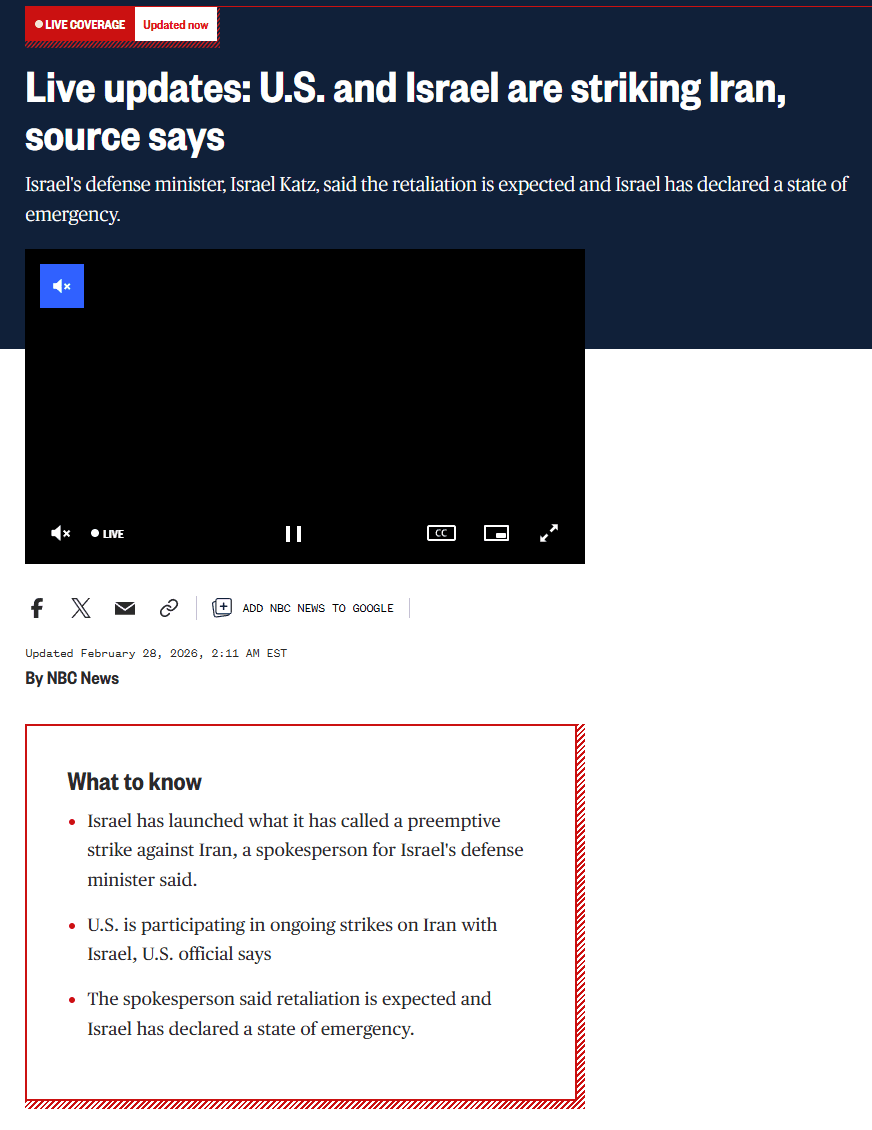
A recent social media post claiming "The Iranian war has officially started" has drawn attention to a growing threat in global conflicts: AI-powered disinformation campaigns. While the tweet itself contained no verifiable information or evidence, its rapid dissemination across platforms illustrates how synthetic media and automated amplification systems can create dangerous false narratives during times of international tension.
The Incident and Its Context
On October 25, 2024, a Twitter account (@kimmonismus) posted a brief message claiming "The Iranian war has officially started" with a link to an external source. The tweet gained immediate traction, being viewed thousands of times within hours despite containing no substantiating evidence. This incident occurred against a backdrop of heightened tensions in the Middle East, where any suggestion of escalated conflict could trigger market volatility, diplomatic reactions, or even military miscalculations.
What makes this particularly concerning is not the content itself—which was quickly flagged by fact-checkers—but the underlying technological infrastructure that allows such claims to spread rapidly. The account in question had characteristics common to disinformation networks: recently created, minimal personal information, and a history of posting provocative content about international conflicts.
The AI Disinformation Ecosystem
Modern disinformation campaigns increasingly leverage artificial intelligence across multiple dimensions:
Content Generation: AI systems can now produce convincing text, images, and videos that appear authentic. While this particular tweet was text-based, similar campaigns often include AI-generated images of military movements or synthetic audio of political leaders making inflammatory statements.
Amplification Networks: Bot networks powered by AI algorithms can automatically like, share, and comment on content to create artificial engagement signals that trick platform algorithms into promoting the content to genuine users.
Personalized Targeting: Machine learning systems analyze user behavior to identify individuals most susceptible to specific narratives, then deliver tailored content designed to maximize emotional response and sharing behavior.
Adaptive Evasion: AI systems continuously test platform moderation systems, learning which phrasing, timing, and presentation methods avoid detection while maximizing reach.
Verification Challenges in the AI Era
The incident highlights growing challenges in information verification:
Velocity vs. Verification: False claims can circle the globe before fact-checkers even begin their work. Platform algorithms optimized for engagement often prioritize sensational content regardless of accuracy.
Context Collapse: Social media strips information from its original context, making it difficult for users to evaluate credibility. A claim about "war starting" might refer to economic measures, cyber operations, or conventional warfare—but the ambiguity creates maximum anxiety.
Epistemic Crisis: When users encounter conflicting claims, they often default to sources that confirm existing beliefs rather than pursuing objective verification, creating self-reinforcing information bubbles.
Platform Responses and Limitations
Major social media platforms have implemented various AI-driven moderation systems, but these face significant challenges:
Scale Issues: With billions of posts daily, even sophisticated AI systems struggle to evaluate context accurately across languages and cultural contexts.
False Positives: Overly aggressive moderation can suppress legitimate discussion, particularly in conflict zones where citizens rely on social media for safety information.
Adversarial Adaptation: Disinformation networks continuously evolve to bypass detection systems, creating an endless arms race between creators and platforms.
Geopolitical Complications: Platforms must navigate conflicting national regulations, with some governments demanding removal of content they consider destabilizing while others may weaponize moderation systems against political opponents.
Broader Implications for Global Security
The proliferation of AI-powered disinformation represents a fundamental shift in conflict dynamics:
Pre-Conflict Escalation: False claims can create conditions that make actual conflict more likely by poisoning diplomatic channels, undermining trust, and creating public pressure for aggressive responses.
Crisis Instability: During actual conflicts, AI-generated false flags or exaggerated claims can trigger disproportionate responses or hinder ceasefire negotiations.
Democratic Erosion: Chronic exposure to synthetic media undermines public trust in institutions and media, making societies more vulnerable to manipulation by both state and non-state actors.
Asymmetric Warfare: Smaller actors can leverage AI disinformation to achieve strategic effects disproportionate to their conventional capabilities, potentially destabilizing regions without traditional military investment.
Technical and Policy Responses
Addressing this challenge requires multi-faceted approaches:
Technical Solutions: Developing better provenance systems for digital content, including cryptographic signatures for authentic media and improved detection algorithms for synthetic content.
Platform Accountability: Regulatory frameworks that require transparency about content amplification, particularly during periods of geopolitical tension.
Media Literacy: Educational initiatives that help citizens identify manipulation techniques and verify information through multiple sources.
International Cooperation: Developing norms and agreements about state behavior in information space, similar to existing frameworks for cyber operations.
Journalistic Adaptation: News organizations must develop new verification workflows that can operate at internet speed while maintaining traditional standards of accuracy.
The Path Forward
The "Iranian war" tweet incident, while ultimately containing no factual claim, serves as a warning about our vulnerability to AI-enhanced disinformation. As synthetic media becomes increasingly sophisticated—with AI systems that can generate convincing video of events that never occurred or simulate the voices of world leaders saying things they never said—the potential for destabilization grows exponentially.
What makes this particularly dangerous is the convergence of multiple technological trends: not just better content generation, but also micro-targeted delivery, automated amplification, and adaptive evasion of moderation systems. This creates an environment where false narratives can achieve unprecedented scale and psychological impact.
Ultimately, addressing this challenge requires recognizing that information integrity is now a fundamental component of national and international security. The same AI capabilities that threaten to destabilize global order might also provide solutions—through better detection systems, improved verification tools, and more transparent information ecosystems. But realizing this potential will require coordinated effort across technology companies, governments, civil society, and individual citizens.
The tweet claiming war had started was false, but the war for truth in the digital age is very real—and we're all participants whether we choose to be or not.