A recent analysis circulating in AI research circles suggests we may be just years away from artificial intelligence systems capable of fully automating or dramatically accelerating the work of elite human research teams. According to sources examining current AI development trajectories, this capability could emerge as early as 2027, with potentially profound implications for international security and technological advancement.
The Timeline to Automated Research
The specific claim, originating from discussions among AI researchers and analysts, posits that "it is plausible, as soon as early 2027, that our AI systems could fully automate, or otherwise dramatically accelerate, the work of large, top-tier teams of human researchers." This projection represents a significant acceleration from previous estimates about AI's research capabilities.
What makes this timeline particularly noteworthy is the focus on "domains where fast progress could cause threats to international security." This suggests researchers aren't just talking about AI assisting with literature reviews or data analysis, but rather systems that could independently drive forward research in sensitive areas like biotechnology, cybersecurity, weapons development, or other dual-use technologies.
Context: The Accelerating Pace of AI Development
This projection comes amid unprecedented acceleration in AI capabilities. Over the past two years alone, we've seen remarkable advances in large language models, multimodal AI systems, and specialized scientific AI tools. Systems like AlphaFold have already revolutionized protein structure prediction, while AI-assisted drug discovery platforms are shortening development timelines.
What's changing is the breadth of these capabilities. Early AI systems excelled at narrow tasks, but contemporary models show increasing ability to integrate across domains, reason through complex problems, and generate novel solutions—capabilities essential for replacing entire research teams.
The Security Implications
The security dimension of this development cannot be overstated. Research acceleration in sensitive domains could fundamentally alter international power dynamics. Consider what might happen if AI systems could:
- Rapidly advance biotechnology research, potentially enabling new classes of pathogens or countermeasures
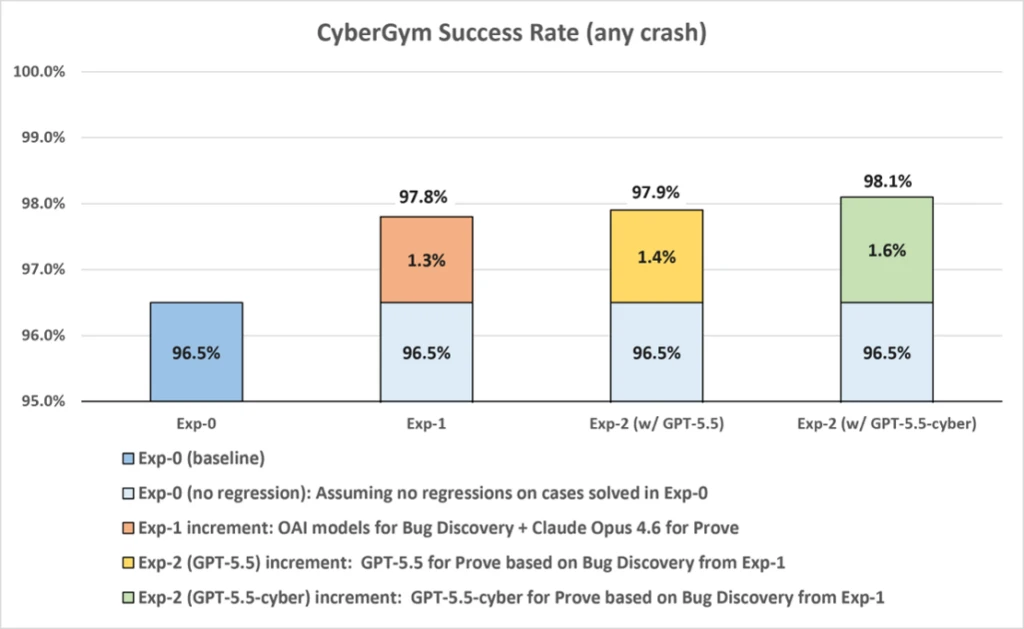
- Accelerate cyberweapon development, creating vulnerabilities and exploits at unprecedented speeds
- Revolutionize materials science, leading to new military technologies
- Automate intelligence analysis and strategic planning
Such capabilities, if concentrated in certain nations or organizations, could create dangerous asymmetries. The traditional safeguards of human deliberation, ethical review, and international cooperation might be bypassed by AI systems operating at machine speeds.
Technical Pathways to Research Automation
How might AI achieve this level of research automation? Several converging developments suggest plausible pathways:
- Advanced reasoning systems that can formulate hypotheses, design experiments, interpret results, and iterate on findings
- Multimodal understanding that integrates text, data, images, and experimental results
- Tool integration allowing AI to control laboratory equipment, run simulations, and access research databases
- Collaborative AI systems where multiple specialized AIs work together on complex problems
- Self-improvement capabilities that allow AI systems to enhance their own research methodologies
Recent demonstrations of AI systems planning chemical syntheses, designing novel proteins, and discovering mathematical relationships suggest these capabilities are already emerging in nascent forms.
Governance Challenges
The 2027 timeline, if accurate, creates urgent governance challenges. Current international frameworks for controlling sensitive technologies were designed for human-paced research. They may be ill-equipped to handle AI-driven acceleration.
Key questions include:
- How can we ensure responsible development of research-automating AI?
- What verification mechanisms could track AI research activities?
- How might international agreements adapt to AI-driven research acceleration?
- What role should researchers and developers play in self-governance?
Some experts argue we need new forms of "AI research safety" protocols, similar to biosafety protocols in laboratories working with dangerous pathogens.
Industry and Academic Responses
The AI research community appears divided on both the timeline and appropriate responses. Some researchers view the 2027 projection as realistic given current trends, while others believe it underestimates the challenges of true research automation.
Major AI labs have implemented varying levels of safety protocols, but these primarily focus on preventing immediate harms from current systems. Few have publicly addressed the specific challenge of AI automating sensitive research.
Academic institutions face particular challenges, as their traditional mission emphasizes open scientific exchange, which may conflict with security concerns around certain AI research applications.
Looking Toward 2027
If the 2027 timeline proves accurate, we have approximately three years to develop appropriate governance frameworks, safety protocols, and international cooperation mechanisms. This represents an extraordinarily compressed timeline for addressing such complex challenges.
The coming years will likely see increased attention to:
- Technical research on AI alignment and controllability
- Policy development around AI research capabilities
- International dialogues on managing AI security risks
- Ethical guidelines for developing research-automating AI
What's clear is that the potential for AI to automate sensitive research represents a qualitatively different challenge from previous technological advances. It's not just another productivity tool—it's potentially a force multiplier that could reshape global security dynamics.
Source analysis based on discussions circulating in AI research communities and examination of current AI capability trajectories.