A new AI-powered financial modeling tool from Perplexity is revealing what many financial advisors have long known but few individuals fully grasp: your investment allocation decisions today could determine whether you retire in your early 50s or early 60s—a difference that could amount to nearly a decade of additional work.
The AI Retirement Calculator That's Turning Heads
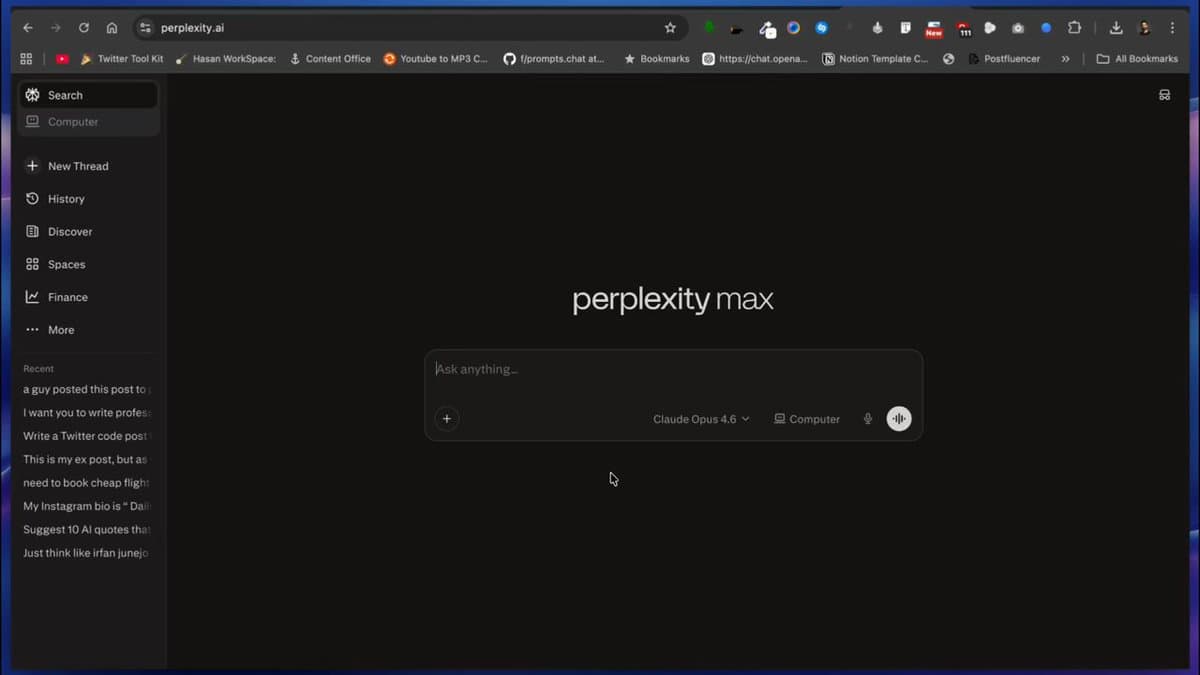
According to a demonstration shared on social media, Perplexity's "Computer" feature can perform sophisticated retirement planning calculations in under five minutes that traditionally require expensive financial advisory services. When asked "I'm 28, earning $85K. When can I retire with $2M?" the AI model generated three distinct retirement timelines based on different investment approaches.
The model accounts for multiple complex factors including:
- 5% annual salary raises compounding over decades
- 401k contribution limits and employer matching
- Tax-advantaged growth scenarios
- Historical market volatility rather than just average returns
- Inflation-adjusted retirement targets
The Nine-Year Gap That Changes Everything
The results revealed a startling spread in retirement ages depending solely on investment allocation:
Aggressive portfolio (90% equities): Retirement at age 52
Balanced portfolio (60/40 split): Retirement at age 56
Conservative portfolio (30/70 split): Retirement at age 61
This nine-year difference represents a fundamental shift in how individuals might approach retirement planning. For someone starting their career in their late 20s, the choice between an aggressive or conservative investment strategy could literally determine whether they spend their 50s working or enjoying retirement.
Democratizing Financial Planning Expertise
What makes this development particularly noteworthy is the accessibility factor. Traditional financial advisors typically charge $2,000 or more for similar comprehensive retirement analyses, often using what critics describe as "outdated Monte Carlo tools from 2015." Perplexity's AI model provides this service for free, with no advisor fees, upsells, or mandatory follow-up appointments.
This represents a significant democratization of financial planning expertise. Previously, sophisticated retirement modeling that accounts for salary growth, tax implications, market volatility, and inflation was largely inaccessible to middle-income earners who couldn't justify thousands of dollars in advisory fees.
The Implications for Financial Services
The emergence of AI-powered financial planning tools raises important questions about the future of traditional financial advisory services. While human advisors offer personalized guidance, behavioral coaching, and comprehensive financial planning beyond just retirement calculations, the core analytical work that forms the basis of many advisor-client relationships is becoming increasingly automated and accessible.
This development comes at a time when:
- Financial literacy gaps persist despite abundant information
- Retirement anxiety is growing among younger generations
- The fiduciary standard debate continues in financial services
- Robo-advisors have already disrupted the investment management space
Limitations and Considerations
While AI retirement calculators represent a breakthrough in accessibility, they come with important caveats:
Model limitations: No model can predict future market returns with certainty, and historical volatility patterns may not repeat.
Individual circumstances: AI models may not account for unique personal situations, health considerations, career interruptions, or unexpected life events.
Behavioral factors: The most sophisticated model is useless if individuals don't follow through with consistent saving and investing habits.
Regulatory considerations: Unlike human financial advisors, AI tools aren't bound by fiduciary standards or specific regulatory frameworks for financial advice.
The Future of AI in Personal Finance
Perplexity's retirement calculator represents just one example of how AI is transforming personal finance. Similar tools are emerging for:
- Tax optimization strategies
- Debt repayment planning
- Education funding calculations
- Estate planning considerations
As these tools become more sophisticated and integrated with real financial data through secure APIs, we may see a future where AI-powered financial assistants become as commonplace as navigation apps are today—guiding individuals through complex financial decisions with personalized, data-driven recommendations.
Practical Takeaways for Savers and Investors
For individuals looking to leverage these new tools while maintaining a balanced approach:
- Use AI models as a starting point for understanding retirement possibilities, not as definitive predictions
- Consider consulting a human advisor for complex situations or behavioral support
- Focus on what you can control: savings rate, investment costs, and asset allocation
- Regularly revisit your plan as circumstances change, using updated AI tools as they evolve
- Remember that the best plan is one you'll actually implement consistently over decades
The emergence of free, sophisticated retirement planning tools represents a significant step forward in financial democratization. While they won't replace human judgment entirely, they're making high-quality financial analysis accessible to millions who previously couldn't afford it—potentially helping people reclaim years of their lives through better financial decisions.
Source: Analysis based on Perplexity Computer demonstration shared by @hasantoxr on X/Twitter