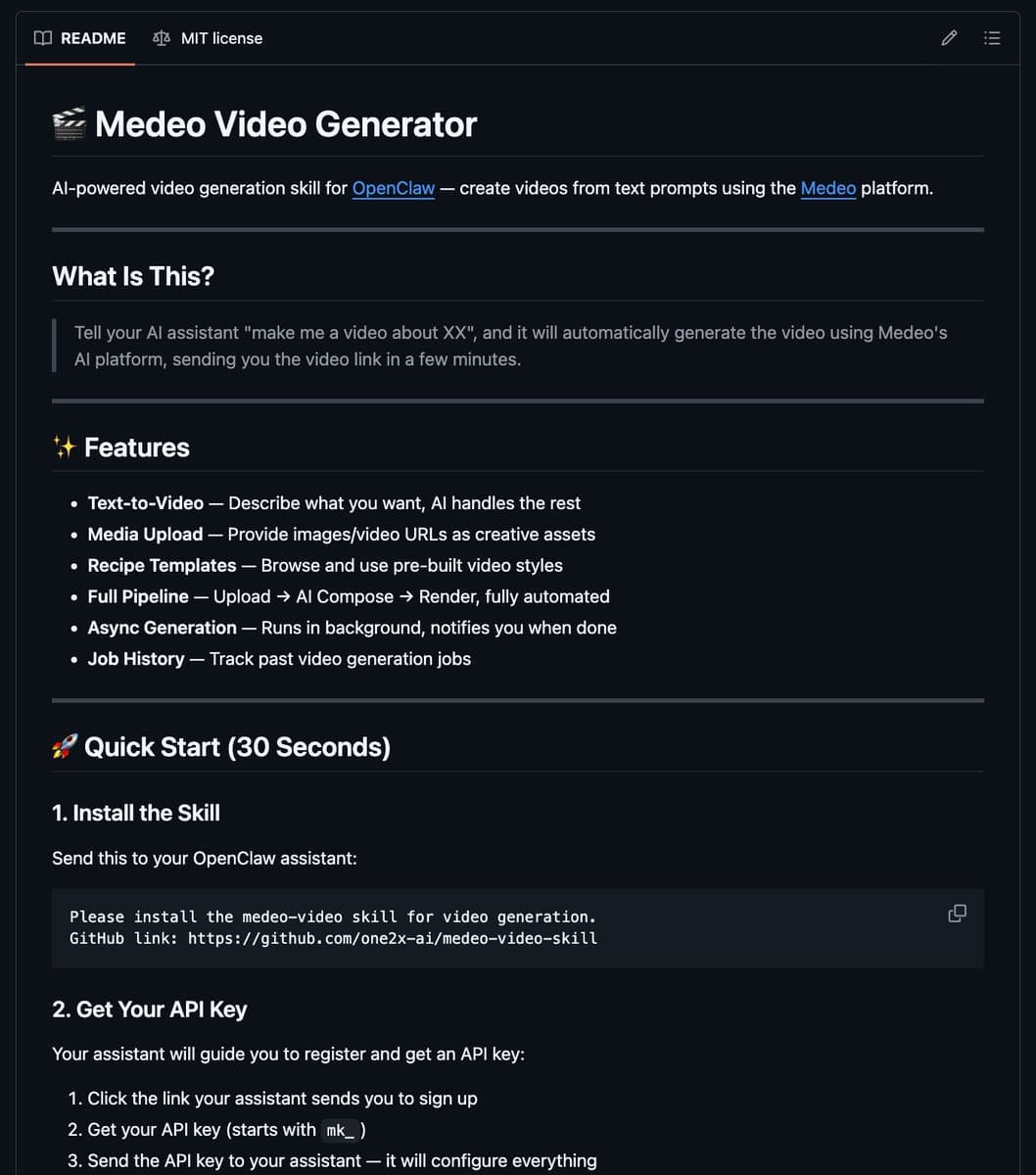
A significant development in AI-powered content creation has emerged with the introduction of the Medeo Video Skill for OpenClaw, which enables users to generate complete videos through simple text commands. This breakthrough represents a major step toward democratizing video production and expanding the capabilities of AI assistants.
How the Medeo Video Skill Works
According to developer reports, the skill operates through a remarkably simple interface. Users interact with their AI assistant by typing natural language requests like "make me a video about coffee brewing" or similar commands. The system then handles the entire video creation process autonomously, eliminating the need for specialized software, editing skills, or production resources.
While the source material doesn't detail the exact technical architecture, the functionality suggests integration of multiple AI subsystems working in concert. This likely includes natural language processing to interpret user requests, content generation to create scripts or narratives, visual asset creation (potentially through text-to-image or text-to-video models), audio generation for narration or background elements, and automated editing to combine these components into a cohesive final product.
The Evolution of AI Video Generation
This development builds upon several years of rapid advancement in generative AI technologies. Text-to-video capabilities have progressed from simple animated sequences to increasingly sophisticated productions. What makes the Medeo Video Skill particularly noteworthy is its integration into an existing AI assistant ecosystem (OpenClaw) and its emphasis on complete, end-to-end automation.
Previous AI video tools typically required multiple steps, specialized knowledge, or manual intervention at various stages. The promise of this new skill is that it reduces video creation to a single conversational interaction, potentially making professional-quality video production accessible to anyone with basic typing skills.
Potential Applications and Implications
The implications of this technology span numerous domains. Content creators could rapidly prototype ideas or produce supplementary material. Educators might generate explanatory videos on demand. Businesses could create marketing materials without extensive production budgets. The technology could also support accessibility initiatives by automatically converting text content into video format.
However, this advancement also raises important questions about content authenticity, copyright considerations, and the potential displacement of traditional video production roles. As with many AI advancements, the democratization of creation tools comes with both opportunities and challenges that will need to be addressed as adoption grows.
The Future of AI-Assisted Content Creation
The Medeo Video Skill represents a tangible step toward more intuitive, conversational interfaces for complex creative tasks. As these systems improve, we may see further integration of video generation with other AI capabilities, potentially allowing for real-time adjustments, multi-format content creation from single prompts, and increasingly sophisticated narrative structures.
This development also highlights the growing trend toward multimodal AI systems that can seamlessly work across text, image, audio, and video domains. The ability to coordinate these different modalities through natural language commands suggests a future where creative tools become increasingly conversational and accessible.
Source: Developer announcement via @hasantoxr on X/Twitter