What Happened
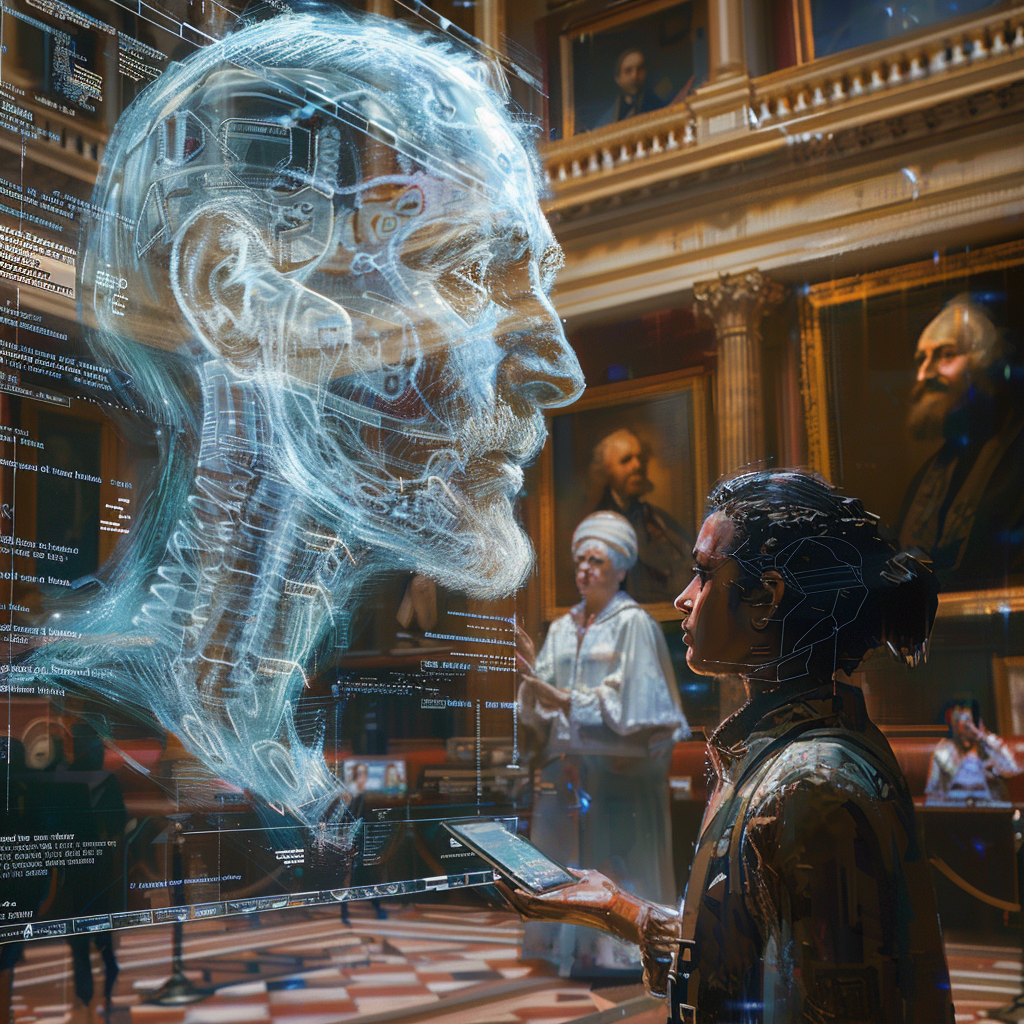
A new AI project, introduced by researchers including Alec Radford and David Duvenaud (both known for their work at OpenAI), promises to let users "talk to someone from the past." The project, teased via a social media post, is described as an interactive conversational AI that simulates historical figures.
Context
The concept of talking to historical figures via AI has been explored by several projects, including Character.AI's historical figure chatbots and various GPT-based role-playing experiments. However, this project stands out due to the involvement of Alec Radford, a key figure behind GPT-1 and GPT-2, and David Duvenaud, a prominent researcher in generative models. Their collaboration suggests a technically rigorous approach.
gentic.news Analysis
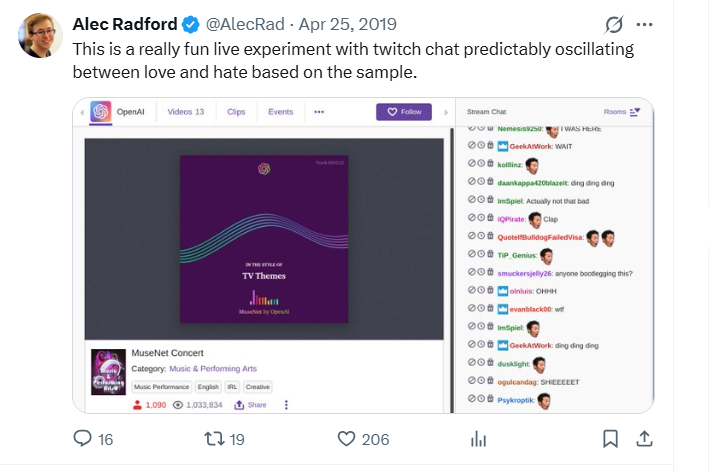
This project is a natural extension of Radford's and Duvenaud's work on large language models. Radford co-authored the original GPT paper in 2018, which demonstrated that unsupervised language models could learn to perform various tasks with minimal fine-tuning. Duvenaud's work on neural ODEs and generative models adds a layer of sophistication. The ability to simulate historical figures requires not just a large model but also careful curation of training data to ensure historical accuracy and appropriate tone. The project likely uses a fine-tuned version of a large model, possibly GPT-4 or a custom variant, trained on historical texts and dialogues.
What's particularly interesting is the timing. With the rise of AI companions and chatbots, this project could be a research preview or a product prototype. Given Radford's and Duvenaud's track record, it's unlikely to be a simple novelty — it may introduce new techniques for persona-based dialogue or long-term memory in conversations.
Frequently Asked Questions
How does the AI talk to historical figures?
The AI likely uses a large language model fine-tuned on historical texts, letters, and biographies to mimic the speech patterns and knowledge of specific figures.
Is this the same as Character.AI?
Character.AI offers a similar feature, but this project's involvement of top AI researchers suggests it may use more advanced techniques for accuracy and coherence.
When will this be publicly available?
No release date has been announced. It may be a research project or a private demo.
Can I talk to any historical figure?
The announcement didn't specify which figures are included. It's likely a limited set of well-documented individuals.