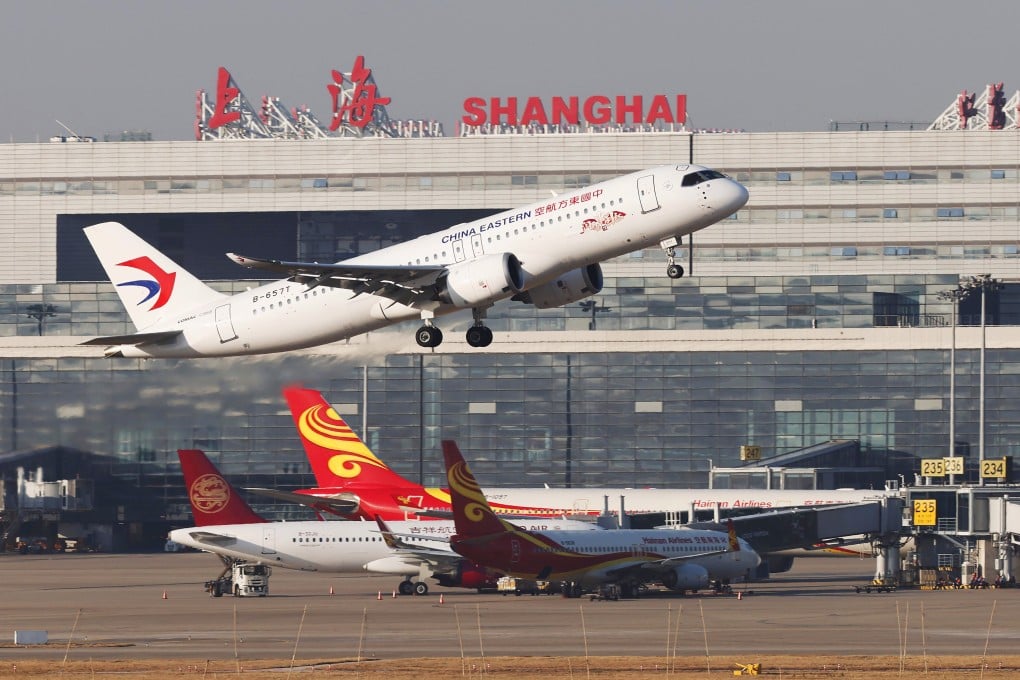
Alibaba Group has launched the first external partnership for its flagship consumer AI application, Qwen, integrating with China Eastern Airlines. This move marks a strategic shift, extending the app's "agentic" capabilities—where AI can autonomously execute multi-step tasks—outside Alibaba's own ecosystem and into real-world service delivery.
The collaboration enables users of the Qwen app to complete the entire flight booking process within a single natural-language chat interface. This includes searching for flights, purchasing tickets, selecting seats, and checking in. According to Alibaba, the AI acts as a "proactive intelligent companion," anticipating user needs and suggesting options.
Key Takeaways
- Alibaba has opened its Qwen consumer AI app to its first external partner, China Eastern Airlines.
- Users can now manage the entire flight booking process through a single chat interface, expanding the app's real-world agentic capabilities beyond Alibaba's ecosystem.
What's New: From Internal Tool to External Platform
Previously, Qwen's agentic functions were primarily deployed within Alibaba's vast digital ecosystem, which includes e-commerce platforms like Taobao and Tmall, cloud services, and digital media. The China Eastern partnership represents a deliberate pivot to an open platform strategy.
Key Capabilities Enabled:
- End-to-End Flight Management: A unified chat interface replaces the need to navigate multiple airline web pages or apps.
- Proactive Assistance: The AI suggests options based on user conversation and history.
- Planned Expansion: Alibaba states the app will expand into airline loyalty programs and other travel-related services.
Wu Jia, president of the Qwen app, stated: "Expanding from the strong momentum within the Alibaba ecosystem, integrating China Eastern marks the first time our agentic capabilities are available to external partners, making everyday life easier for even more users with new use cases."
The Business Context: Justifying a Massive AI Bet
This partnership is a concrete step in Alibaba's broader effort to drive adoption of its full-stack AI strategy and monetize its significant investments. The company is under pressure to demonstrate tangible returns from its AI spending.
Investment Scale:
- In early 2025, Alibaba pledged to invest 380 billion yuan (US$55.6 billion) in AI and cloud computing over three years.
- The company had already spent over 120 billion yuan in the sector in the four quarters through September 2025.
The China Eastern deal serves as a proof-of-concept for Alibaba's AI-as-a-Service (AIaaS) model for consumer applications. By proving the Qwen app can reliably handle complex, transactional tasks for a major external partner, Alibaba aims to attract more businesses to integrate with its AI agent platform.
How It Works: The Agentic AI Stack in Action
While the source material does not detail the underlying architecture, the described functionality points to a sophisticated agentic system built on top of Alibaba's Qwen large language models (LLMs).
Likely Technical Components:
- Foundation Model: The Qwen series of LLMs (e.g., Qwen2.5, Qwen2.5-Coder) provide the core reasoning and natural language understanding.
- Tool-Use & API Integration: The system is equipped with specific "tools" or API connectors to China Eastern's booking, seat map, and check-in systems.
- Orchestration & Memory: An agent framework (potentially similar to LangChain or AutoGPT concepts) orchestrates the sequence of API calls, maintains conversation context, and manages user authentication and transaction security.
- Proactive Suggestion Engine: This likely involves fine-tuning on travel dialogue and integrating user preference data (with consent) to predict next-step queries.
The move from internal to external use necessitates robust security, data privacy safeguards, and guaranteed API reliability—significant engineering hurdles that Alibaba claims to have overcome.
The Competitive Landscape: China's AI Agent Race Heats Up
Alibaba is not alone in pursuing agentic AI for consumer services. This partnership directly positions Qwen against other major Chinese AI players pushing into applied AI.
Key Competitors:
- Tencent: Integrates its Hunyuan models into WeChat's ecosystem for similar in-chat services.
- Baidu: Leverages its Ernie models within its search and maps products.
- Startups: Companies like Moonshot AI and Zhipu AI are also developing agentic applications.
Alibaba's differentiator is its attempt to create a standalone, partner-agnostic AI app that can be a primary interface for multiple services, rather than being solely embedded within a super-app like WeChat.
gentic.news Analysis
This partnership is a critical inflection point in Alibaba's AI strategy, transitioning Qwen from a model family and an internal productivity tool into a bona fide consumer-facing platform. For over a year, the AI narrative from Chinese tech giants has centered on model capabilities (context length, benchmark scores) and cloud infrastructure. This deal shifts the focus squarely to application-layer monetization and user adoption.
The move aligns with a trend we identified in late 2025: after a period of intense foundational model development, major players are now racing to build the agentic middleware layer—the software that reliably connects powerful LLMs to real-world APIs and services. Success in this layer is less about pure MMLU scores and more about reliability, security, and user experience, which are harder to quantify but crucial for commercial success.
Financially, this is a necessary step to justify Alibaba's colossal 380 billion yuan investment pledge. Cloud infrastructure sales alone may not suffice. Demonstrating that Qwen can drive transaction volume and user engagement for partners like China Eastern creates a clearer path to ROI. It also potentially opens a new revenue stream through platform fees or shared transaction economics, a model proven by other tech platforms.
Looking ahead, the key question is scalability. Integrating with one airline's APIs is a start; creating a standardized, secure, and efficient onboarding process for hundreds of potential partners across travel, finance, and retail is the true challenge. If Alibaba can streamline this, Qwen could evolve into a universal agent interface, posing a long-term challenge to incumbent super-apps. If the process remains complex and bespoke, its impact will be limited. This partnership is the first major test of that scalability thesis.
Frequently Asked Questions
What is the Qwen app?
The Qwen app is Alibaba's flagship consumer-facing artificial intelligence application. It is built upon the company's family of Qwen large language models (LLMs) and is designed to act as an "agentic" AI—meaning it can understand natural language requests and autonomously execute multi-step tasks by connecting to various services and APIs, rather than just generating text.
What can the Qwen app do with China Eastern Airlines?
Through the new partnership, users can manage the entire China Eastern Airlines flight process within the Qwen app's chat interface. This includes searching for available flights, comparing options, purchasing tickets, selecting specific seats, and completing check-in—all through conversational dialogue with the AI, without needing to switch to the airline's website or mobile app.
Why is this partnership significant for Alibaba?
This is the first time Alibaba has opened the Qwen app's agentic capabilities to a major partner outside of its own corporate ecosystem (which includes Taobao, Tmall, and Alibaba Cloud). It signals a strategic shift from using AI internally to offering it as a platform for other businesses. This is a key step in Alibaba's plan to generate real-world utility and commercial returns from its massive investments in AI technology.
How does this compare to other AI assistants like ChatGPT?
While assistants like OpenAI's ChatGPT can browse the web for information, they generally cannot execute secure transactions on behalf of a user (e.g., purchasing a flight ticket). The Qwen app's integration with China Eastern requires a deeper, trusted connection to the airline's booking systems, representing a more advanced form of "AI agency." It competes more directly with other integrated service platforms and super-apps than with general-purpose conversational chatbots.