OpenAI has introduced a new feature for its ChatGPT platform: workspace agents. These are Codex-powered tools designed for teams to automate complex, multi-step workflows across shared environments like ChatGPT and Slack. The announcement, made via a social media post, signals a significant expansion of ChatGPT's capabilities from a conversational AI tool into a platform for operational automation within organizations.
Key Takeaways
- OpenAI has introduced workspace agents within ChatGPT, powered by Codex, designed to automate complex, multi-step workflows for teams across shared environments like Slack.
- These agents can gather context, execute tasks, request approvals, and run continuously in the cloud.
What's New: Automating Team Workflows

The core offering is an agent system that operates within a team's "workspace." Unlike individual ChatGPT sessions, these agents are built to function in shared environments, accessing context and performing actions on behalf of a team. According to the announcement, the agents can perform several key functions:
- Gather Context: Pull information from across a team's shared tools and conversations.
- Execute Tasks: Automate multi-step processes without requiring manual intervention at each stage.
- Request Approvals: Integrate human-in-the-loop checkpoints within automated workflows.
- Operate Continuously: Run in the cloud, persisting beyond a single chat session to monitor and act on ongoing processes.
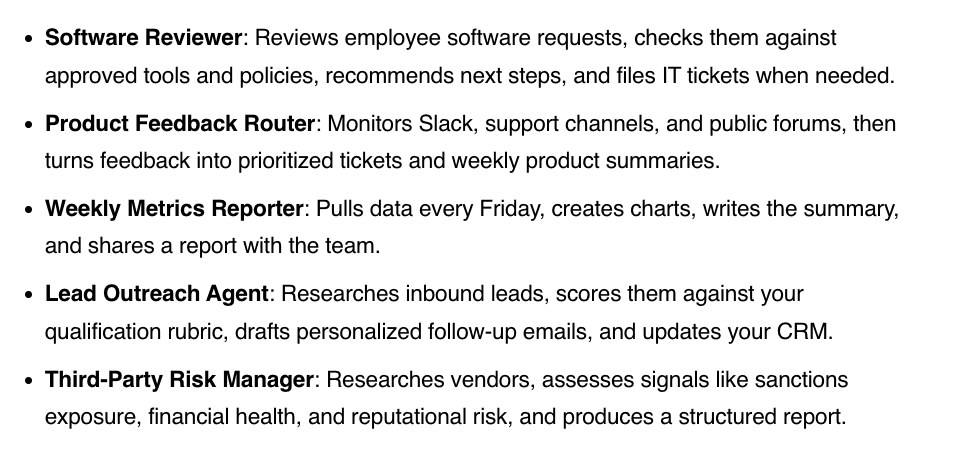
The stated use cases include streamlining business processes like automated reporting, lead outreach campaigns, and risk assessment procedures.
Technical Details: Codex as the Engine
A notable technical detail is the explicit mention of Codex as the underlying power for these agents. Codex, the model family that powers GitHub Copilot, is best known for its proficiency in understanding and generating code. Its application here suggests these workspace agents may heavily rely on parsing instructions, interacting with APIs, and potentially generating code snippets to interface with other software tools (like CRM or data platforms) to complete their assigned workflows. The shift positions Codex not just as a coding assistant but as the reasoning and execution engine for a new class of enterprise automation.
The agents are designed for "shared environments," with Slack named as a primary integration point. This indicates the agents will likely be able to read channels, send messages, and trigger actions based on conversation, moving automation directly into the communication platforms where team coordination happens.
How It Compares: The Enterprise Automation Race
This move places OpenAI in direct competition with other platforms offering AI-powered workflow automation, such as Microsoft's Copilot for Microsoft 365 (which integrates across Teams, Word, and Excel) and various startups building AI agents for business processes. OpenAI's differentiator appears to be the deep integration of its advanced language models (Codex and, by extension, GPT-4) and its foothold in the massive ChatGPT user base.
Core Engine Codex/GPT models GPT-4 integrated with Graph Pre-programmed bots Primary Environment ChatGPT, Slack Microsoft Teams, Office Suite Desktop/Web applications Strength Natural language understanding, flexibility Deep Office suite integration High-fidelity UI automation Setup Likely prompt/config-based Prompt-based within 365 apps Code-intensive process mappingWhat to Watch: Limitations and Questions
The announcement is light on critical details that will determine its real-world utility:
- Access & Pricing: Is this a feature for all ChatGPT users, or a new enterprise-tier product?
- Security & Permissions: How are agent permissions scoped? What safeguards prevent agents from accessing unauthorized data within a workspace?
- Reliability: For "continuous" operation, what are the guarantees on uptime and error handling for complex, multi-step tasks?
- Integration Scope: Beyond Slack, what other "shared environments" will be supported (e.g., Google Workspace, Notion, Jira)?
The success of workspace agents will hinge on their ability to reliably execute business-critical processes, a higher bar than generating a draft email or summarizing a document.
gentic.news Analysis
This launch is a logical and aggressive next step in OpenAI's platform strategy. It follows the company's steady evolution of ChatGPT from a standalone chatbot into a multifaceted platform with features like Custom GPTs (November 2023) and the GPT Store (January 2024). Workspace agents represent a deeper foray into the enterprise, moving beyond content creation to core operational automation. This aligns with the trend we identified in our analysis of Microsoft's Fabric integration with Copilot, where AI is becoming the orchestration layer for data and business processes.
The explicit resurrection of the Codex brand is particularly strategic. While GPT-4 handles broad reasoning, Codex carries a specific reputation for reliable, structured output and code execution—a crucial trust signal for developers and IT teams evaluating automation tools. This creates a clearer product architecture: GPT for conversation and creativity, Codex for execution and automation. It also positions OpenAI against specialized coding agent startups that have emerged in the last year, leveraging its integrated model advantage.
However, this move will test OpenAI's enterprise readiness. Managing permissions, audit trails, and operational reliability for persistent agents is a different challenge than serving chat completions. The competitive landscape is also fierce, with incumbents like Salesforce embedding AI agents directly into their CRM workflows. OpenAI's success will depend on whether its models provide a uniquely powerful automation capability that justifies building a new workflow layer around ChatGPT, rather than within existing enterprise software.
Frequently Asked Questions
What are OpenAI workspace agents?
OpenAI workspace agents are AI-powered tools built into ChatGPT that use the Codex model to automate multi-step tasks for teams. They can run continuously in the cloud, gather information from shared tools like Slack, execute actions, and request human approvals, aiming to streamline processes like reporting and lead generation.
How is Codex used in these workspace agents?
Codex, the model family behind GitHub Copilot, serves as the execution engine for the workspace agents. Its proficiency in understanding and generating code suggests it is used to interpret complex instructions, interact with application APIs, and potentially create scripts to perform tasks across different software platforms within a team's workflow.
How do ChatGPT workspace agents differ from Microsoft Copilot?
While both aim to automate work, Microsoft Copilot is deeply integrated within the Microsoft 365 suite (Teams, Word, Excel). OpenAI's workspace agents appear to be platform-agnostic, starting with Slack integration and powered by the ChatGPT interface. They seem focused on orchestrating workflows across multiple applications rather than enhancing productivity within a single vendor's ecosystem.
Are workspace agents available to all ChatGPT users?
As of this announcement, availability details have not been disclosed. Given the enterprise focus on team automation and shared environments, it is highly likely that workspace agents will be a feature of a paid ChatGPT Enterprise or a new dedicated business tier, rather than the standard consumer subscription.