SpaceX's internal artificial intelligence division, SpaceXAI, has announced a partnership with the company behind the popular AI-native code editor, Cursor. The collaboration aims to combine SpaceX's proprietary aerospace engineering and simulation data with Cursor's development environment to create what the companies call "the world's best coding and knowledge work AI."
The announcement was made via a retweet from a SpaceX account, stating the two entities are "now working closely together." No specific technical details, model names, release timelines, or benchmarks were provided in the brief social media post.
What Happened
The core of the announcement is a strategic partnership. SpaceXAI will reportedly provide Cursor with access to its unique datasets generated from rocket design, flight simulations, and complex systems engineering. The goal is to integrate this domain-specific knowledge into the AI capabilities powering the Cursor editor, which is already built around large language models (LLMs) for code completion, refactoring, and chat-based development.
Context
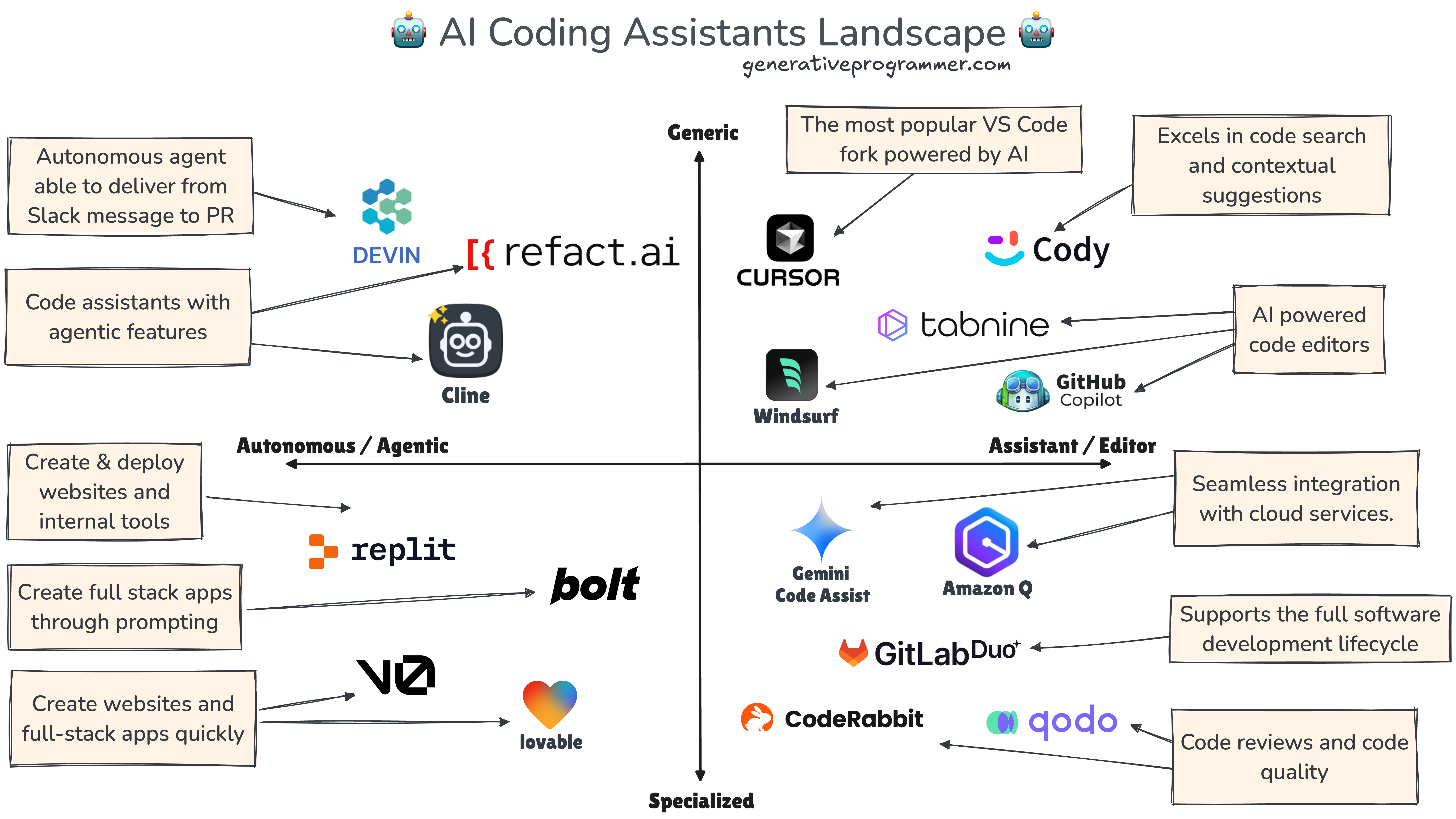
This move follows a clear trend of vertical integration and domain specialization in AI. General-purpose coding assistants like GitHub Copilot and Amazon CodeWhisperer are being challenged by tools fine-tuned for specific stacks or industries.
- SpaceXAI is Elon Musk's AI venture within SpaceX, focused on applications for aerospace engineering and manufacturing. Its existence and some projects have been referenced in the past, but it has operated largely out of the public spotlight compared to xAI.
- Cursor AI is the company behind the Cursor editor, an IDE that has gained significant traction among developers for its deep, agent-like integration of AI (primarily OpenAI's models) directly into the coding workflow. It is known for features like "Chat with your codebase" and automated refactoring.
The partnership suggests Cursor is seeking a defensible data moat—SpaceX's engineering data—to build a uniquely capable assistant for complex, systems-level programming, potentially surpassing the capabilities of assistants trained only on public code repositories.
What This Means in Practice
If successful, developers using Cursor could eventually benefit from an AI assistant with implicit knowledge of:
- High-reliability, safety-critical code practices.
- Physics-based simulation and modeling.
- Large-scale, distributed systems architecture akin to those running spacecraft.
- Real-world problem-solving from one of the most ambitious engineering organizations.
gentic.news Analysis
This partnership is a textbook example of the Data as a Moat strategy playing out in the AI coding tools arena. While Anthropic, Google, and OpenAI compete on scaling general-purpose reasoning models, the real-world utility for professionals often comes from deep vertical expertise. SpaceX's decades of in-house engineering data—covering simulations, avionics, controls, and manufacturing—is a unique and highly valuable corpus not available in any public dataset like Stack Overflow or GitHub. Training or fine-tuning models on this data could produce an assistant with unparalleled reasoning for complex systems programming, physics-informed code generation, and high-assurance software development.
This aligns with a trend we've covered extensively, where specialized AI is outpacing general models in professional domains. For instance, our analysis of AlphaFold 3 highlighted how domain-specific data and constraints lead to breakthroughs that general LLMs cannot achieve. The SpaceXAI-Cursor partnership applies the same principle to software engineering. It also represents a strategic pivot for Cursor, which until now has been an interface layer on top of foundational models from OpenAI and others. By partnering for exclusive data access, Cursor is moving up the stack to control a key part of the value chain: the specialized training data that defines model capability.
However, significant questions remain. The announcement lacks technical substance. Will this involve training a new foundational model from scratch, or fine-tuning an existing one like Claude 3.5 Sonnet or o1? How will the data be curated and prepared? What are the first concrete product features? The partnership's success hinges on execution—merging the culture of a fast-moving startup (Cursor) with the proprietary, likely highly secured data environment of SpaceX. If they can navigate this, it could create a formidable tool for a niche but influential segment of the developer population working on hard engineering problems.
Frequently Asked Questions
What is SpaceXAI?
SpaceXAI is the internal artificial intelligence division of SpaceX. It focuses on applying AI and machine learning to the company's core challenges in rocket design, manufacturing, flight operations, and simulation. Unlike Elon Musk's other AI company, xAI, which is building general-purpose AI (Grok), SpaceXAI is a vertical, applied AI team.
What is the Cursor AI editor?
Cursor is an AI-native code editor built for a workflow centered around conversational AI. It integrates LLMs deeply into the IDE, allowing developers to chat with their codebase, ask for complex refactors, generate code from natural language, and debug using AI agents. It has become popular for its productivity gains and is often seen as a more integrated alternative to using ChatGPT or Copilot alongside a traditional editor like VS Code.
How will SpaceX data improve a coding AI?
Public code repositories contain software for typical business applications, websites, and utilities. SpaceX's data includes code, simulations, and engineering documents for building and operating physical systems like rockets—domains with extreme requirements for reliability, real-time performance, and integration with hardware. An AI trained on this data could be better at generating code for embedded systems, numerical simulations, control algorithms, and managing large-scale, interdependent software projects, transferring aerospace-grade rigor to other fields.
When will this new AI be available?
The announcement did not provide a timeline. The partnership is described as just beginning ("now working closely together"), suggesting a product integration or new model is likely months away, at a minimum. Any release will probably come as an update or a specialized mode within the existing Cursor editor application.