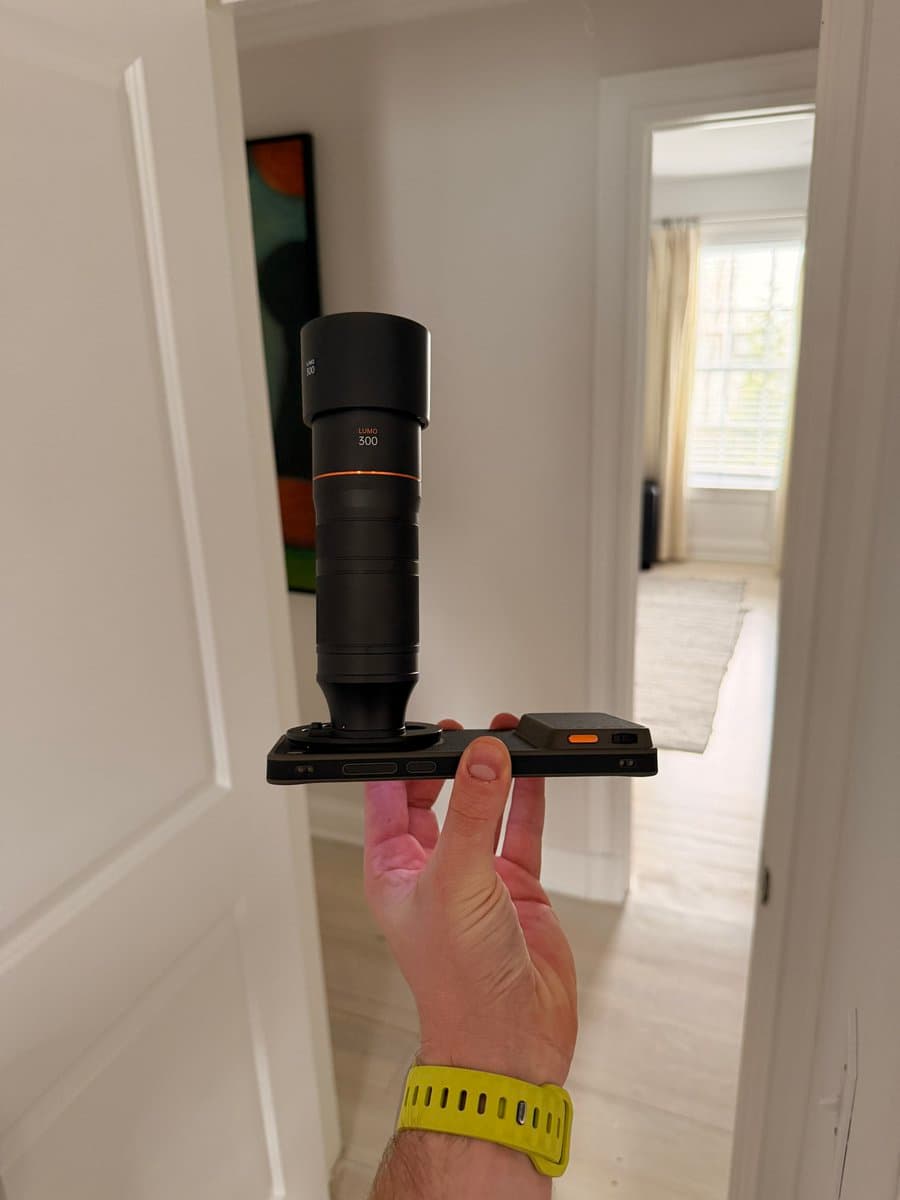
A hands-on preview from leaker Max Weinbach (@mweinbach) details the camera-centric design of the upcoming OPPO Find X9 Ultra. The flagship phone is described as pushing the boundaries of mobile photography hardware, featuring a novel external telephoto lens and a high-resolution quad-camera array.
Key Takeaways
- A hands-on preview reveals the OPPO Find X9 Ultra includes an external telephoto lens and a quad-camera system with dual 200MP sensors.
- This positions it as a 'pocketable camera' for a niche enthusiast market willing to pay a premium.
What's New

The key hardware revelation is the inclusion of an external telephoto lens. While details on its mechanism or magnification are not specified, its presence suggests OPPO is exploring modular or enhanced optical designs beyond the internal periscope systems common in current flagships.
The rear camera system is a quad setup:
- Two 200MP cameras (sensors unspecified)
- Two 50MP cameras (sensors unspecified)
Weinbach's assessment is that the phone "takes very good photos" and represents a push to create the "perfect pocketable camera."
Market Context & Strategy
The preview positions the Find X9 Ultra as a "halo product" aimed squarely at photography enthusiasts and tech fans. Weinbach notes the market for such a device is "small," but argues these flagship products "matter more than most people acknowledge" for brand perception and pushing technological boundaries.
The strategy appears to be an escalation in the premium Android segment, creating a "new battlefield of just making the Ultra as Ultra as possible" for a customer base that "will pay anything for it."
Limitations & Unknowns

The source is a brief, qualitative hands-on preview. Critical technical details are absent:
- Specific sensor models (e.g., Sony LYTIA, Samsung ISOCELL)
- The function and specifications of the external telephoto lens
- Any AI/Computational Photography features (e.g., proprietary algorithms, NPU-driven processing)
- Official pricing, availability, or full specifications
- Direct performance comparisons or sample images
gentic.news Analysis
This leak points to a continued hardware arms race in high-end mobile photography, but with a twist. While competitors like Xiaomi (with its 14 Ultra) and Samsung focus on integrating larger sensors and more sophisticated internal lens assemblies, OPPO seems to be experimenting with external modularity. This is reminiscent of earlier concepts like attachable lenses for smartphones, but potentially executed at a much higher, factory-integrated level.
The mention of dual 200MP sensors is significant. It suggests OPPO may be using pixel-binning at an extreme scale (likely merging 16 pixels into one for 12.5MP output) to maximize light capture and detail. The real test will be the image signal processor (ISP) and the AI algorithms that fuse data from these sensors. OPPO's parent company, BBK Electronics, has extensive resources in this area through its brands (OnePlus, realme, vivo), and we expect the Find X9 Ultra to leverage next-generation computational photography pipelines.
However, the success of this "external lens" approach hinges on practical implementation. Does it retract? Is it protected? Does it add noticeable bulk? Without answers, it remains an intriguing but unproven differentiator. Ultimately, for the AI/ML community, the hardware is just the input stage. The more compelling story will be what OPPO's software does with this data—how its AI models handle multi-sensor fusion, computational zoom, and low-light processing to justify the "Ultra" moniker.
Frequently Asked Questions
What is the external telephoto lens on the OPPO Find X9 Ultra?
Based on the leak, it is a physical telephoto lens that is part of the phone's camera system but is described as "external." Its exact design, whether it's a fixed protrusion, a sliding mechanism, or a small attached module, is not detailed. Its purpose is to provide enhanced optical zoom capabilities beyond standard internal periscope lenses.
How good is the camera on the OPPO Find X9 Ultra?
The early hands-on report states it "takes very good photos." However, this is a subjective first impression. A full assessment requires official samples, technical reviews, and comparisons against established flagships like the iPhone Pro series, Samsung Galaxy S Ultra, or Xiaomi 14 Ultra. The dual 200MP sensors suggest a strong focus on detail and light capture.
When will the OPPO Find X9 Ultra be released?
The leak does not provide a release date. Based on OPPO's typical schedule for its Find X series, a global launch could occur in the first quarter of 2026. Announcements for the Chinese market often come slightly earlier.
Is the OPPO Find X9 Ultra worth the expected high price?
The device is explicitly targeted at enthusiasts and "fans that care, and will pay anything for it." For the average user, a standard flagship will likely offer more than enough camera performance. The Find X9 Ultra's value proposition will depend on how significantly its external lens and dual 200MP sensors improve real-world photography over competitors, which remains to be quantitatively tested.