In a brief but important correction, OpenAI has clarified that its text-embedding-3-small model is not being deprecated, countering an error in its official developer documentation.
Key Takeaways
- OpenAI's Head of Developer Experience clarified that a documentation error incorrectly marked the text-embedding-3-small embedding model as deprecated.
- The model remains fully available and supported for developers.
What Happened

On April 15, 2026, Romain Huet, OpenAI's Head of Developer Experience, responded to a user flagging an issue on the platform X. The user, Jeffrey Huber, had pointed out that OpenAI's API documentation listed the text-embedding-3-small model with a deprecation notice.
Huet's response was direct: "Thank you for flagging this, Jeff. This was a mistake: we are not deprecating text-embedding-3-small."
He followed up, stating, "We’re working on fixing the docs. It should be corrected shortly."
Context
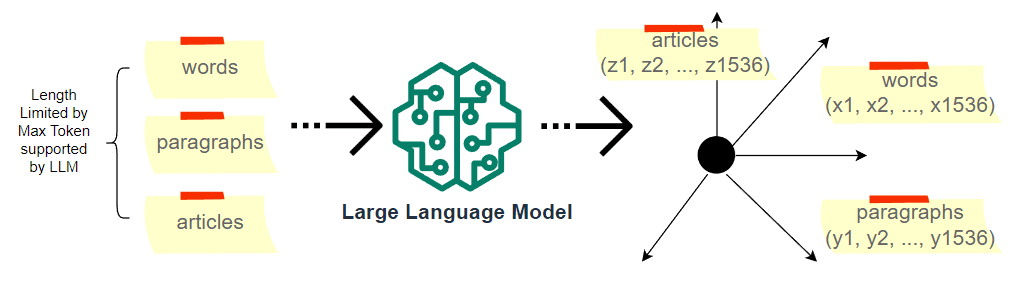
The text-embedding-3-small model is a key offering in OpenAI's embedding suite, launched in January 2024 alongside text-embedding-3-large. Embeddings are vector representations of text that capture semantic meaning, and are fundamental to building retrieval-augmented generation (RAG) systems, semantic search, and clustering applications. The "small" variant offers a compelling balance of performance and cost for many production use cases.
A deprecation notice would have signaled the model's impending removal from the API, forcing developers to migrate their applications to an alternative, likely the newer text-embedding-3-large or a future model. Such a migration requires retesting, potential recalibration of similarity thresholds, and could increase inference costs.
Immediate Impact for Developers
For developers building with the OpenAI API, this correction provides immediate clarity:
- No Migration Required: Existing applications using
text-embedding-3-smallcan continue without modification. - Cost Stability: The pricing for
text-embedding-3-smallremains at $0.00002 per 1k tokens, which is one-fifth the cost of thetext-embedding-3-largemodel. - Project Planning: Roadmaps and technical designs that relied on the small model for its cost-efficiency can proceed as planned.
The swift correction suggests the deprecation notice was a documentation error, not a reversed policy decision.
gentic.news Analysis
This incident, while minor, highlights two persistent themes in the current AI infrastructure landscape. First, it underscores the critical importance of accurate, real-time documentation for foundational model APIs. As we covered in our analysis of Anthropic's Claude 3.5 Sonnet API launch, developer trust is built on stability and clear communication. A deprecation notice for a widely-used, cost-effective model like text-embedding-3-small would have caused significant downstream disruption, forcing reevaluations of architecture and budgets across countless projects.
Second, it reflects the ongoing competitive pressure in the embedding model space. OpenAI's text-embedding-3 series competes directly with offerings like Cohere's Embed v3, Google's text-embedding-004, and a growing number of high-quality open-source models from organizations like Nomic AI (Nomic-Embed) and Alibaba's Qwen team. In this context, maintaining a clear and competitive product lineup is essential. Retaining text-embedding-3-small allows OpenAI to serve the budget-conscious segment of the market, a segment that might otherwise be captured by open-source alternatives, which have seen a notable uptrend in adoption for embedding tasks over the last year.
The quick public correction by a senior leader like Huet also demonstrates a responsive developer relations strategy, aiming to contain confusion before it spreads. This aligns with a broader industry trend where AI providers are becoming more communicative about platform changes, a necessity given the deep integration of these models into production systems.
Frequently Asked Questions
Is the OpenAI text-embedding-3-small model being discontinued?
No. OpenAI has confirmed that the deprecation notice in its documentation was an error. The text-embedding-3-small model remains fully active, supported, and available via the API.
What is the difference between text-embedding-3-small and text-embedding-3-large?
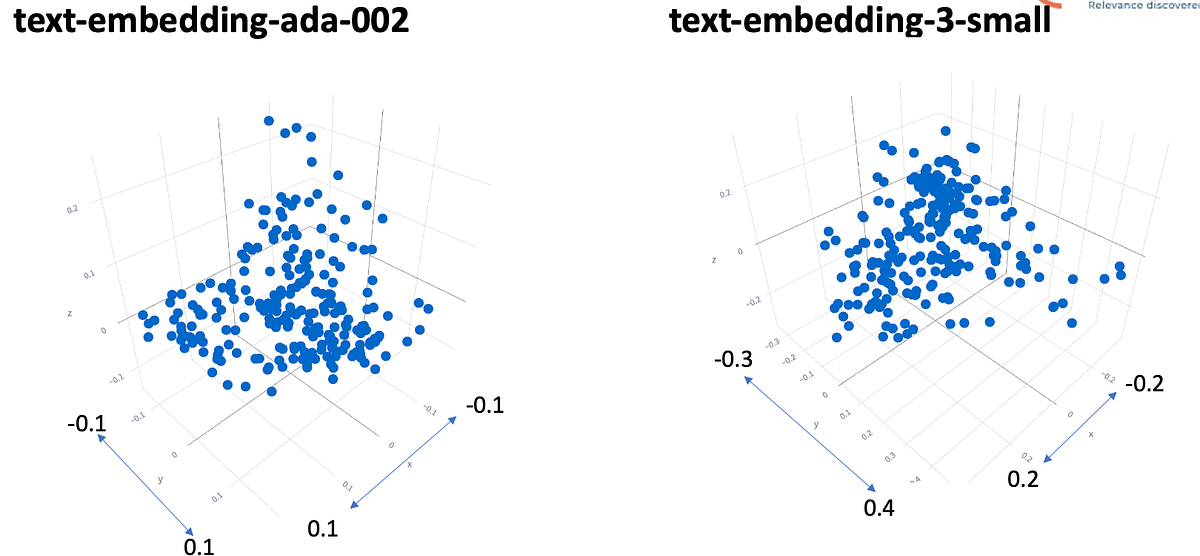
The primary differences are dimensionality, performance, and cost. text-embedding-3-small generates 1536-dimensional vectors at a cost of $0.00002 per 1k tokens. text-embedding-3-large generates 3072-dimensional vectors (by default) at a cost of $0.00013 per 1k tokens. The large model generally offers higher accuracy on retrieval benchmarks but at 6.5x the cost.
Should I switch from text-embedding-ada-002 to text-embedding-3-small?
If you are still using the older text-embedding-ada-002 model, upgrading to the text-embedding-3 series is recommended. The newer models offer significantly improved performance on standard benchmarks. The choice between -small and -large depends on your application's accuracy requirements versus budget constraints.
Where can I see the correct OpenAI model deprecation schedule?
The authoritative source is the official OpenAI API documentation. Always refer to the "Models" page for the latest status of all endpoints. Community forums and official social channels may provide supplemental announcements.