In a stark display of diverging AI scaling strategies, Chinese AI lab Moonshot AI has released a trillion-parameter open-source model that reportedly matches the performance of Anthropic's flagship Claude Opus model on most coding benchmarks. The release came the same day Anthropic announced a massive $25 billion commitment to Amazon Web Services (AWS) for compute infrastructure.
Key Takeaways
- Moonshot AI released a trillion-parameter open-source model that reportedly matches Anthropic's Claude Opus on most coding benchmarks.
- This follows the same day Anthropic committed $25B to AWS for compute, highlighting divergent AI scaling strategies.
What Happened

On April 14, 2026, Anthropic announced a $25 billion multi-year commitment to AWS for cloud computing capacity, one of the largest infrastructure deals in AI history. The same day, Beijing-based Moonshot AI shipped what it claims is a trillion-parameter open-source model with coding capabilities competitive with Claude Opus.
According to the announcement, the Moonshot model achieves performance parity with Claude Opus on "most coding benchmarks" while being released with open weights available for download. The timing highlights the contrast between Western AI giants' capital-intensive infrastructure investments and Chinese labs' focus on algorithmic efficiency and open distribution.
The Cost Disparity
The financial contrast is particularly striking. Anthropic reportedly spent $4.1 billion on training alone in 2025, according to industry estimates. Moonshot's total expenditure for developing their trillion-parameter model is described as "probably a fraction of that."
This cost differential suggests Chinese AI labs are achieving competitive results through:
- More efficient training methodologies
- Algorithmic innovations that reduce compute requirements
- Different economic models that prioritize open distribution over proprietary scaling
Technical Implications
While specific benchmark numbers weren't provided in the announcement, the claim of matching Claude Opus on coding tasks is significant. Claude Opus has consistently ranked among the top performers on benchmarks like HumanEval, MBPP, and SWE-Bench. If verified, this would represent the first open-source model at the trillion-parameter scale to achieve parity with leading proprietary coding assistants.
The trillion-parameter scale itself is noteworthy. Most open-source models to date have capped out in the hundreds of billions of parameters due to training complexity and cost. A functional trillion-parameter open model suggests breakthroughs in:
- Model parallelism and distributed training - Efficiently scaling across thousands of GPUs
- Mixture-of-Experts (MoE) architectures - Using sparse activation to reduce inference cost
- Training stability techniques - Preventing divergence at extreme scales
The Infrastructure Divide
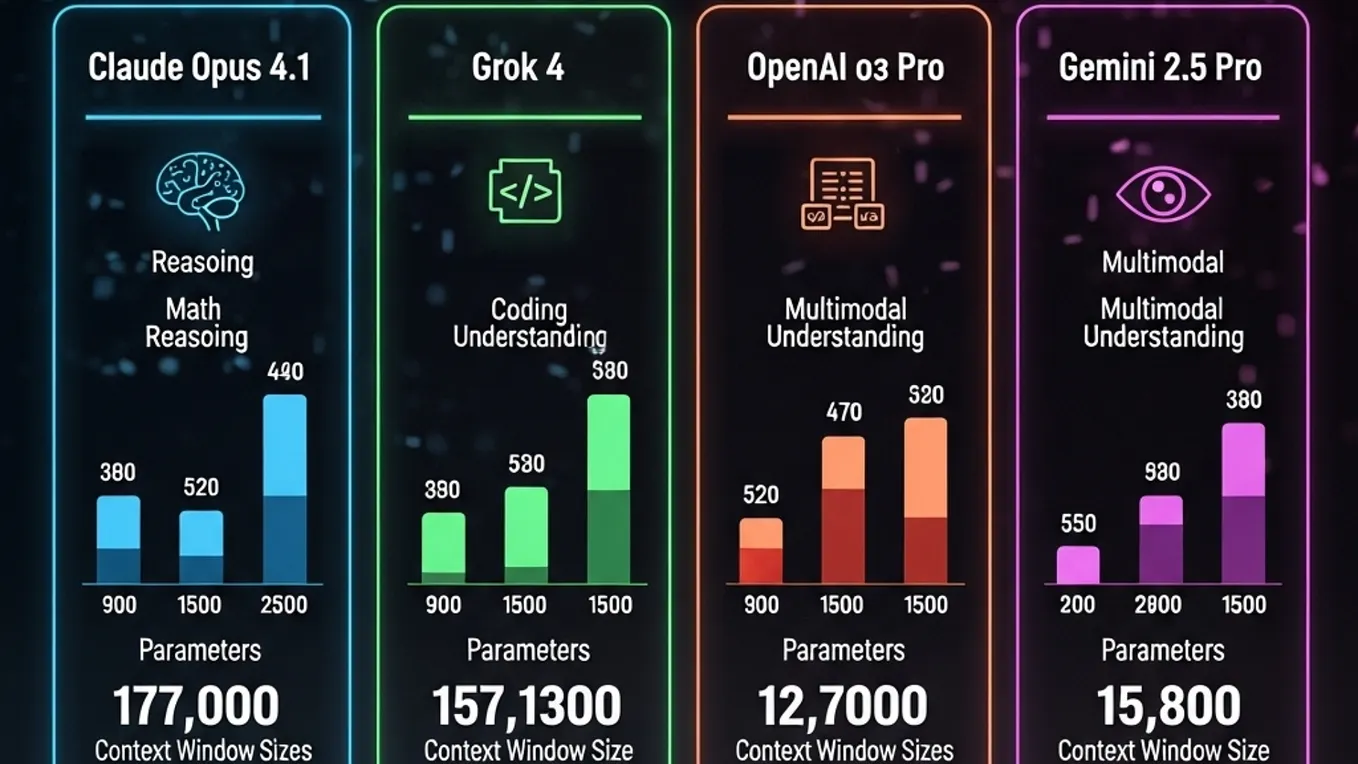
The simultaneous announcements highlight two fundamentally different approaches to AI scaling:
Infrastructure $25B AWS commitment Unknown, likely fraction of cost Model Access Proprietary, API-only Open weights, downloadable 2025 Training Spend $4.1B Fraction of Anthropic's spend Scaling Strategy Capital-intensive compute buying Algorithmic efficiency + open distributionAs the source notes: "One side is buying buildings. The other is renting rooms and still catching up."
Open vs. Closed Ecosystem Implications
The Moonshot release continues the trend of Chinese AI labs embracing open-source distribution while Western counterparts increasingly lock down their most capable models. This creates a potential asymmetry where:
- Chinese developers get access to state-of-the-art foundation models for fine-tuning and deployment
- Western AI safety concerns lead to more restrictive access policies
- Global AI capability distribution becomes increasingly fragmented along geopolitical lines
The "open weights, download today" approach contrasts sharply with Anthropic's gradual, controlled release strategy for Claude models.
gentic.news Analysis
This development represents a critical inflection point in the global AI race. Moonshot AI's achievement—if benchmark claims hold—demonstrates that raw compute spending alone doesn't guarantee competitive advantage. This aligns with our December 2025 analysis of DeepSeek's efficiency breakthroughs, where we noted Chinese labs were closing the gap with Western giants through algorithmic innovation rather than pure scale.
The timing is particularly significant. By releasing their model the same day as Anthropic's massive AWS announcement, Moonshot is making a deliberate statement about alternative paths to AI capability. This follows a pattern we've tracked since 2024: Chinese AI labs (including 01.AI, DeepSeek, and now Moonshot) consistently releasing competitive open models while maintaining lower reported training costs than their Western counterparts.
From a technical perspective, the trillion-parameter open model challenges several assumptions in the field. First, it suggests that the "compute moat" theory—that AI leadership requires prohibitive infrastructure investment—may be less absolute than previously believed. Second, it raises questions about whether Western AI safety approaches that restrict model access might inadvertently cede technical leadership to more open ecosystems.
Practitioners should watch for independent benchmark verification of Moonshot's claims. If confirmed, this could accelerate the trend toward open foundation models in commercial applications, particularly in regions where API access to Western models is restricted or cost-prohibitive.
Frequently Asked Questions
What is Moonshot AI?
Moonshot AI is a Beijing-based artificial intelligence research lab founded in 2023. The company has focused on developing large language models with particular emphasis on reasoning capabilities and coding proficiency. Prior to this trillion-parameter release, Moonshot was known for its Kimi chatbot and earlier model releases in the tens to hundreds of billions of parameters range.
How does a trillion-parameter model compare to GPT-4 and Claude Opus?
Most estimates place GPT-4 at approximately 1.76 trillion parameters across a mixture-of-experts architecture, while Claude Opus is believed to be in the hundreds of billions range. A trillion-parameter open model would represent the largest openly released foundation model to date, significantly surpassing previous open-source releases like Meta's Llama 3 (70B-400B parameters) or DeepSeek's models (up to 671B parameters).
Can I download and run the Moonshot model locally?
According to the announcement, the model is available with "open weights" for download. However, running a trillion-parameter model requires significant hardware—likely multiple high-end GPUs with substantial VRAM. Most users will probably access it through cloud services or API endpoints rather than local deployment.
What does this mean for the future of proprietary vs. open-source AI?
This development strengthens the case for open-source AI as a viable alternative to proprietary models, particularly in specialized domains like coding. If open models can match proprietary performance at lower cost, it could pressure closed AI companies to either open their models or demonstrate clear superiority that justifies their restricted access and higher costs.