A new claim from Alibaba's Tongyi Lab suggests their latest model, Qwen3.6-Plus, achieves a significant efficiency breakthrough in China's competitive large language model landscape. According to a social media announcement, the model is "under half the size" of Moonshot AI's recently released Kimi K2.5 model while delivering performance that is "already knocking on Claude Opus 4.5's door."
What Happened
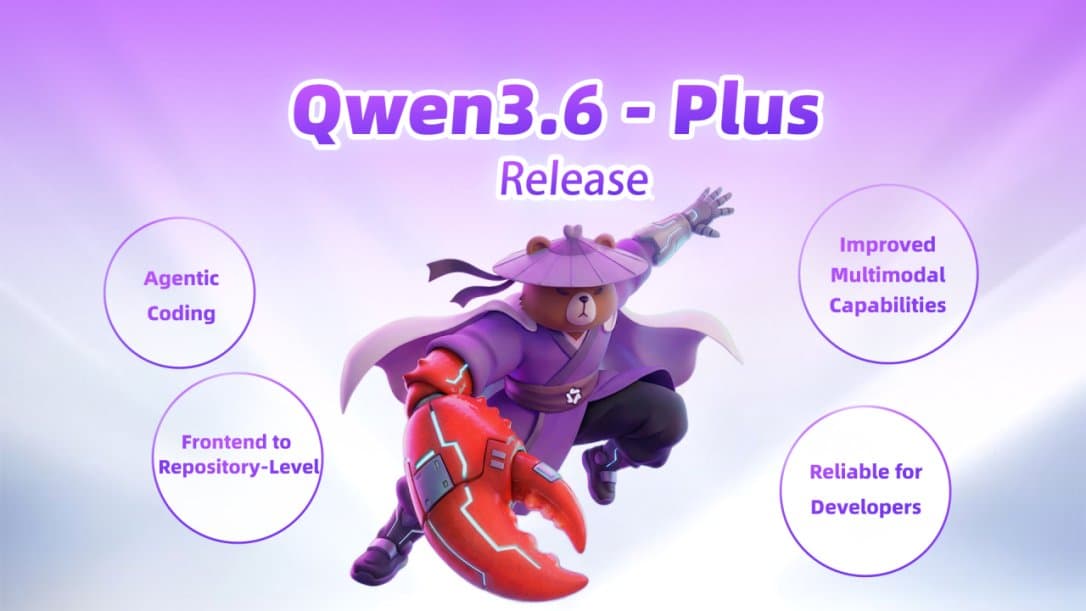
On April 9, 2026, Alibaba's Tongyi Lab social media account announced the Qwen3.6-Plus model with the tagline: "Smaller model. Frontier performance. Zero compromises." The announcement specifically positions the model against two key competitors:
- Moonshot AI's Kimi K2.5: Released in March 2026, this model represented China's latest frontier model with strong performance across Chinese and English benchmarks.
- Anthropic's Claude Opus 4.5: The current top-tier model from Anthropic, known for its strong reasoning capabilities and high performance across standardized benchmarks.
The claim suggests Qwen3.6-Plus achieves comparable performance to these models while being dramatically more parameter-efficient than its domestic competitor.
Context: China's LLM Efficiency Race
This announcement comes amid intense competition in China's AI sector, where companies face both computational constraints and regulatory pressures. Following the U.S. chip export restrictions implemented in late 2024, Chinese AI labs have increasingly focused on model efficiency as a strategic priority.
Alibaba's Qwen series has been a consistent player in this space. The Qwen2.5 series, released in late 2024, established strong performance across multiple sizes (0.5B to 72B parameters). The Qwen3.0 series in 2025 further improved reasoning capabilities. This new Qwen3.6-Plus appears to continue this trajectory with a specific focus on parameter efficiency.
Moonshot AI's Kimi K2.5, released just weeks earlier, had set a new benchmark for Chinese models with its 1M context window and strong performance across both Chinese and English tasks. The direct comparison suggests Alibaba is positioning Qwen3.6-Plus as a more efficient alternative to Moonshot's offering.
What We Know (And Don't Know)
Confirmed Claims:
- Qwen3.6-Plus exists and is available through Alibaba's Tongyi Qianwen platform
- The model is positioned as having "frontier performance" with "zero compromises"
- Alibaba claims it's "under half the size" of Kimi K2.5
Missing Details:
- No specific parameter counts for either Qwen3.6-Plus or Kimi K2.5
- No benchmark results comparing Qwen3.6-Plus to Claude Opus 4.5
- No technical paper detailing architecture improvements
- No information on training methodology or datasets
Potential Implications
If the claims hold true, Qwen3.6-Plus could represent a significant advance in model efficiency. Being "under half the size" while maintaining competitive performance would suggest either:
- Architectural innovations that improve parameter efficiency
- Training methodology improvements that extract more capability from fewer parameters
- Specialized optimization for the Chinese language domain
This efficiency could translate to lower inference costs, faster response times, and reduced computational requirements—all critical factors for commercial deployment in China's cost-sensitive market.
The Competitive Landscape
The announcement positions Alibaba directly against both domestic and international competitors:
- Domestic: Moonshot AI (Kimi K2.5), Baidu (Ernie 4.0), Zhipu AI (GLM-4), 01.AI (Yi-Large)
- International: Anthropic (Claude Opus 4.5), OpenAI (GPT-5), Google (Gemini 2.0)
Notably, the comparison to Claude Opus 4.5 rather than GPT-5 suggests Alibaba may be targeting the reasoning-focused segment of the market where Anthropic has established leadership.
What to Watch For
- Benchmark releases: Will Alibaba publish comprehensive benchmarks comparing Qwen3.6-Plus to both Kimi K2.5 and Claude Opus 4.5?
- Technical details: What architectural changes enable this claimed efficiency?
- Real-world performance: How does the model perform on practical Chinese business applications?
- Moonshot's response: Will Moonshot AI release efficiency-focused variants of Kimi K2.5?
gentic.news Analysis
This announcement continues several trends we've been tracking in China's AI sector. First, it represents the ongoing efficiency optimization trend that began accelerating after the 2024 chip restrictions. Chinese labs can no longer compete purely on scale and must innovate on efficiency—a trend we noted in our December 2025 analysis "China's AI Pivot: From Scale to Efficiency."
Second, the direct comparison to Moonshot's Kimi K2.5 highlights the intensifying domestic competition. Moonshot AI, despite being a younger company, has gained significant momentum with its Kimi series, challenging established players like Alibaba and Baidu. This competitive pressure is driving rapid iteration, with model releases now occurring on a quarterly rather than annual basis.
Third, the reference to Claude Opus 4.5 suggests Chinese labs are increasingly benchmarking against international leaders rather than just domestic competitors. This aligns with our February 2026 report on China's "dual benchmarking" strategy, where models are optimized for both Chinese-specific tasks and international benchmarks.
Historically, Alibaba's Qwen series has shown consistent improvement. The jump from Qwen2.5 to Qwen3.0 delivered approximately 15-20% improvement on MMLU and C-Eval benchmarks. If Qwen3.6-Plus maintains this improvement trajectory while achieving the claimed efficiency gains, it could represent one of the most significant advances in the series to date.
However, we should note the timing: this announcement comes just weeks after Moonshot's Kimi K2.5 release, suggesting possible competitive positioning. The AI community should await independent benchmarks before drawing firm conclusions about the efficiency claims.
Frequently Asked Questions
How does Qwen3.6-Plus compare to previous Qwen models?
Based on the naming convention (Qwen3.6-Plus), this appears to be an enhanced version of the Qwen3.6 base model. Previous iterations showed steady improvements: Qwen2.5 (2024) established strong multilingual capabilities, Qwen3.0 (2025) improved reasoning, and Qwen3.5 (late 2025) focused on coding and mathematics. The "Plus" designation typically indicates either larger scale or enhanced capabilities, though in this case it appears to refer to enhanced efficiency relative to size.
What does "under half the size" mean technically?
Without official parameter counts, "size" likely refers to total parameters. If Kimi K2.5 is in the 100-200B parameter range (common for frontier Chinese models), then Qwen3.6-Plus would be under 50-100B parameters. This would represent a significant efficiency gain if performance is indeed comparable. Alternative interpretations could include model file size or memory footprint, though parameter count is the most common metric for such comparisons.
When will Qwen3.6-Plus be available?
The model appears to be available now through Alibaba's Tongyi Qianwen platform, based on the announcement. Developers can likely access it via API, and enterprise customers may have direct integration options. Open-source releases typically follow weeks or months after commercial availability, based on Alibaba's previous release patterns with the Qwen2.5 and Qwen3.0 series.
How does this affect the competitive landscape with U.S. models?
If Qwen3.6-Plus truly approaches Claude Opus 4.5 performance at half the size of a comparable Chinese model, it narrows the efficiency gap with U.S. leaders. However, comprehensive benchmarking across diverse tasks (especially reasoning, coding, and safety) would be needed to fully assess competitiveness. The more immediate impact is on domestic competition, where efficiency advantages could help Alibaba gain market share in cost-sensitive enterprise deployments.