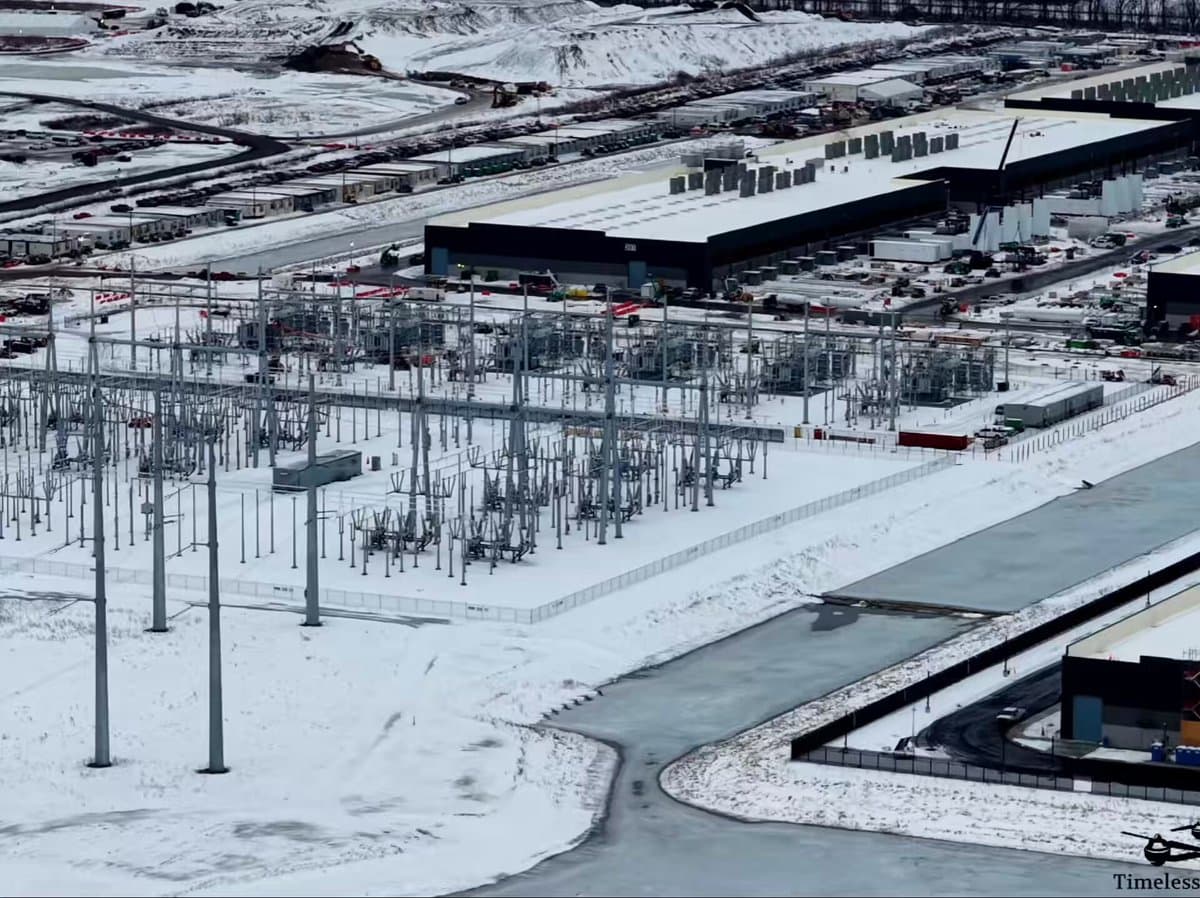
Amazon has unveiled plans for a monumental $11 billion data center campus in St. Joseph County, Indiana, specifically engineered to power the next generation of artificial intelligence. The facility, projected to draw a staggering 2.2 gigawatts (GW) of electricity, represents one of the largest single infrastructure investments in the AI era and signals a profound shift in how and where computational power is being built.
The Scale of the Investment
The sheer magnitude of the Indiana project is difficult to overstate. An $11 billion capital expenditure is comparable to the GDP of a small nation and underscores the immense financial commitment required to compete in the foundational layer of AI. The 2.2 GW power draw is perhaps the most telling metric. To put that in perspective, 1 gigawatt can power approximately 750,000 average U.S. homes. This single campus will therefore require a continuous electricity supply equivalent to powering around 1.7 million households. This demand stems from the energy-intensive nature of training and running large language models (LLMs) like those behind Amazon's AWS AI services, Alexa, and its competitive offerings against OpenAI and Google.
The AI Data Center Arms Race
Amazon's move is not occurring in a vacuum. It is a direct response to an industry-wide scramble for AI-ready infrastructure. Microsoft, Google, and Meta are all engaged in a multi-billion dollar building spree for data centers specifically designed for high-performance computing (HPC) and AI workloads. These facilities differ markedly from traditional cloud data centers. They require:
- Advanced Cooling Systems: AI server racks, packed with GPUs like NVIDIA's H100 and B200, generate extreme heat, necessitating sophisticated liquid cooling solutions.
- Denser Power Distribution: Power requirements per square foot are exponentially higher than in standard server farms.
- Ultra-Low Latency Networking: The interconnected nature of AI training clusters demands lightning-fast internal networking to move vast datasets between processors.
Amazon's Indiana campus is a bet that owning and controlling this hyper-specialized infrastructure is a critical moat for its cloud division, AWS, which is the profit engine of the entire company.
Why Indiana? The New Geography of Compute
The choice of St. Joseph County, Indiana, is emblematic of a broader trend: the migration of massive data centers away from traditional tech hubs to regions offering specific advantages.
- Energy Availability and Cost: The Midwest often has more readily available capacity on the electrical grid compared to strained networks in Virginia's "Data Center Alley" or the Silicon Valley area. Access to reliable, and potentially more affordable, power is the primary siting criterion for AI data centers.
- Economic Incentives: States like Indiana offer significant tax abatements and incentives to attract these capital-intensive projects, which promise high-value construction jobs and long-term tax revenue, even if permanent operational staffing is relatively low.
- Geographic Diversification: For resilience and to reduce latency for customers across North America, cloud providers are building a distributed network of availability zones. The Midwest provides an optimal central location.
- Land and Water: These campuses require vast tracts of land for future expansion and often rely on water for cooling. The Midwest provides both at a scale that is becoming unavailable in coastal regions.
Implications and Challenges
The rise of these AI "power plants" carries significant implications.
For the Tech Industry: It creates an incredibly high barrier to entry. Few entities beyond the largest tech giants and well-funded sovereign nations can afford the $10+ billion price tag for a competitive AI infrastructure cluster. This could centralize control of frontier AI development.
For Energy Grids and Climate Goals: The 2.2 GW demand in Indiana is a microcosm of a macro problem. The International Energy Agency (IEA) estimates data center electricity consumption could double by 2026, with AI being a primary driver. This surge is straining utility planning and forcing difficult conversations about energy sources. While Amazon has a goal of powering its operations with 100% renewable energy by 2025, the round-the-clock demand of AI data centers may necessitate investments in firm power sources like nuclear or natural gas with carbon capture to ensure grid stability, complicating decarbonization efforts.
For Local Communities: While promising investment and construction jobs, such projects can place immense pressure on local water resources (for cooling) and community infrastructure. Proactive planning and community benefit agreements are essential to ensure the long-term relationship is positive.
The Bigger Picture: Just One of Many
As noted in the source commentary, the most critical context is that Amazon's Indiana campus is "only one of many and... there are even a lot bigger planned." This is not a one-off project but a standard unit in a new industrial blueprint. Microsoft, for instance, is planning a data center in Wisconsin that could draw up to 5 GW. These facilities are becoming the factories of the 21st century, where the raw materials are electricity and data, and the output is intelligent capability.
The $11 billion Indiana campus is a stark, physical manifestation of the AI boom's second act. The initial phase was defined by algorithms, model architectures, and software breakthroughs. We have now decisively entered the infrastructure phase, where supremacy will be determined by concrete, steel, power purchase agreements, and the ability to deploy capital at a scale rarely seen outside of heavy industry. Amazon's massive bet in the heartland is a clear signal that the race to build the physical foundations of AI is the defining corporate competition of our time.
Source: Initial report via @rohanpaul_ai on X, citing Amazon's announced plans for St. Joseph County, Indiana.