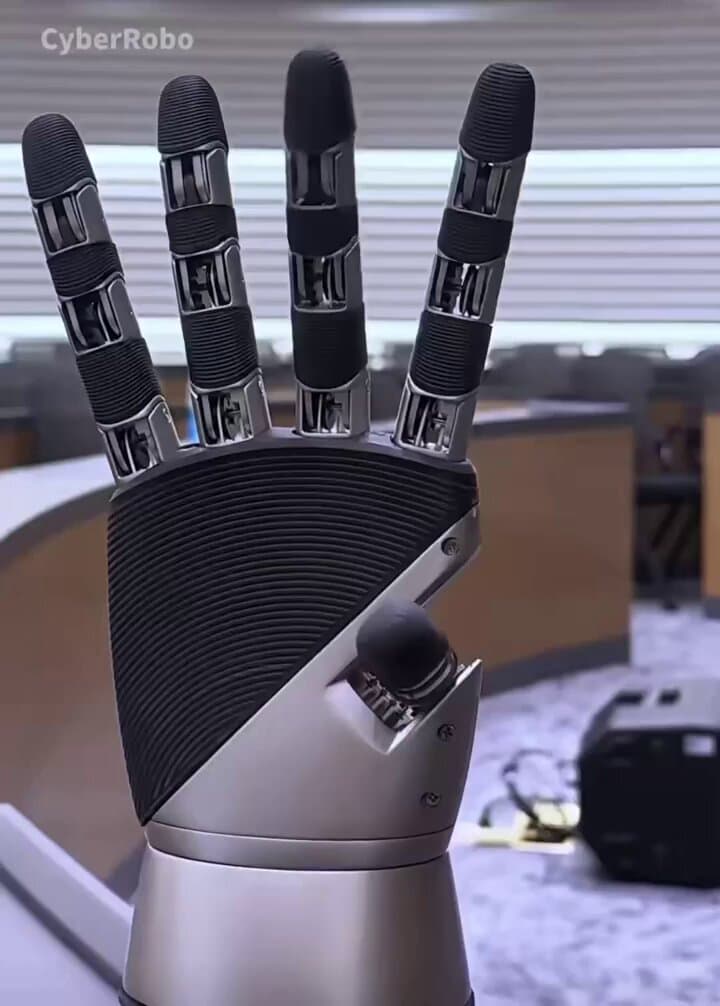
In a significant leap forward for robotics and artificial intelligence, ChangingTek Robotics has unveiled a robotic hand with unprecedented capabilities that challenge conventional limitations of robotic manipulation. The system demonstrates not just human-like dexterity but actually surpasses human biological constraints in several key areas, marking a potential paradigm shift in how robots interact with physical objects.
Breaking the Symmetry Barrier
The most immediately striking feature of ChangingTek's robotic hand is its ability to dynamically switch between left and right configurations. Traditional robotic hands are typically designed as either left or right-handed, mirroring human anatomical constraints. This new system eliminates that limitation entirely, creating what could be described as the world's first truly ambidextrous robotic hand.
This capability has profound implications for robotic applications. In manufacturing environments, robots could adapt to different workstations without requiring specialized end-effectors. In logistics and warehousing, a single robotic system could handle packages from any orientation. The elimination of handedness constraints represents a fundamental shift toward more versatile and adaptable robotic systems.
Exceeding Human Biological Limits
Beyond its ambidexterity, the robotic hand demonstrates movement capabilities that exceed human anatomical possibilities. The system can "bend in reverse"—a movement pattern impossible for human hands due to skeletal and ligament constraints. Additionally, it achieves "exceeds human degrees of freedom," suggesting the hand has more independent movement axes than the approximately 20-30 degrees of freedom in a human hand.
This expanded range of motion enables manipulation strategies unavailable to human operators. The hand could potentially reach into confined spaces, manipulate objects from unconventional angles, or perform complex assembly tasks requiring non-human movement patterns. Such capabilities could revolutionize fields from surgical robotics to delicate manufacturing processes.
Practical Dexterity and Speed
The demonstration video referenced in the source material shows the hand gripping diverse objects including wrenches and drinks—two very different manipulation challenges. Wrenches require precise force application and torque control, while drinks demand gentle handling to avoid spillage. This versatility suggests sophisticated sensory feedback and control algorithms that can adapt grip strength and orientation to object properties.
Perhaps most impressive is the system's speed: "a joint movement speed of 230° per second." To put this in perspective, human finger joints typically achieve maximum speeds around 180-200° per second during rapid movements. The robotic hand not only matches but exceeds human speed capabilities while maintaining precision—a combination rarely achieved in robotic systems.
Tendon-Driven Architecture
The hand is "driven by tendon chords," a biomimetic approach that mimics the musculoskeletal structure of human hands. Unlike traditional robotic hands that use motors directly at each joint, tendon-driven systems use cables (tendons) pulled by remotely located actuators. This approach offers several advantages:
- Reduced weight in the hand itself
- More natural compliance and shock absorption
- Potential for more compact design
- Better force transmission efficiency
This architectural choice suggests ChangingTek is prioritizing natural movement patterns and efficiency over simpler but less biomimetic designs. The tendon-driven approach, combined with advanced AI control systems, likely contributes to the hand's remarkable speed and dexterity.
Implications for AI and Robotics Integration
The development represents more than just mechanical innovation—it showcases the critical role of artificial intelligence in enabling such advanced manipulation. Controlling a tendon-driven hand with multiple degrees of freedom at high speeds requires sophisticated algorithms for:
- Real-time trajectory planning
- Force and torque control
- Object recognition and property estimation
- Adaptive grip strategies
- Error correction and recovery
The hand's ability to handle such diverse objects suggests integrated computer vision systems and machine learning models that can rapidly assess objects and select appropriate manipulation strategies.
Potential Applications and Future Directions
This technology could transform numerous industries:
Healthcare and Rehabilitation: Prosthetic hands with such capabilities would represent a quantum leap forward, potentially restoring near-natural dexterity to amputees. The ambidextrous capability would be particularly valuable for bilateral amputees.
Manufacturing and Assembly: Robots equipped with these hands could handle more varied tasks without retooling, increasing flexibility in production lines. The ability to manipulate tools like wrenches suggests potential for maintenance and repair robotics.
Logistics and Warehousing: The combination of speed, dexterity, and adaptability could significantly improve picking and packing operations in e-commerce fulfillment centers.
Hazardous Environments: Robots with such manipulation capabilities could perform delicate operations in environments unsafe for humans, from nuclear facilities to disaster zones.
Research and Development: The hand itself could serve as a platform for studying manipulation algorithms and human-robot interaction.
Challenges and Considerations
While the demonstration is impressive, several questions remain unanswered in the available source material:
- Power consumption and efficiency of the tendon-driven system
- Durability and maintenance requirements of the tendon mechanisms
- Cost of production and scalability
- Integration with existing robotic platforms
- Sensory feedback systems and their resolution
Additionally, the ethical implications of robots with superhuman dexterity warrant consideration, particularly regarding workforce displacement and safety protocols for human-robot collaboration.
Conclusion
ChangingTek Robotics' ambidextrous hand represents a significant milestone in robotic manipulation. By combining biomimetic design with AI-driven control, the system achieves not just human-like dexterity but capabilities beyond human biological limits. The ability to switch handedness, exceed human degrees of freedom, and operate at superhuman speeds while handling diverse objects suggests we are entering a new era of robotic manipulation.
As this technology matures and becomes more widely available, it could fundamentally change how robots interact with the physical world—from manufacturing floors to hospital operating rooms to our own homes. The boundary between human and machine capability in manipulation tasks continues to blur, driven by innovations like this remarkable robotic hand.
Source: Demonstration video and description shared by @rohanpaul_ai on X/Twitter, showcasing ChangingTek Robotics' robotic hand capabilities.