Key Takeaways
- AutoZone, Home Depot, Macy’s, and Ulta Beauty have entered into partnerships with Google Cloud to implement agentic AI solutions.
- These systems, built on Google's Gemini models, aim to handle complex, multi-step customer interactions.
- The move signals a shift from experimental chatbots to more autonomous, task-completing AI agents in retail.
The Innovation — What the Source Reports
A cohort of major retailers—AutoZone, The Home Depot, Macy’s, and Ulta Beauty—has announced strategic partnerships with Google Cloud to develop and deploy agentic AI systems. These are not simple chatbots, but AI agents powered by Google's Gemini models, designed to autonomously execute complex, multi-step tasks for customers and associates.
The announcements, covered by Chain Store Age, Forbes, PR Newswire, and Retail TouchPoints, highlight a concrete move beyond conversational AI into actionable, goal-oriented systems. The partnership is facilitated through Cognizant, a global IT services provider, which is collaborating with Google Cloud to bring "Gemini Enterprise" to retail.
While specific implementations vary by retailer, the core use cases revolve around critical customer moments:
- Ulta Beauty: Developing an AI beauty advisor to provide personalized product recommendations, shade matching, and routine building.
- Macy’s: Focusing on customer-facing convenience, likely enhancing its virtual styling and customer service capabilities.
- The Home Depot: Leveraging AI for complex DIY project guidance and product discovery, helping customers from planning to purchase.
- AutoZone: Presumably applying agentic AI to automotive part identification, troubleshooting, and in-store associate support.
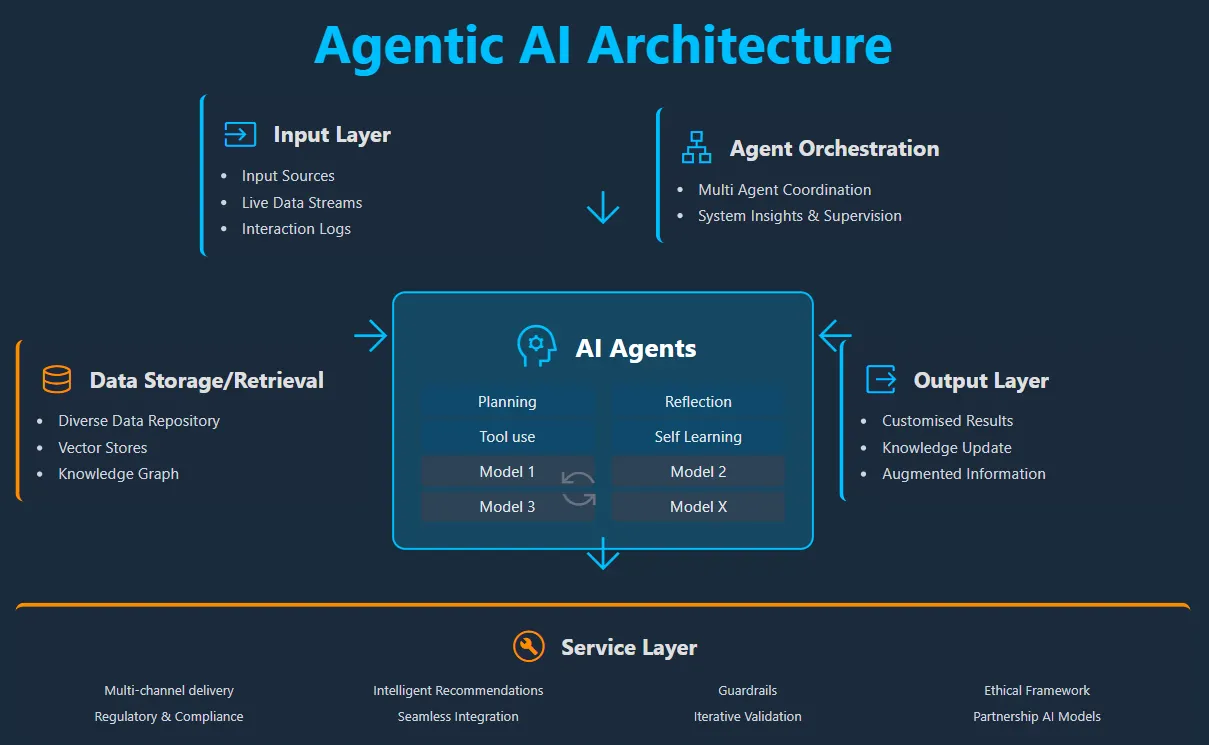
The underlying technology is Google's Gemini 1.5 Pro, accessed via Vertex AI. The "agentic" nature implies these systems can break down a customer's high-level goal (e.g., "remodel my bathroom" or "create a skincare routine for acne") into a sequence of actions: asking clarifying questions, searching product databases, checking inventory, comparing options, and ultimately guiding the user to a solution or purchase.
Why This Matters for Retail & Luxury
This wave of partnerships represents a significant maturation of AI in retail. The industry is moving past the first generation of FAQ bots and single-turn Q&A systems toward autonomous, transactional agents. For luxury and high-touch retail, the implications are profound:
- Hyper-Personalized Consultations at Scale: An agentic AI can emulate the depth of a personal shopper or beauty advisor. For a luxury brand, it could cross-reference a client's purchase history, known preferences, and current trends to curate a personalized collection or suggest complementary items for an existing wardrobe piece.
- Complex Product Discovery: Luxury purchases are often considered investments. An agent can handle nuanced queries like, "Find a handbag that is both professional and suitable for evening, under €5,000, and available in Paris next week." It would navigate size, color, material, inventory, and logistics in one interaction.
- Augmenting, Not Replacing, Human Expertise: The goal is to handle routine but complex inquiries, freeing human associates to focus on the highest-value interactions, relationship building, and experiential elements that define luxury retail.
Business Impact
The direct business impact cited in the coverage includes improved customer satisfaction, increased conversion rates, and operational efficiency. By resolving complex queries in a single interaction, retailers reduce friction and basket abandonment. For Ulta, the AI advisor aims to replicate the in-store consultation experience online, directly attacking a key barrier to beauty e-commerce.
This follows Google's aggressive push into the enterprise AI market, competing directly with Microsoft (OpenAI) and Amazon (Bedrock). For the retailers, this is a strategic bet on Google's ecosystem. Cognizant's role as the implementation partner indicates these are not off-the-shelf solutions but require significant systems integration, data pipeline development, and customization—a substantial services engagement.
Implementation Approach & Technical Requirements

Deploying a production-grade agentic AI system is a major technical undertaking. The architecture likely involves:
- Foundation Model: Gemini 1.5 Pro or a fine-tuned variant via Vertex AI.
- Orchestration Framework: Using frameworks like LangChain or Google's own Vertex AI Agent Builder to manage the agent's reasoning, tool use, and workflow.
- Tool Integration: The agent must be equipped with "tools"—APIs and connectors to core retail systems: Product Information Management (PIM), Inventory Management, Customer Relationship Management (CRM), and Order Management Systems (OMS).
- Data Grounding: The agent's knowledge must be grounded in the retailer's proprietary data—product catalogs, brand guidelines, inventory feeds, and customer consenting data—to ensure accuracy and brand voice.
- Guardrails & Evaluation: Robust safeguards are non-negotiable. This includes hallucination prevention, strict adherence to brand tone, compliance with data privacy regulations (GDPR, CCPA), and continuous evaluation against key performance indicators (KPIs).
Governance & Risk Assessment
For luxury brands, the risks are magnified by the premium on brand equity and customer trust.
- Brand Safety & Tone: An AI agent must communicate with the sophistication and discretion expected of a luxury brand. A single off-brand or overly casual response could damage perception.
- Data Privacy: These agents will process personal data and preferences. Implementing strict data governance, clear consent mechanisms, and ensuring all processing is within regulatory boundaries is critical.
- Bias & Fairness: In areas like beauty (Ulta) or fashion (Macy’s), the AI must be meticulously audited for bias in recommendations across skin tones, body types, ages, and cultural contexts.
- Maturity Level: Agentic AI is an emerging, complex paradigm. While promising, it carries higher technical risk than deterministic systems. Failures can be more confusing and frustrating for users. A phased rollout with heavy human-in-the-loop oversight is the prudent path.
gentic.news Analysis
This cluster of announcements is a strategic market signal. Google Cloud is securing flagship retail clients to demonstrate the vertical applicability of its Gemini models, directly challenging competitors in a key industry. The choice of partners spans home improvement (Home Depot), automotive (AutoZone), department store (Macy’s), and specialty beauty (Ulta), showcasing the flexibility of the agentic approach.
For the retail AI landscape, this marks the beginning of the multi-agent era. We are transitioning from systems that answer questions to systems that accomplish tasks. This aligns with our previous analysis on the evolution of retail chatbots into complex reasoning engines. The involvement of Cognizant underscores that realizing value from these large models requires deep integration expertise—the model is just the engine, not the car.
For luxury brands observing this trend, the lesson is to focus on specialization. A generic agent will not suffice. The winning implementation will be one where the agent's knowledge, tools, and conversational style are deeply customized to the brand's unique universe, product lexicon, and clienteling rituals. The race is no longer about who has an AI, but about who has the most sophisticated, brand-aligned, and effective AI agent.