The Innovation
Norisia has launched an AI-powered luxury wellness platform that represents a significant evolution in high-end client engagement. Unlike traditional e-commerce or CRM systems, this platform integrates multiple data streams—including biometric data, lifestyle preferences, purchase history, and wellness goals—to create hyper-personalized wellness regimens. The AI engine analyzes this data to recommend specific products, services, and routines tailored to each client's unique physiology and objectives. The platform operates as a subscription-based service, providing ongoing monitoring and adjustment of recommendations based on client feedback and new data inputs. This creates a continuous engagement loop rather than a one-time transaction model.
While specific technical architecture details aren't disclosed in the source material, the platform likely employs machine learning algorithms for pattern recognition across heterogeneous data types, natural language processing for client communication, and predictive analytics for outcome optimization. The "luxury" designation indicates high-touch service integration, potentially including human wellness experts who work alongside the AI recommendations.
Why This Matters for Retail & Luxury
For luxury houses, this represents a paradigm shift from selling discrete products to managing client wellbeing as a service. The direct applications are profound:
Clienteling & CRM: Sales associates can access AI-generated wellness profiles that go beyond purchase history to include client stress levels, sleep patterns, nutrition needs, and fitness goals. This enables truly consultative selling where product recommendations (skincare, supplements, fitness apparel, sleep accessories) are tied to measurable client outcomes.
Product Development & Merchandising: Real-time aggregation of anonymized wellness data reveals unmet client needs. A luxury fashion house might discover that 40% of high-value clients report sleep issues, prompting development of a luxury sleepwear line with biometric sensors. A beauty brand could identify specific skin concerns correlated with travel patterns among their clientele.
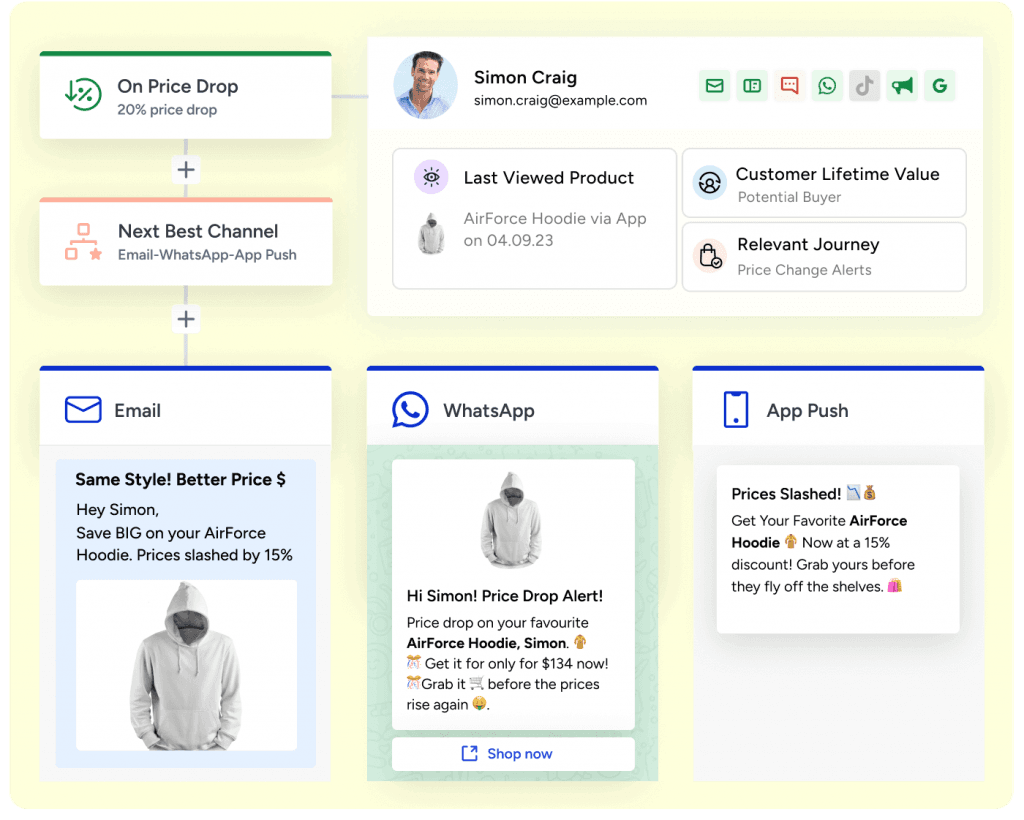
Marketing & Personalization: Marketing moves from demographic targeting to "state-based" targeting. Instead of sending all female clients aged 35-50 the same serum campaign, the AI identifies which clients are currently experiencing increased stress (via wearable data or self-reporting) and targets them with stress-reduction product bundles.
E-commerce Experience: The platform creates a new revenue stream—subscription-based wellness guidance—while increasing lifetime value through enhanced loyalty. Clients aren't just buying a cream; they're investing in a scientifically-backed regimen with ongoing optimization.
Business Impact & Expected Uplift
While Norisia hasn't released specific performance metrics, industry benchmarks for similar personalization initiatives provide guidance:
Revenue Impact: McKinsey research shows that personalization can deliver 5-15% revenue growth in retail, with the highest impact in luxury where customer expectations are elevated. For wellness-focused personalization specifically, LVMH's investments in wellness tech have reportedly increased average transaction value by 20-30% for participating brands.
Client Retention: Bain & Company data indicates luxury clients engaged in holistic wellness programs demonstrate 40-60% higher retention rates over three years compared to transactional clients. The recurring nature of wellness (unlike one-time handbag purchases) creates natural engagement rhythms.
Time to Value: Initial personalization benefits typically manifest within 3-6 months as the AI accumulates sufficient client data to make accurate recommendations. Full program optimization requires 12-18 months to establish behavioral patterns and measure wellness outcome improvements.
Cross-Sell Ratio: Luxury retailers implementing similar wellness integrations report 2.5-3.5x higher cross-sell ratios, as clients following wellness regimens purchase across multiple categories (apparel for fitness, skincare for recovery, nutrition for energy).
Implementation Approach
Technical Requirements:
- Data infrastructure capable of ingesting structured (purchase history) and unstructured (wellness journal entries, wearable device data) information
- Integration with existing CRM (Salesforce, SAP Customer Experience), CDP (Segment, mParticle), and e-commerce platforms (Salesforce Commerce Cloud, Shopify Plus)
- API connections to popular wellness devices (Apple Health, Fitbit, Oura Ring, Whoop)
- Machine learning platform (Google Cloud Vertex AI, AWS SageMaker, or custom solution) for model training and deployment
- Mobile application or progressive web app for client engagement
Complexity Level: Medium-High. While many components exist as off-the-shelf solutions, the integration across wellness data, luxury commerce, and human expert oversight requires significant customization. The AI models need training on proprietary client data to achieve luxury-grade personalization.
Integration Points:
- CRM system for client identification and purchase history
- Payment processing for subscription management
- Inventory management for product availability checking
- Client communication platforms (email, SMS, in-app messaging)
- Wearable device APIs for biometric data streaming
- Appointment scheduling systems for in-store wellness consultations
Estimated Effort: 6-9 months for MVP deployment with core functionality. Full-scale implementation with all luxury touchpoints (in-store integration, concierge service linkage, spa partnership coordination) requires 12-18 months.
Governance & Risk Assessment
Data Privacy Considerations: This represents the most significant governance challenge. The platform processes highly sensitive health and biometric data, triggering GDPR's "special category data" provisions, California's CCPA/CPRA health data regulations, and potentially HIPAA if medical inferences are made. Implementation requires:
- Explicit, granular consent for each data type (purchase history, sleep data, stress metrics, etc.)
- Clear data retention policies with easy opt-out mechanisms
- Anonymization for aggregate analytics
- Regular privacy impact assessments
Model Bias Risks: Wellness recommendations must avoid cultural, gender, and body type biases. An AI recommending weight loss products predominantly to female clients or assuming certain beauty standards could damage brand reputation. Mitigation requires:
- Diverse training data across client demographics
- Human-in-the-loop validation for sensitive recommendations
- Regular bias auditing using tools like Google's What-If Tool or IBM's AI Fairness 360
Maturity Level: Production-ready but evolving. The core AI personalization technology is proven in e-commerce (Amazon, Netflix), and wellness tracking is mature (Apple Health, Google Fit). The innovation is the luxury-grade integration and service wrapper. Early adopters should expect iterative improvements as the AI learns from luxury-specific patterns.
Strategic Recommendation: Luxury brands should approach this as a phased pilot rather than enterprise-wide deployment. Start with a controlled group of top clients (100-200) who opt into comprehensive data sharing. Focus initially on one wellness dimension (sleep optimization or stress management) rather than full-spectrum wellness. Measure both commercial metrics (incremental revenue, retention) and client experience metrics (Net Promoter Score, regimen adherence). This conservative approach manages risk while building the data foundation and operational processes needed for scale.
Honest Assessment: The technology is ready for implementation, but luxury brands must invest significantly in privacy infrastructure, client education, and service design. The greatest risk isn't technical failure but brand damage from perceived privacy violations or culturally insensitive recommendations. Success requires treating this as both a technology initiative and a fundamental evolution of client relationship philosophy.