In a landmark achievement for global energy transition, China has reached its ambitious target of 1.2 terawatts (TW) of installed wind and solar capacity a full six years ahead of schedule. Originally set for 2030, this milestone was reportedly met in 2024, cementing China's position as the undisputed leader in renewable energy deployment. The scale is difficult to overstate: 1.2 TW is roughly equivalent to the total installed electricity capacity of the entire United States.
The Strategy: Ubiquitous Energy Generation
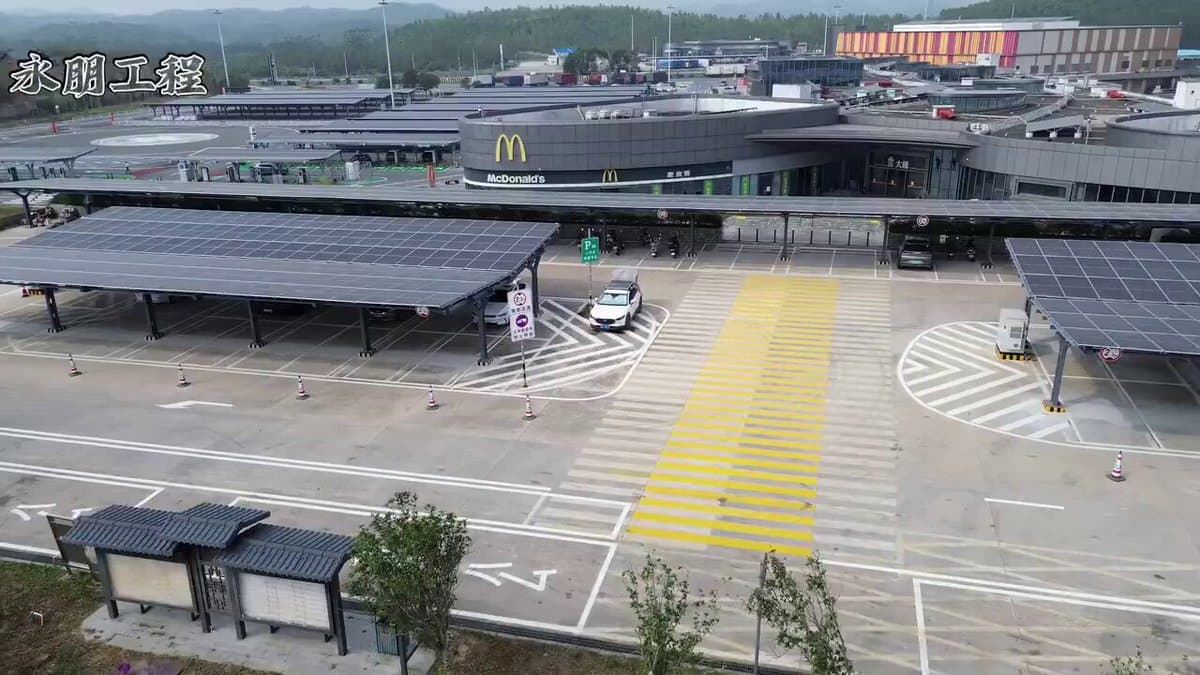
The acceleration wasn't achieved through massive, remote utility-scale projects alone. A key tactic has been the widespread conversion of existing urban and suburban infrastructure into decentralized power generators. As highlighted in reports, China has systematically turned parking lots and rooftops into distributed solar power plants. This approach solves multiple problems simultaneously: it utilizes already-developed land, reduces transmission losses by generating power closer to demand, and accelerates deployment by bypassing some land-use controversies.
This "ubiquitous solar" model transforms car parks into shaded solar canopies and turns the vast, flat roofs of factories, warehouses, and residential buildings into revenue-generating assets. It represents a shift from seeing solar farms as separate, dedicated installations to viewing the entire built environment as a potential energy-producing surface.
The Implicit Role of Digital Management and AI
While the source material explicitly celebrates the deployment milestone, managing a distributed energy network of this unprecedented scale and complexity is impossible without sophisticated digital tools. The integration of millions of distributed generation points—from a rooftop array on a village home to a vast solar canopy over a factory parking lot—into a stable national grid requires advanced coordination.
This is where artificial intelligence and smart grid technologies become critical, though often unsung, enablers. AI-driven grid management systems are essential for forecasting solar and wind output, balancing variable renewable generation with demand, optimizing energy storage dispatch, and maintaining grid stability. China's rapid rollout likely leverages:
- Predictive Analytics: For weather-dependent generation forecasting.
- Computer Vision: Potentially using satellite and drone imagery to assess rooftop solar potential and monitor installation progress across the country.
- Smart Inverters & IoT: Devices that allow distributed assets to communicate with grid operators, providing real-time data for AI systems to optimize power flows.
The achievement is thus not just a story of manufacturing and construction prowess, but also of digital infrastructure and data intelligence scaling in lockstep with physical infrastructure.
Global Context and Implications
China's achievement dramatically alters the global clean energy landscape. Its total solar and wind capacity now dwarfs that of any other nation. This colossal scale has driven down the cost of solar panels and wind turbines worldwide, fueling the global energy transition. However, it also raises questions about supply chain dominance and competitive balance in the renewable technology sector.
For other nations, China's model offers a powerful blueprint: aggressive, state-backed targets combined with policies that incentivize decentralized generation can yield astonishing results. The strategy of leveraging everyday infrastructure—a solution readily available in most countries—demonstrates that land constraints need not be a prohibitive barrier to rapid solar adoption.
Challenges on the Horizon
Reaching the capacity target is one feat; fully integrating this power into the grid is an ongoing challenge. China still faces issues with curtailment (wasting renewable energy when generation exceeds grid capacity or demand) and needs a massive parallel build-out of energy storage and ultra-high-voltage transmission lines to move power from sunny/windy regions to population centers. The next phase of its energy transition will depend even more heavily on AI for grid optimization and storage management to ensure this clean power is used effectively, not just installed.
China's six-year-early victory on its 1.2 TW target proves that with strong policy, industrial capacity, and the intelligent integration of technology into the built environment, the pace of the renewable energy transition can be radically accelerated. The world is now watching to see how it manages the equally complex task of building a grid smart enough to handle it.