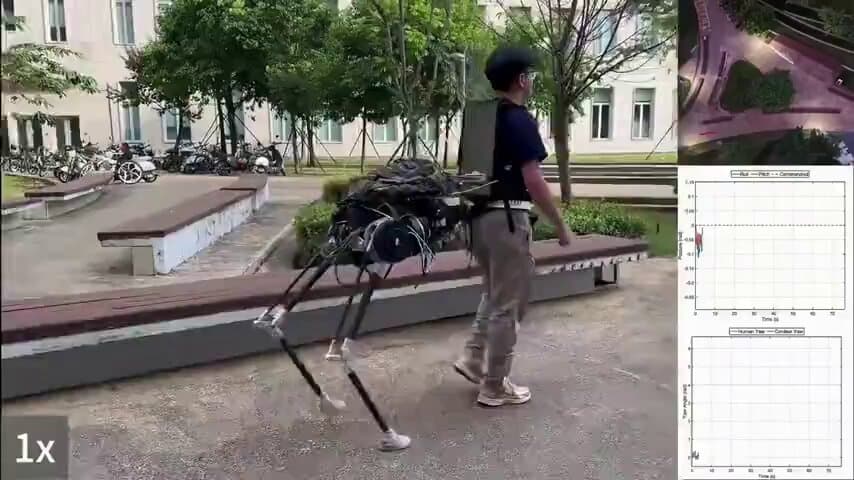
Chinese engineers have unveiled a groundbreaking wearable technology: a waist-hip exoskeleton specifically designed to assist with carrying heavy backpacks. This innovation promises to transform the experience of hikers, military personnel, and workers who regularly bear significant loads over long distances or challenging terrain.
The Core Innovation: Offloading Weight to the Hips
The fundamental breakthrough of this device lies in its design philosophy. Unlike traditional backpack frames that transfer weight primarily to the shoulders and spine, this exoskeleton intelligently redistributes the load. It is engineered to carry between 30% and 50% of the total backpack weight, with a support capacity of up to 30 kilograms (approximately 66 pounds). By shifting this substantial portion of the burden away from the upper body, the system directly targets the primary sources of fatigue and injury.
How It Works: A Propulsive Assist
The exoskeleton doesn't just statically hold weight; it provides active assistance. The key mechanical action is a forward-pushing force. As the user walks, climbs, or hikes, the device applies this propulsive aid. This action serves a dual purpose: it counteracts the backward pull of a heavy pack, and it actively assists the leg muscles in propelling the body forward. This mechanism is crucial for reducing metabolic cost and muscle fatigue in the legs and lower back, areas that bear immense strain during loaded locomotion.
Target Applications and Impact
The potential applications for this technology are vast and immediately relevant:
- Recreational Hiking and Mountaineering: Long-distance trekkers and climbers could extend their range and reduce injury risk, making expeditions safer and more enjoyable.
- Military and Search & Rescue: Soldiers and rescue personnel often carry extreme loads in critical situations. This exoskeleton could enhance endurance, speed, and operational effectiveness.
- Field Research and Forestry: Professionals like geologists, biologists, and rangers who carry equipment in remote areas would benefit from reduced physical strain.
- Industrial and Logistics Work: The principles could be adapted for workers who carry heavy tools or materials, potentially reducing workplace injuries.
The reported benefit of "cutting strain on the back and legs" addresses the most common complaints associated with heavy load carriage, suggesting meaningful improvements in comfort, endurance, and long-term musculoskeletal health.
The Broader Context of Wearable Robotics
This development from Chinese engineers fits into the rapidly accelerating global field of assistive and augmentative exoskeletons. While much attention has been focused on full-body suits for industrial lifting or lower-limb devices for medical rehabilitation, this waist-hip model represents a specialized, pragmatic approach. It focuses on a ubiquitous problem—carrying a backpack—with a targeted solution that is likely less bulky, complex, and expensive than full exosuits.
The choice to focus on the waist and hip is biomechanically astute. The hips are a powerful center of mass and movement, making them an efficient point for applying assistive forces. This design likely offers a favorable balance between providing meaningful assistance and maintaining the user's natural gait and freedom of movement, which is essential for navigating uneven trails or rugged environments.
Future Trajectory and Considerations
The announcement, as reported by Rohan Paul, signals a significant step in personal augmentation technology. The next phases will involve rigorous field testing, user feedback, and iterations to optimize weight, comfort, battery life (if powered), and adaptability to different body types and movement patterns.
Successful commercialization will depend on proving the device's reliability, durability, and value proposition in real-world conditions beyond controlled demonstrations. Furthermore, the evolution of such technology will inevitably intersect with discussions about human performance enhancement, its equitable access, and its potential applications beyond recreational and professional use.
Source: Development reported by @rohanpaul_ai, citing work by Chinese engineers.