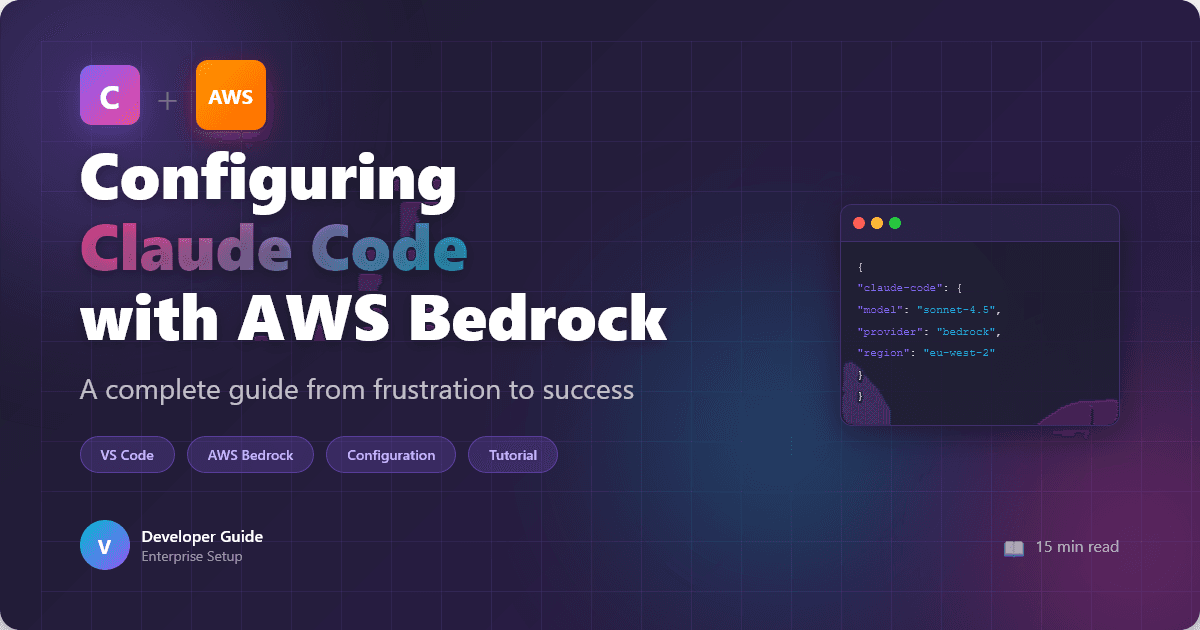
Anthropic has announced a significant reduction in the time required to set up its Claude Code agent on two major cloud platforms: Amazon Web Services (AWS) Bedrock and Google Cloud Vertex AI. The update, announced via a developer-focused social media post, targets a key friction point for engineers looking to deploy the specialized coding AI within their existing cloud infrastructure.
What's New
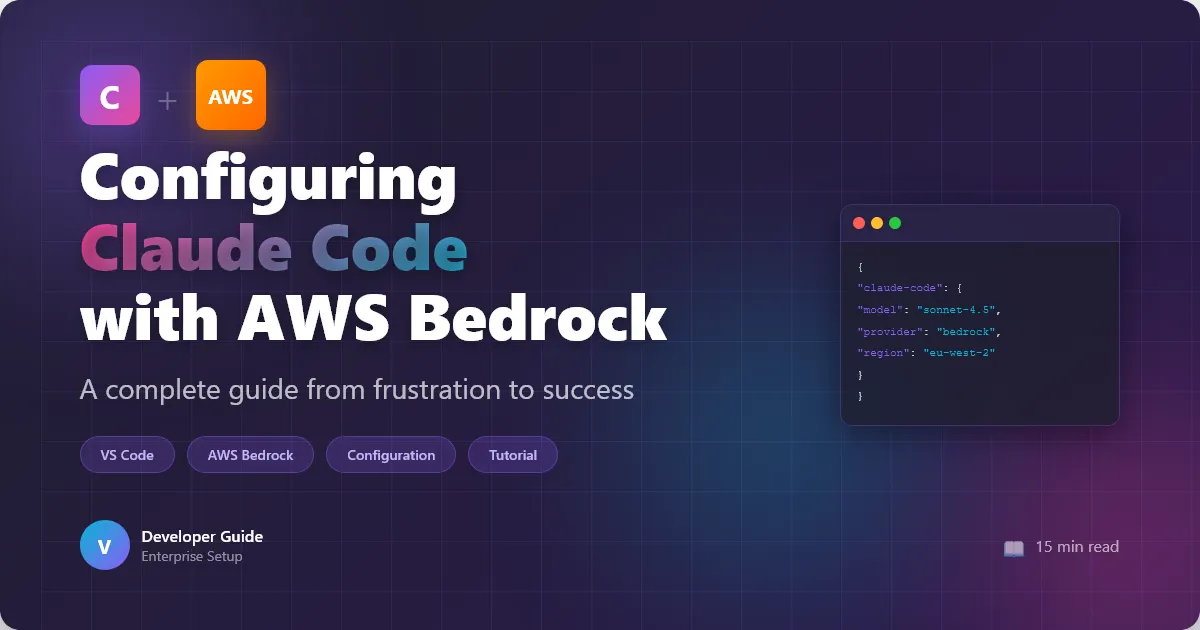
The core announcement is straightforward: the configuration and deployment process for Claude Code on AWS Bedrock and Google Vertex AI is now "much faster." While specific time savings were not quantified in the brief announcement, the implication is a streamlined workflow for developers. This likely involves optimizations in the provisioning of necessary APIs, configuration of model endpoints, and integration of Claude Code's specialized tooling for code generation, editing, and debugging within these managed AI service environments.
Technical Context
Claude Code is Anthropic's AI agent specifically fine-tuned for software development tasks. Unlike a general-purpose chat model, it is designed to interact with codebases, execute commands in a sandboxed environment, and handle complex coding workflows. Deploying such an agent on a cloud platform like Bedrock or Vertex AI involves several steps:
- Model Access: Enabling the specific Claude model variant (likely Claude 3.5 Sonnet or a specialized version) within the cloud provider's AI model catalog.
- API & IAM Configuration: Setting up the correct API endpoints, service roles, and Identity and Access Management (IAM) permissions to allow Claude Code to operate securely.
- Tooling Integration: Configuring the agent's ability to use its coding tools, which may involve setting up compute environments or connecting to version control systems.
The announced speed-up suggests Anthropic has worked to pre-configure, automate, or simplify one or more of these steps, potentially through improved documentation, one-click deployment scripts, or closer integration with the cloud platforms' native deployment tools.
Why It Matters
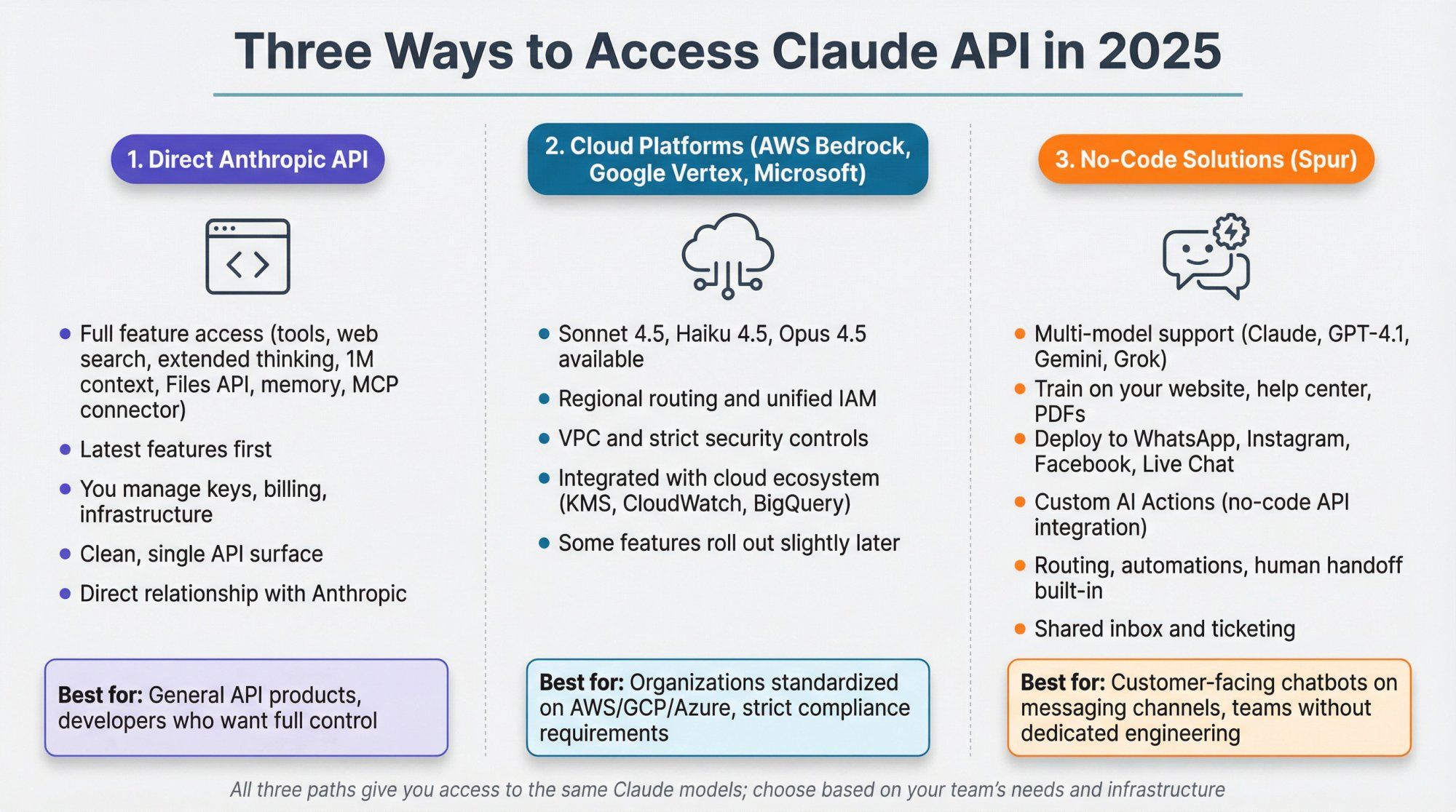
For development teams, faster setup translates directly to lower time-to-value. Reducing the configuration overhead from hours to minutes removes a barrier to experimentation and adoption. This is particularly important in the competitive landscape of AI coding assistants, where ease of integration can be as decisive a factor as raw capability.
This move also signals Anthropic's continued commitment to a multi-cloud distribution strategy. By optimizing for both AWS and Google Cloud—two of the three major hyperscalers—they ensure developers are not locked into a single ecosystem and can use Claude Code within their preferred cloud environment. This aligns with broader industry trends where foundational model providers are ensuring their models are readily available across all major cloud marketplaces.
gentic.news Analysis
This incremental but practical improvement fits into a clear pattern of Anthropic maturing its enterprise and developer offerings. Following the launch of Claude 3.5 Sonnet in June 2024 and the subsequent introduction of the Claude Code agent, the focus has shifted from pure model capability to developer experience and integration. As we covered in our analysis of the Claude 3.5 Sonnet launch, the model's standout performance on coding benchmarks was a key differentiator. Now, the battle is to make that capability effortlessly accessible within professional workflows.
The acceleration for AWS Bedrock and Google Vertex AI is a direct competitive maneuver. GitHub Copilot is deeply integrated into Microsoft's Azure OpenAI Service and GitHub ecosystem. By making Claude Code faster to deploy on AWS and Google Cloud, Anthropic is targeting the significant developer bases on those platforms who may not be fully invested in the Microsoft stack. This also complements Anthropic's existing strategic partnerships, including its major investment and collaboration with Amazon.
Practitioners should view this as part of the ongoing commoditization of AI model access. The differentiation is increasingly less about who has the model and more about how seamlessly it can be woven into existing tools, clouds, and CI/CD pipelines. The next logical steps for Anthropic would be to publish benchmark data on the setup time reduction and to extend similar optimizations to other deployment targets, such as private virtual private clouds (VPCs) or on-premises solutions for highly regulated industries.
Frequently Asked Questions
What is Claude Code?
Claude Code is a specialized AI agent from Anthropic, built on the Claude 3.5 model family, that is fine-tuned for software development. It can write, edit, debug, and explain code within a sandboxed environment, acting as an autonomous coding assistant.
How do I access Claude Code on AWS Bedrock or Vertex AI?
You access it through the respective cloud platform's AI service console. First, ensure you have an account with the cloud provider and the Claude models are available in your region. Then, you would typically navigate to the Bedrock or Vertex AI Model Garden, select the appropriate Claude model, and follow the provisioning and deployment steps, which have now been optimized for faster setup.
Is Claude Code better than GitHub Copilot?
"Better" depends on the use case. Claude Code is an agent that can operate autonomously in a workspace, while GitHub Copilot is primarily an inline code-completion tool. Claude Code may excel at broader tasks like debugging or writing full functions, whereas Copilot is deeply integrated into the editor for real-time suggestions. Performance also varies by language and task. Developers often trial both to see which fits their workflow.
Does this update cost extra?
The update to the setup process itself does not incur extra cost. You will still pay for the standard usage fees associated with running Claude models on AWS Bedrock or Google Vertex AI, typically based on tokens processed (input and output).
Source: Announcement via @_catwu on X.