Anthropic has moved its Claude Cowork coding assistant from a limited beta into general availability. The launch, announced via a tweet from the company's developer relations team, marks a significant expansion of Anthropic's enterprise-focused AI toolset, providing a dedicated environment for software development powered by its Claude 3 model family.
Key Takeaways
- Anthropic has made its Claude Cowork coding assistant generally available.
- This positions it directly against GitHub Copilot and other AI-powered development tools.
What's New

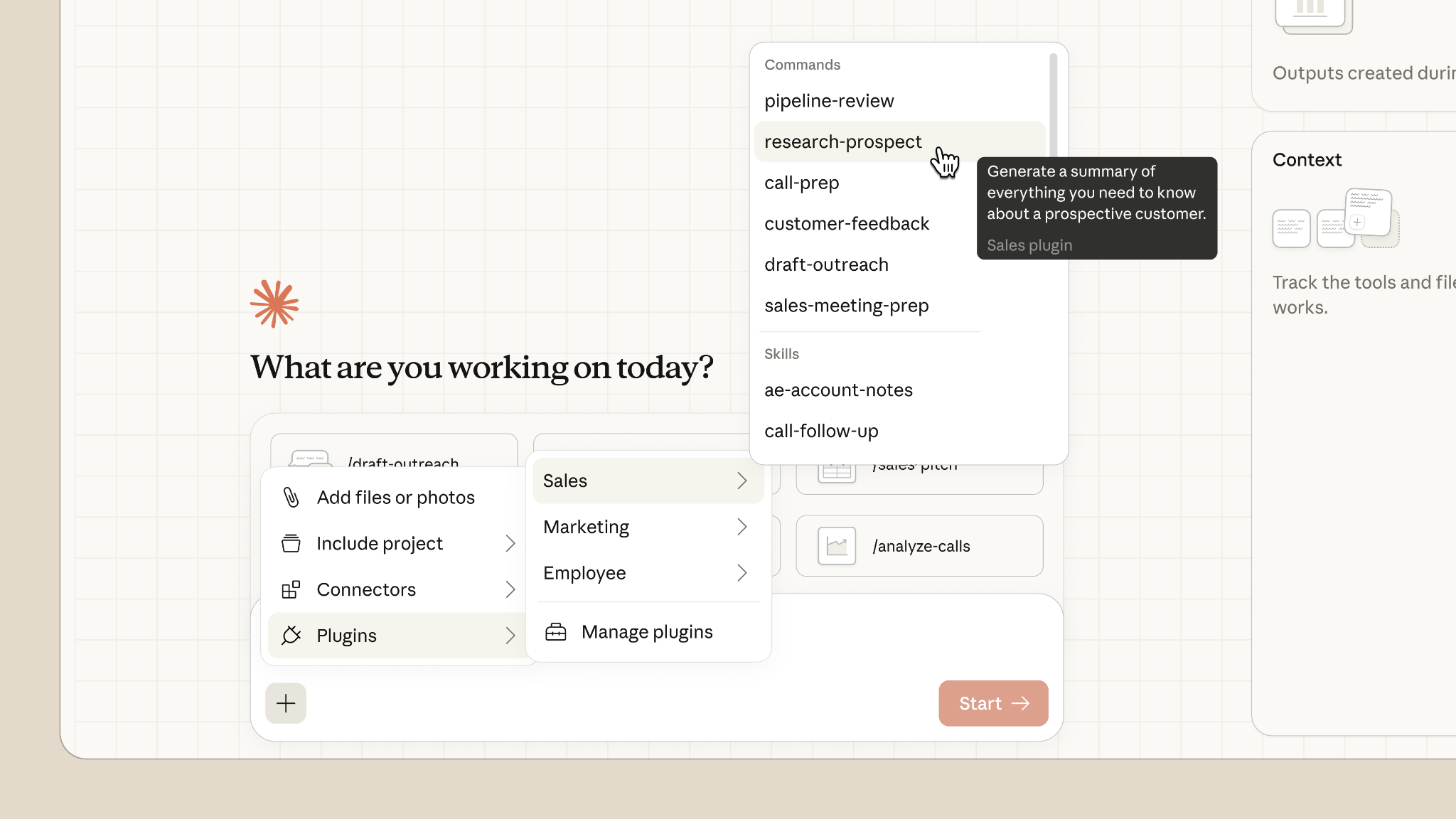
Claude Cowork is a specialized workspace for software development, distinct from the general-purpose Claude.ai chat interface. It is designed to understand and manipulate codebases, offering features like:
- Context-Aware Code Generation: The assistant can generate, explain, refactor, and debug code based on the full context of a project.
- Project-Aware Assistance: It can ingest and reason across multiple files, understanding dependencies and project structure.
- Integrated Development Workflow: The tool is built as a standalone web application tailored for coding tasks, reducing context-switching for developers.
The general availability (GA) release indicates Anthropic believes the product is stable, scalable, and feature-complete enough for broad enterprise adoption. This typically follows a period of private or public beta testing where the product is refined based on user feedback.
Technical Details & Positioning
While the announcement tweet is brief, Claude Cowork is understood to be powered by Anthropic's Claude 3 models (likely Claude 3.5 Sonnet or Opus for complex tasks). Its release as a GA product suggests it now includes enterprise-grade features such as:
- Enhanced security and data governance promises, critical for companies integrating AI into proprietary codebases.
- Administrative controls for team management and usage policies.
- Reliable performance and API stability for integration into developer workflows.
The product enters a competitive landscape dominated by GitHub Copilot (powered by OpenAI models) and a host of other assistants like Amazon CodeWhisperer, Tabnine, and Cursor. Anthropic's key differentiator is its foundational model's strong performance on reasoning benchmarks and its constitutional AI approach, which emphasizes safety and steerability—a selling point for risk-averse enterprises.
What to Watch
The GA launch is just the starting gun. Key questions for developers and engineering leaders evaluating Claude Cowork include:
- Benchmark Performance: How does it compare to Copilot and others on real-world coding tasks, beyond synthetic benchmarks like HumanEval or SWE-Bench? Independent developer reviews will be crucial.
- IDE Integration: While a standalone web app is useful, deep integration into IDEs like VS Code, JetBrains suites, and Neovim is table stakes for developer adoption. The extent and quality of these integrations will be a major factor.
- Pricing Model: Anthropic has not announced specific pricing for Claude Cowork. Will it be a standalone subscription, bundled with Claude Team/Enterprise plans, or usage-based? This will directly impact its adoption trajectory against established competitors.
gentic.news Analysis
This launch is a direct and expected escalation in the AI coding assistant wars. Anthropic has been methodically building out its enterprise stack, following the releases of the Claude 3 model family, the Claude API, and the Claude Team plan. Claude Cowork represents a verticalization of their technology, attacking one of the most commercially proven use cases for large language models.
Strategically, this move pressures GitHub Copilot's market leadership and forces a clearer comparison between OpenAI's and Anthropic's models on a specific, high-value task. It also complements Anthropic's recent push for longer context windows, as codebase analysis is a natural application for 200K-token contexts. The success of Claude Cowork will hinge less on raw benchmark scores and more on the nuanced developer experience—latency, code suggestion quality, and how well it handles the messy reality of legacy enterprise systems.
For the broader market, it signals that frontier model labs are no longer content to just provide API access; they are building vertically integrated applications to capture more value and gather deeper, domain-specific feedback loops. This pattern is likely to continue in other verticals like legal, scientific research, and financial analysis.
Frequently Asked Questions
What is Claude Cowork?
Claude Cowork is a dedicated AI-powered coding assistant and workspace built by Anthropic. It uses the Claude 3 models to help developers write, understand, debug, and refactor code within the context of their entire project.
How is Claude Cowork different from using Claude.ai for coding?
Claude Cowork is a specialized environment designed specifically for software development. It is project-aware, can process multiple files simultaneously, and has a UI and feature set tailored for coding. Claude.ai is a general-purpose chat interface that can also answer coding questions but lacks this dedicated context and tooling.
Who are Claude Cowork's main competitors?
Its primary competitor is GitHub Copilot. Other significant competitors include Amazon CodeWhisperer, Tabnine, Cursor, and various coding assistants built on top of OpenAI's GPT-4 or open-source models like CodeLlama.
Is Claude Cowork available for individual developers or only teams?
While the initial focus is likely on teams and enterprises (following the pattern of the Claude Team plan), the "generally available" announcement suggests it is now accessible to a broad audience. Specific pricing tiers for individuals versus teams will be clarified by Anthropic's official pricing announcement.