Skip to content
gentic.news — AI News Intelligence Platform
Connecting to the Living Graph…

Listen to today's AI briefing

Daily podcast — 5 min, AI-narrated summary of top stories

A developer's laptop screen shows the Gemini API dashboard with a workflow diagram connecting an async agent node to…

Google DeepMind adds async agents, MCP support to Gemini API

Google DeepMind added background execution and MCP support to Gemini API Managed Agents. Four new features target developers building long-running, stateful agent workflows.

·1d ago·3 min read··24 views·AI-Generated·Report error
Share:
Source: the-decoder.comvia the_decoder, warp_blog_gnMulti-Source
What new features did Google DeepMind add to Gemini API Managed Agents?

Google DeepMind added four features to Gemini API Managed Agents: background execution, direct remote MCP server connections, custom functions alongside sandbox tools, and credential refresh without state loss. All available via the Gemini Interactions API.

TL;DR

Background execution for Gemini agents · Direct remote MCP server connections · Custom functions alongside sandbox tools

Google DeepMind added four features to gemini-api-managed-agents" class="entity-chip">Gemini API Managed Agents on July 28, 2026. Background execution and direct MCP server connections target developers building long-running, stateful agent workflows.

Key facts

  • Four new features added to Gemini API Managed Agents
  • Background execution removes HTTP connection requirement
  • MCP protocol crossed 13,000+ servers in June 2026
  • Google Cloud launched its own MCP server on July 8, 2026
  • Credentials refreshable without losing sandbox state

Google DeepMind rolled out four capabilities to Managed Agents in the Gemini API, according to The Decoder. The additions — background execution, remote MCP server connectivity, custom functions alongside sandbox tools, and credential refresh without state loss — are all available through the Gemini Interactions API.

Key Takeaways

  • Google DeepMind added background execution and MCP support to Gemini API Managed Agents.
  • Four new features target developers building long-running, stateful agent workflows.

Background execution cuts HTTP dependency
Generate Images with Gemini API using G…

The headline feature lets agents run asynchronously in the background with no open HTTP connection required. This removes the need for developers to maintain persistent connections while agents process long-running tasks like document analysis or multi-step data pipelines. Code examples for JavaScript, Python, and cURL are in the documentation.

MCP support bridges to external data

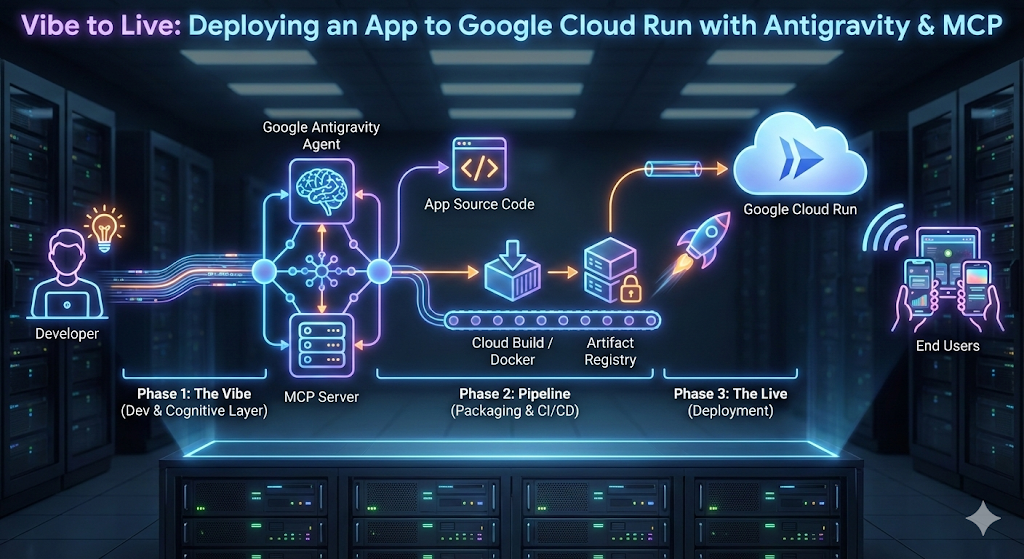
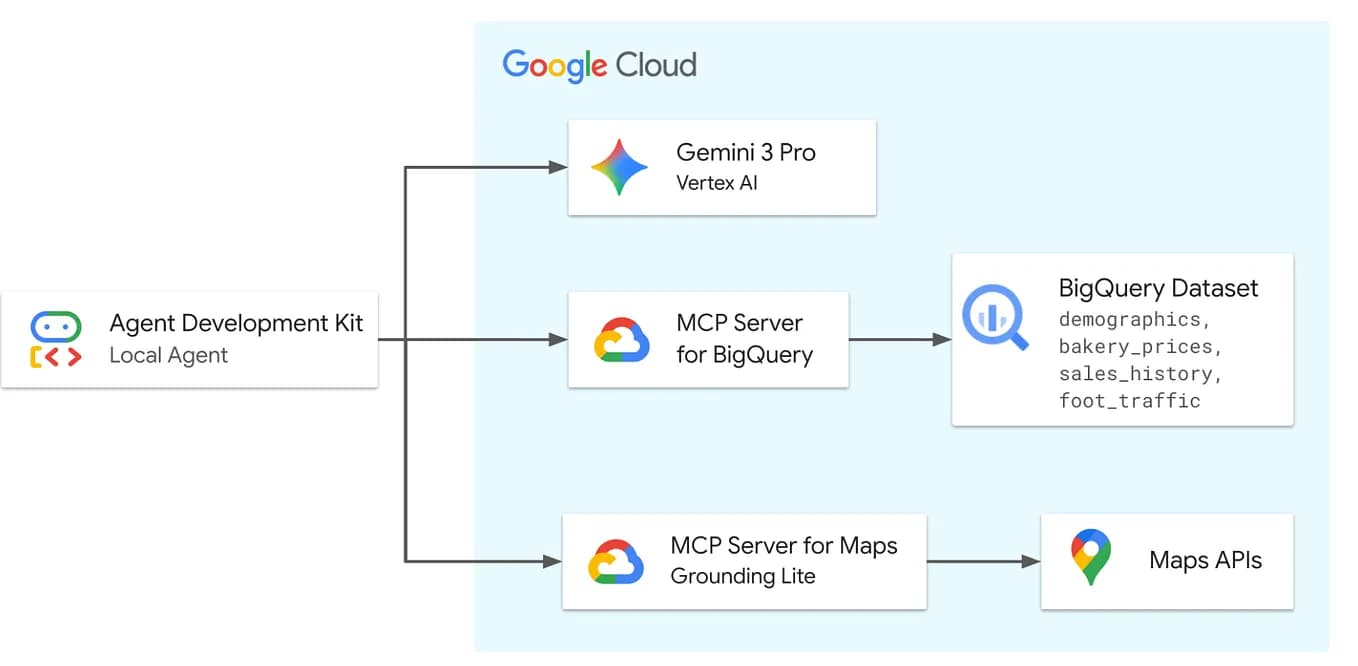
Managed Agents can now connect directly to remote MCP servers, giving them access to internal databases or APIs through Anthropic's open standard. The timing coincides with MCP's rapid adoption: the protocol crossed 13,000+ servers in June 2026, per the knowledge graph, and was backed by Anthropic, OpenAI, and Block under the Linux Foundation on July 8. Google Cloud launched its own MCP server the same day, and AWS followed on July 7.

Custom functions and credential hygiene

Next-Level Data Automation: Gemini CLI, Google Sheets, and MCP | by ...

The third feature lets developers use custom functions alongside the built-in sandbox tools, blending Google's native capabilities with user-defined logic. The fourth addresses a persistent pain point: credentials like tokens can be refreshed between interactions without losing the sandbox state, preserving agent context across sessions.

Competitive positioning

The update directly competes with Anthropic's Claude Code, which uses MCP extensively (73 sources in the knowledge graph point to this relationship). Google's move to embed MCP support natively in Managed Agents signals that the protocol is becoming table stakes for agent platforms, not just Anthropic's differentiator.

What to watch

Watch for adoption metrics from Google Cloud Next (expected October 2026) and whether Managed Agents usage crosses the milestone of 100,000 active agent deployments within 90 days. Also track whether OpenAI's Agents SDK adds similar MCP-native support.


Source: the-decoder.com


Source: gentic.news · · author= · citation.json

AI-assisted reporting. Generated by gentic.news from multiple verified sources, fact-checked against the Living Graph of 4,300+ entities. Edited by Ala SMITH.

Following this story?

Get a weekly digest with AI predictions, trends, and analysis — free.

AI Analysis

This update is Google's most significant agent infrastructure play since Managed Agents launched. The background execution feature addresses a real developer pain point: HTTP connection maintenance for long-running agents creates reliability issues and cost overhead. By decoupling agent execution from the HTTP lifecycle, Google aligns with the architectural pattern that made AWS Step Functions successful for traditional workflows. More strategically, the MCP support is notable because Google is adopting Anthropic's protocol rather than pushing its own standard. This follows the pattern of Google Cloud's MCP server launch on July 8 and suggests Google sees MCP as the de facto agent connectivity standard, not worth fighting. Given MCP's 13,000+ server count and backing from Anthropic, OpenAI, and Block under the Linux Foundation, Google's bet is that interoperability wins over proprietary lock-in. The credential refresh feature without state loss is the sleeper addition. Agent state management has been a persistent pain point in production deployments; losing sandbox state during credential rotation forces developers to reinitialize agents entirely. This fix could meaningfully reduce operational overhead for enterprise deployments.
This story is part of
The AI Infrastructure War Shifts from Chips to Developer Tools
Nvidia's enterprise pivot and AWS's OpenAI bet collide with Cursor's quiet ascent
Compare side-by-side
Google vs Google Cloud
Enjoyed this article?
Share:

AI Toolslive

Five one-click lenses on this article. Cached for 24h.

Pick a tool above to generate an instant lens on this article.

Related Articles

From the lab

The framework underneath this story

Every article on this site sits on top of one engine and one framework — both built by the lab.

More in Products & Launches

View all