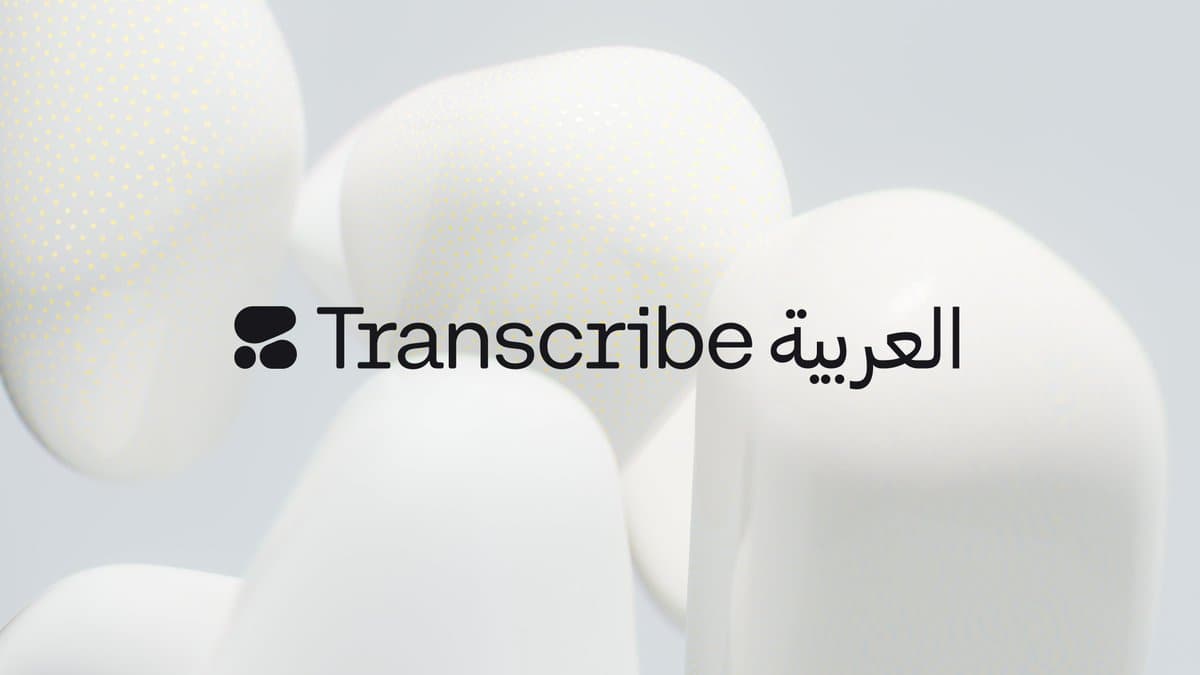
Cohere released Cohere Transcribe Arabic, claiming it's the world's most accurate open-source Arabic speech recognition model. The model is available under the Apache 2.0 license, allowing commercial use and modification.
Key facts
- Released under Apache 2.0 license.
- Claimed as world's most accurate open-source Arabic ASR.
- No benchmark scores or training data disclosed.
- Targets underserved Arabic speech recognition market.
- No technical paper or blog post accompanies release.
Cohere announced the release of Cohere Transcribe Arabic via an X post, describing it as "the world's most accurate open-source model for Arabic speech recognition." The model is distributed under the Apache 2.0 license, per the announcement, which permits commercial deployment, redistribution, and modification without royalty obligations.
The company did not disclose training data size, benchmark scores, or model architecture details in the announcement. No accompanying blog post, technical paper, or evaluation results were published alongside the release. The claim of "world's most accurate" lacks public verifiable evidence at launch.
Why Arabic speech recognition matters
Arabic speech recognition has historically lagged behind English and Mandarin in open-source model quality due to dialect diversity—Modern Standard Arabic plus dozens of regional dialects—and limited publicly available transcribed datasets. Major open-source ASR models like OpenAI's Whisper and Meta's Wav2Vec 2.0 have supported Arabic but with lower accuracy compared to their English counterparts, particularly for dialectal speech.
Cohere's entry targets this underserved market. The Apache 2.0 license removes friction for enterprise adoption in the Middle East and North Africa, where government and financial services require permissive licensing for compliance. The move mirrors Cohere's broader strategy of focusing on enterprise AI use cases, though the company has historically been known for text-based large language models rather than speech recognition.
What's missing
Key details remain undisclosed: the model's parameter count, training dataset composition, word error rate on standard Arabic benchmarks (such as Common Voice Arabic or MGB-2), and whether the model handles dialectal variants or only Modern Standard Arabic. Without these, independent verification of the accuracy claim is impossible. Cohere has not announced a timeline for releasing evaluation details or a technical report.
The announcement comes as the open-source ASR landscape heats up. In 2025, OpenAI released Whisper large-v3 with improved multilingual performance, and Meta open-sourced SeamlessM4T v2 supporting Arabic speech-to-text. Cohere's model must demonstrate measurable improvements over these baselines to substantiate its claim.
Key Takeaways
- Cohere released Arabic speech recognition model under Apache 2.0, claiming world's most accurate open-source version.
- No benchmark data or training details disclosed.
What to watch
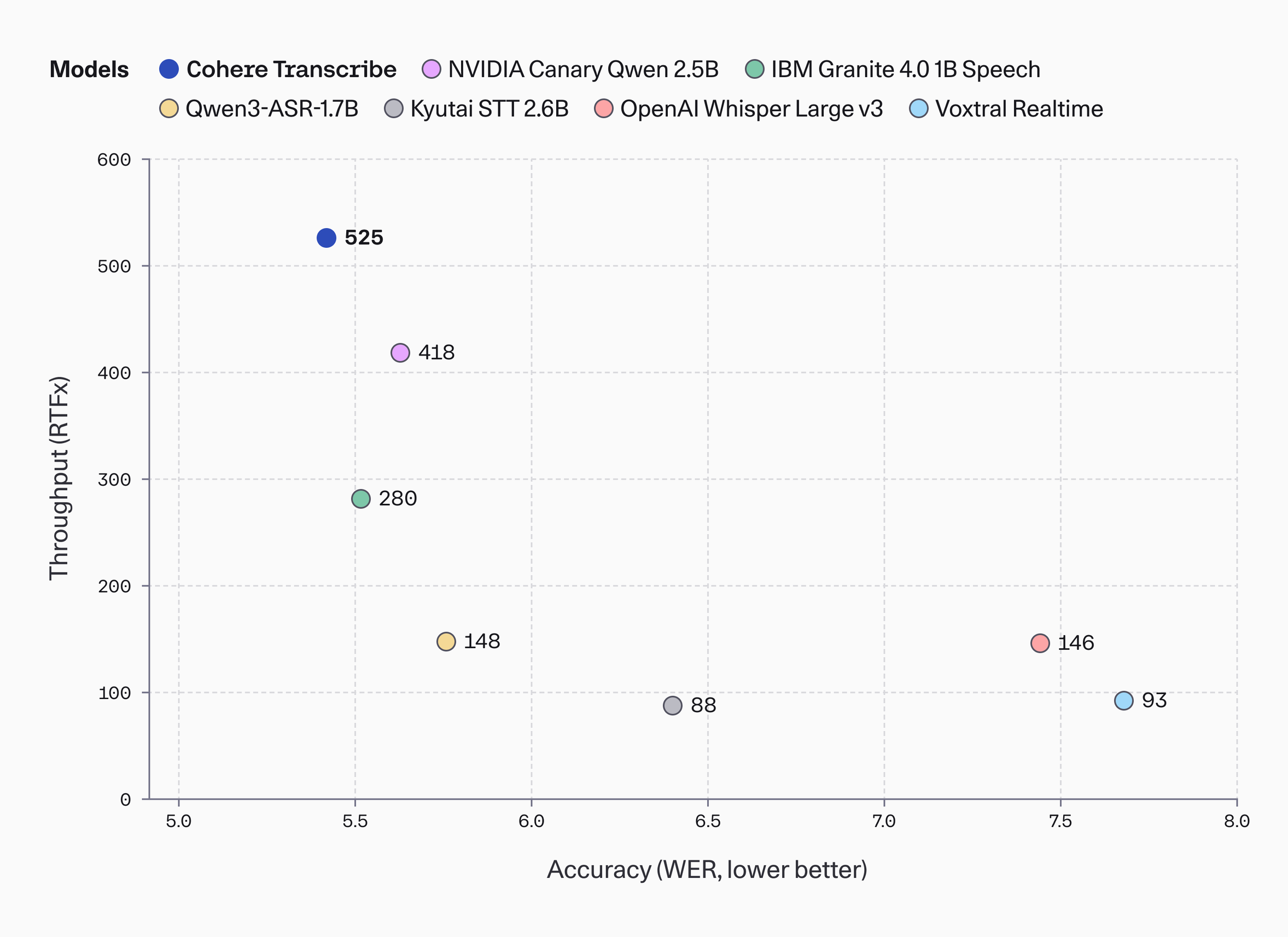
Watch for independent benchmark evaluations on standard Arabic ASR datasets like Common Voice Arabic or MGB-2. Also monitor whether Cohere releases a technical paper detailing training data, architecture, and dialectal coverage—without these, the accuracy claim remains unverifiable.