Google Cloud shipped its official MCP server on July 1, 2026. The move marks the first time a major cloud provider has natively supported the Model Context Protocol.
Key facts
- Google Cloud shipped official MCP server on July 1, 2026
- First major cloud provider with native MCP support
- Supports Vertex AI, BigQuery, Cloud Storage
- No additional cost for MCP layer
- Public preview available now
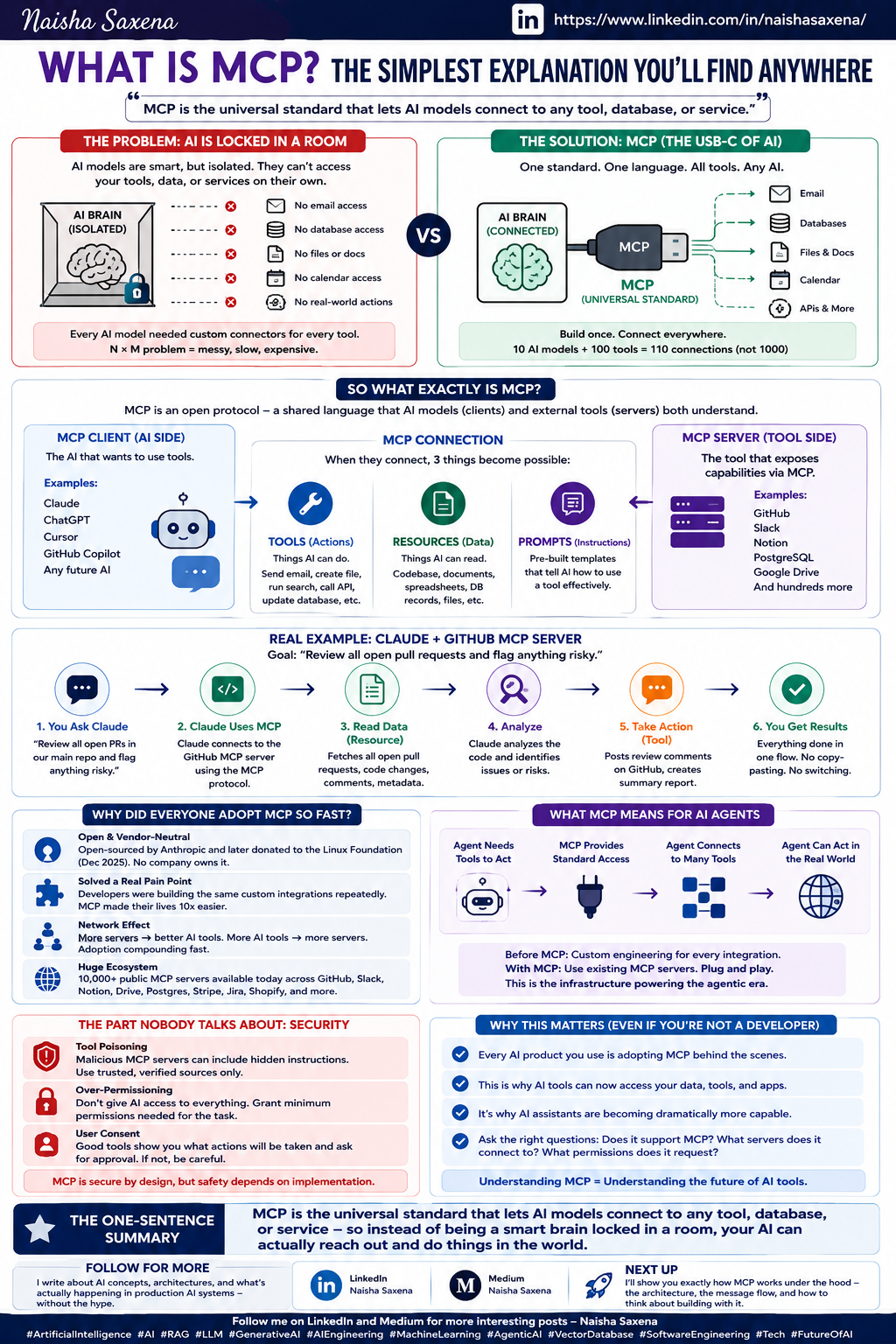
Google Cloud has released its official Model Context Protocol (MCP) server, becoming the first major cloud provider to ship a native implementation of the protocol According to Platformer. The server allows AI agents to directly call cloud APIs — including Vertex AI, BigQuery, and Cloud Storage — without requiring custom middleware or third-party adapters.
MCP, an open protocol developed by Anthropic and released in late 2024, standardizes how AI models interact with external tools and data sources. Until now, cloud providers required developers to build bespoke connectors between their AI agents and cloud services. Google Cloud's native MCP server eliminates that step, enabling agents to provision compute, query databases, and manage storage through a single protocol.
The release coincides with a broader industry shift toward agentic workflows. In the past 90 days, Anthropic released MCP 2.0, and companies like Navan have built travel-booking MCP servers that collapse multi-step workflows into single commands. Google's entry validates MCP as the de facto standard for AI-to-infrastructure communication — a role previously filled by proprietary APIs and SDKs.
Why this matters
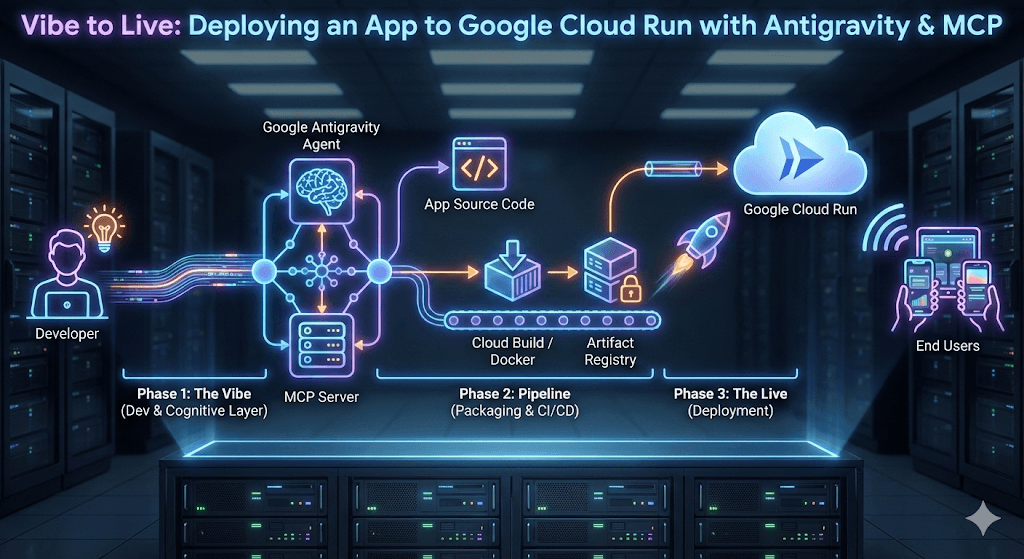
Google Cloud's MCP server is not just a convenience — it signals that "vibe coding" has escaped the terminal. The term, popularized by Andrej Karpathy in early 2025, describes AI agents writing code autonomously. With native MCP support, those agents can now directly manipulate cloud infrastructure, blurring the line between coding and operations. The server supports Vertex AI's model catalog, BigQuery's data warehouse, and Cloud Storage, effectively giving AI agents root access to the cloud.
Competitive landscape
Amazon Web Services and Microsoft Azure have not yet shipped native MCP servers. AWS offers Bedrock agents with proprietary tool integration, while Azure's Copilot stack relies on its own connector framework. Google Cloud's first-mover advantage in MCP could reshape how enterprises choose cloud providers for AI workloads. The server is available now in public preview, with pricing tied to existing Vertex AI and BigQuery usage — no additional cost for the MCP layer itself [According to Google Cloud documentation].
Limitations
The MCP server currently supports only a subset of Google Cloud services. Compute Engine, Google Kubernetes Engine, and Cloud Run are not yet integrated. Security considerations around agentic access — particularly privilege escalation and data exfiltration — remain unaddressed in the initial release. Google has not disclosed whether the server supports fine-grained IAM roles for agentic workflows, a critical requirement for enterprise adoption.
Key Takeaways

- Google Cloud ships first major cloud MCP server, enabling AI agents to directly access Vertex AI, BigQuery, and Cloud Storage.
- Move validates MCP as standard for AI-to-infrastructure communication.
What to watch
Watch for AWS and Azure MCP server announcements — or lack thereof — by Q4 2026. Also track enterprise adoption of agentic IAM controls, as Google's security posture for MCP access will determine whether regulated industries trust the protocol.
Source: news.google.com